


Published : 08 Feb 2021, 12:34 PM
Updated : 08 Apr 2022, 12:46 PM


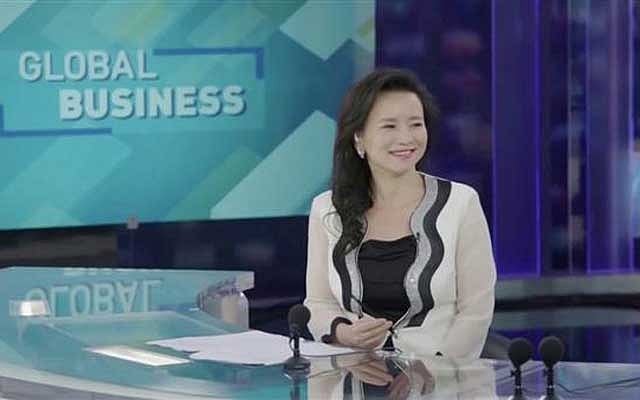
The journalist, Cheng Lei, worked as an anchor for a business show on China Global Television News, or CGTN, when she was detained in August. The Chinese Ministry of Foreign Affairs later disclosed that Cheng had been accused of a national security crime, but gave no further details.
“Chinese authorities have advised that Cheng was arrested on suspicion of illegally supplying state secrets overseas,” the Australian foreign minister, Marise Payne, said in a brief statement Monday. She gave no other details.
“We expect basic standards of justice, procedural fairness and humane treatment to be met, in accordance with international norms,” Payne added.
Cheng was born in China and grew up in Australia. Her arrest on such a serious, politically charged accusation appears likely to add to tensions between China and Australia. The countries have been at loggerheads in a series of disputes, which include accusations of spying, that have driven relations to their lowest point in decades.
Australia has sought to deter China from influence-building activities on Australian soil, including among the country’s large population of recent migrants from China. The Australian government has angered China by blocking the potential participation of Chinese tech giant Huawei in building Australia’s 5G network.
Last year, Australia led calls for an international investigation into the origins and course of the coronavirus pandemic, angering China, which has been sensitive about questions of culpability. In turn, China has restricted imports of Australian goods, including wine, coal and barley.
The Chinese government has not described those actions as political retaliation, but few in Australia are convinced otherwise.
Before Cheng’s case, another Australian of Chinese heritage, Yang Hengjun, faced spying charges in China. Yang, a writer and businessman also known as Yang Jun, has been held in China since early 2019, and last year was indicted on espionage charges.
Two Canadians — Michael Kovrig, a former diplomat, and Michael Spavor, a businessman — are also awaiting trial in China on spying charges. Their supporters have said that China is using them as pawns to coerce Canada to refuse the extradition of a Huawei executive, Meng Wanzhou, to the United States, where she faces fraud charges.
Cheng’s case became bound up with those of two Australian journalists who abruptly left China in September, fearing detention. After a diplomatic standoff, the journalists — Michael Smith, the China correspondent for The Australian Financial Review; and Bill Birtles, a correspondent with the Australian Broadcasting Corporation — were questioned by Chinese state security officers, including about Cheng.
Cheng, the daughter of Chinese migrants to Australia, first worked in business in Australia and China. As a CGTN journalist, she appeared eager to promote better relations between the two countries, and had highlighted China’s economic success story.
“Passionate orator of the China story,” the introduction on her Twitter account says.
© 2021 New York Times News Service













