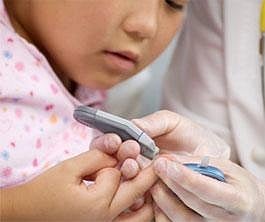
Young diabetics getting the hang of it
At a camp for diabetic kids, patients, Nurul Islam Hasibhears experts say the disease is a reality among teens that has to be faced without being fazed
bdnews24.com News Service
bdnews24.com
Published :
06 Jan 2012, 01:30 PM
Updated :
09 Aug 2022, 03:16 PM
Nurul Islam Hasib
bdnews24.com Senior Correspondent
Savar, Jan 6 (bdnews24.com) – Priom Chakrabarty was about 14 a little more than a year ago when he suddenly started losing weight and became drastically weaker ahead of his annual examination. His parents thought it was exam pressure -- normal for every other teen.
But it was far from normal for the young one, as his health worsened by leaps and bounds.
"Bouts of vomit and liquid stool prompted my parents to see me a doctor. After blood and urine tests, the doctor told my parents that I was diabetic," Priom, now 15 and a grade-10 student of Hatekhori School and College in Chittagong, told bdnews24.com at a child diabetic camp in Savar, on the capital's outskirts, on Friday.
His frustration visible at the recollection, Priom said: "I had no idea about diabetes. I was scared when I heard I have to take insulin for life. I had never seen anyone my age with the disease at that time."
Almost overnight, the teen had to grow up out of turn and be mature. He checks his own blood sugar regularly, and has a glucose monitor and insulin pump for help when his glucose levels are out of balance.
"I cannot eat sweets like my other friends," he said, stifling sobs. "I have to control myself."
According to medical experts, Priom is just one of scores of children with Type-1 diabetes, known as juvenile diabetes or insulin-dependent diabetes in Bangladesh.
NOT RARE ANY MORE
Though there is no nationwide data to ascertain the exact number of diabetic children in Bangladesh, International Diabetic Federation estimated diabetes 4.2 per 100,000 children under 14.
There are 1,075 registered diabetic children in the 'Changing Diabetes in Children Programme' of the Bangladesh Diabetic Association, which organised the camp with 60 children and their parents at a Brac centre in Savar.
The programme started registration from 2010 to provide free management, including insulin to diabetic children.
Spelling out the worst fear for most parents, programme co-coordinator Dr Bedowra Zabeen said they are getting increasing number of children with diabetes.
"And most of them are adolescents, though we cannot say why," Dr Zabeen, also a child diabetologist, said. "Hormonal changes at this stage may have a connection with the disease.
"It appears as a challenge since we cannot prevent it. What we can do is control the disease, but most parents are so devastated when they discover their child is diabetic that the smiles disappear from their faces immediately -- they become worried about the child's future.
"But what parents should realise, and make their children understand, is that diabetes is not the end of life," she emphasised.
NOT THE END OF LIFE
The world certainly did not come to an end for Priom. Today, he said, he is not scared any more when he sees many other children like him.
Like any other 'normal' child of his age, the boy bursts with energy and joie de vivre. He played football at the camp just minutes before talking to bdnews24.com.
But all that comes with experience -- the blow is still felt like a sledgehammer when the diagnosis is first revealed. Comilla resident Nurjahan Begum, for instance, got the blow of her life when she first learnt that her son Jahidul Islam, 14, is diabetic.
"It was a year and a half ago when he was diagnosed," she told bdnews24.com. "We live in a village called Kutumbupur (under Chandina upazilla of southeastern Comilla district), and I had never seen any diabetic child in our village.
"I was frightened -- I could not concentrate on my work for days."
But time, like always, acted as a balm for her, too. "Now I have accepted the disease for my son's sake. I try to help him control the condition. Sometimes he cannot (but) I also cannot force him to hold on to a strict regimen. After all, he is my only son," Nurjahan said amid sobs.
PEER INTERACTION HELPS
According to Dr Zabeen, camps like the once at Savar help both children and their parents. "Here they find they are not peerless," she said. "They come across many children who, like them, have accepted the disease.
"This boosts their confidence. Our previous experience shows those who attend camps could better manage the condition than others."
At Friday's camp, the children participated in different indoor and outdoor sports, games shows, music and dance, besides counseling and education sessions.
"It's a small part of your life. What you should not do is make it a part of your personality and think (you are) different -- maintain your routine, and do it confidently," a diabetic educator advised the group at the camp.
Type-1 diabetes is a chronic condition in which the pancreas produces little or no insulin -- a hormone needed to break down sugar to create energy.
Experts say with training and some discipline, a child or youth with diabetes can lead as normal a life, and participate in all body contact sports, as any other child without diabetes.
Uncontrolled diabetes, however, can be fatal.
People with Type-2 diabetes, far more common among adults, produce insulin but aren't able to break it down.
bdnews24.com/nih/std/bd/1905h