


Published : 08 Mar 2022, 07:45 PM
Updated : 21 Oct 2022, 03:38 PM


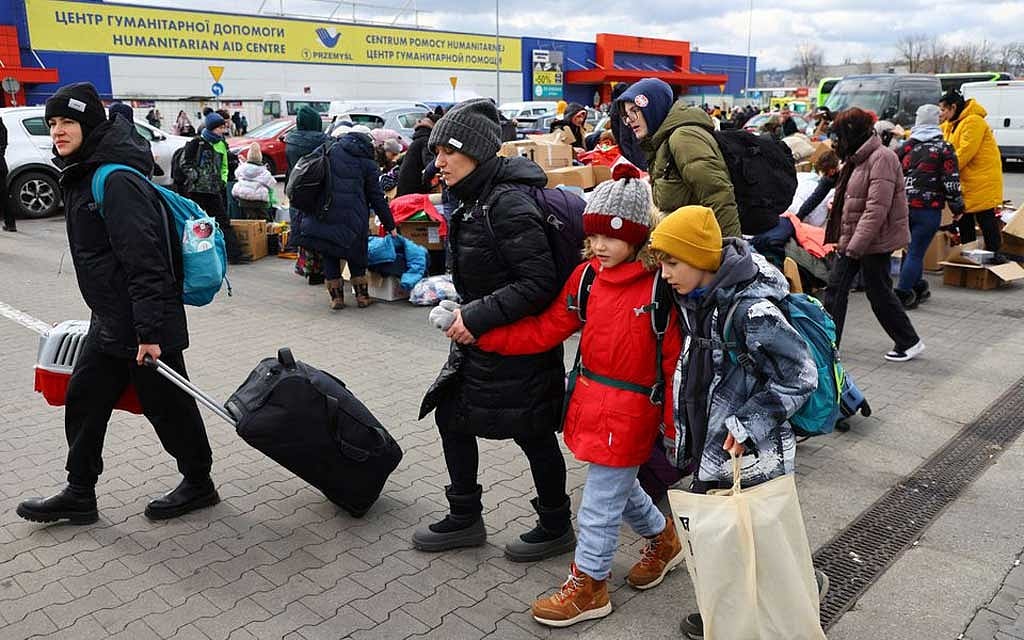
Two million people - mostly women and children - have now fled Ukraine since the beginning of the Russian invasion on Feb. 24, the UN refugee agency UNHCR said.
With fighting around many of Ukraine's main cities intensifying, authorities across eastern Europe are struggling to accommodate the wave of refugees.
"As far as the accommodation is concerned, there are indeed times when it gets very crowded," said Witold Wolczyk, from the mayor's office of Przemysl, a town near Poland's busiest border crossing that has become a transit hub for Ukrainian refugees.
"Last night we managed to get 30 buses out of Przemysl, they went in different directions ... We are trying to do our best to make this traffic flow smoothly," he said.
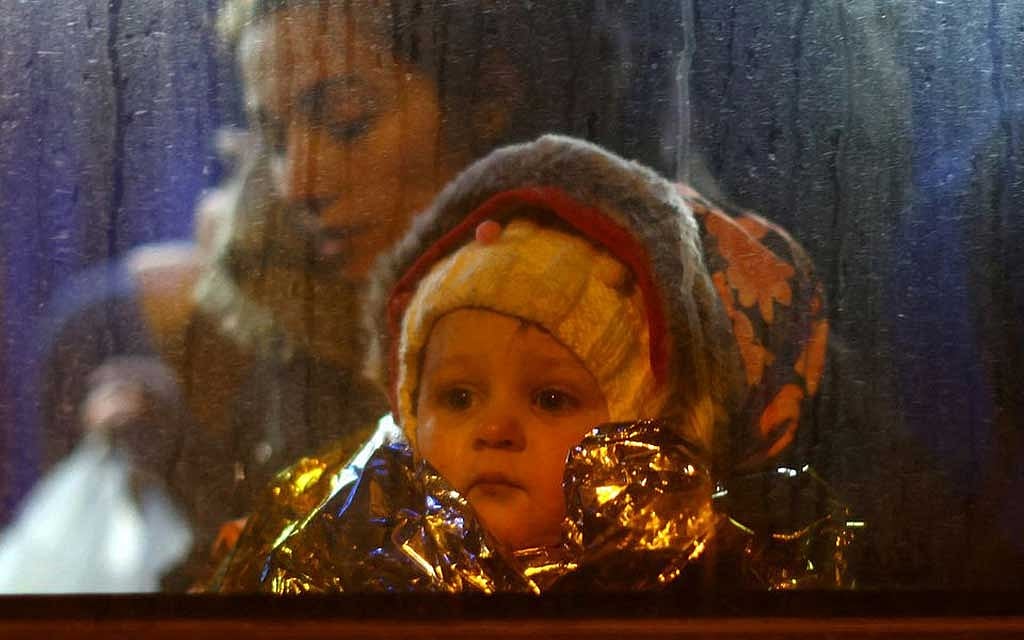
A child looks out of a window of a bus after crossing the border from Ukraine to Poland with people fleeing the Russian invasion of Ukraine, at the border checkpoint in Medyka, Poland, Mar 7, 2022. REUTERS/Fabrizio Bensch
Poland's Ukrainian community of around 1.5 million is the region's largest, making it the prime destination for many of those braving a journey through fighting and long waits at the border.
Near Warsaw, a convention centre was being transformed into the country's biggest reception facility, ready to host 10,000 refugees. City authorities said seven babies had been delivered in Warsaw hospitals to mothers just arrived from Ukraine.
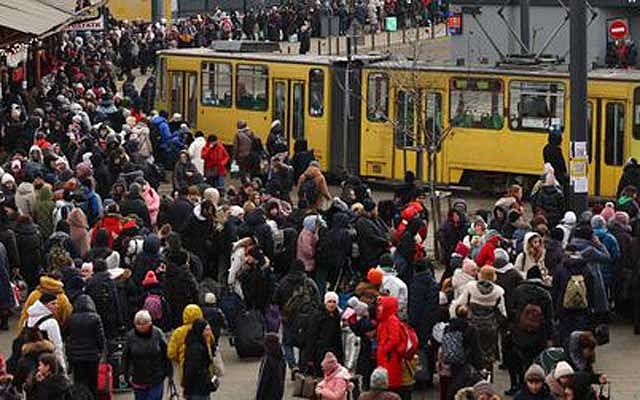
People fleeing the Russian invasion of Ukraine wait for a bus after crossing the border from Ukraine to Poland, at the border checkpoint in Medyka, Poland, Mar 7, 2022. REUTERS/Fabrizio Bensch
The head of the UNHCR said the initial burst of refugees was likely to be followed by a second wave of more vulnerable people, without resources or connections.
"That will be a more complex situation to manage for European countries going forward, and there will need to be even more solidarity by everybody in Europe and beyond," Filippo Grandi told a news conference in Oslo. Read full story
European Union officials have said the bloc could see the arrival of about 5 million people. So far, most of those fleeing remain in the countries bordering Ukraine, led by Poland, which has taken in well over a million so far.
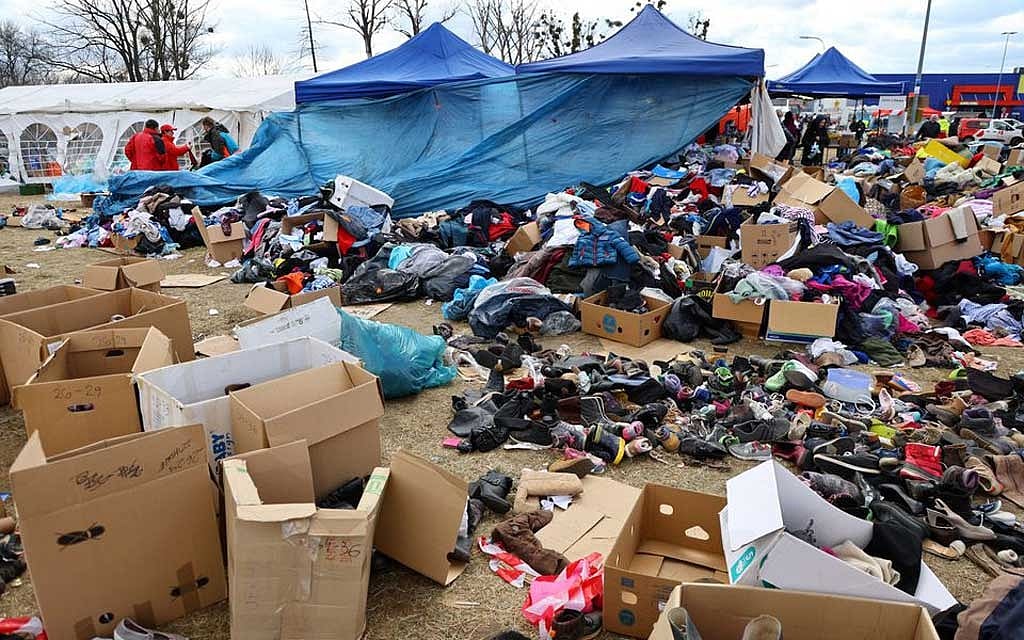
Donated shoes and clothes for refugees fleeing the Russian invasion of Ukraine are pictured clothes outside a temporary accommodation and transport hub for refugees, in Przemysl, Poland, Mar 8, 2022. REUTERS/Fabrizio Bensch
Outrage at Russia's onslaught and a long history of fraught relations with Moscow has seen the refugees largely met with an outpouring of sympathy and aid across eastern and central Europe.
As of Monday, the United Nations had confirmed the deaths of 406 civilians in Ukraine, but it said the real figure was likely much higher, while hundreds of thousands of people had been cut off from aid due to the fighting.
Russia calls its actions in Ukraine - which have triggered the worst refugee crisis in Europe since World War Two - a "special military operation" to disarm its neighbour and unseat leaders it calls neo-Nazis.
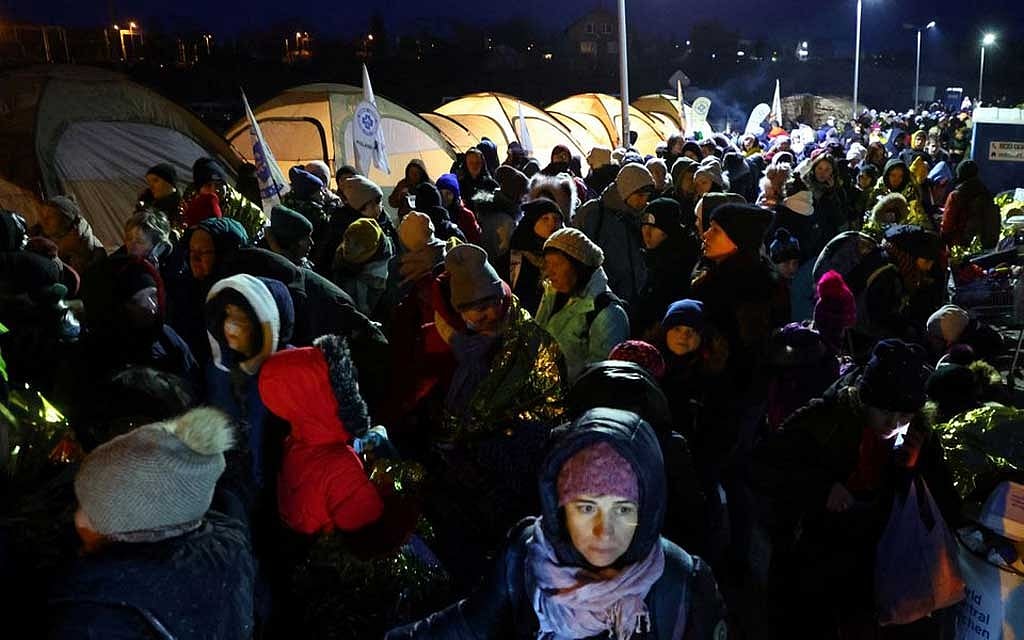
People fleeing the Russian invasion of Ukraine, arrive at a temporary accommodation and transport hub for refugees, in Przemysl, Poland, Mar 8, 2022. REUTERS/Fabrizio Bensch
Nearly 300,000 people have crossed into Romania since the war began, roughly half of whom have entered from non-EU member Moldova, while more than 140,000 had reached Slovakia and almost 200,000 crossed into Hungary, officials say.
At the border crossing in Siret, Romania, firefighters handed out tulips to refugees and volunteers to mark International Women's Day.
With men of conscription age obliged to stay behind, the majority of those crossing are women, children and the elderly, though many women have chosen to stay in Ukraine and fight.
"To them, I want to say: girls, you are awesome, you are powerful, and you empowering us to do our best," Jana, a refugee from Kyiv, said.













