SPECIALSpecial polio campaign stays
Bangladesh will continue to observe the National Immunisation Day (NID) despite its high coverage in routine vaccination and long-time polio-free status, Nurul Islam Hasib writes.
bdnews24.com News Service
bdnews24.com
Published :
03 Oct 2012, 12:48 PM
Updated :
09 Aug 2022, 04:19 PM
Nurul Islam Hasib
bdnews24.com Senior Correspondent
Dhaka, Oct 3 (bdnews24.com) – Bangladesh will continue to observe the National Immunisation Day (NID) despite its high coverage in routine vaccination and long-time polio-free status, as the technical committee feels 'there is still risk of re-emergence' of the crippling virus.
"Our technical committee has advised to continue," Health Minister A F M Ruhal Haque told bdnews24.com on Wednesday after the meeting at the Secretariat.
"It's (NID) a special coverage and a way to maintain polio-free status. We will not take risky decisions like the BNP government," he said referring to the 2005 decision when NID was not observed, but the next year 18 polio cases surfaced.
The minister earlier told bdnews24.com that they might stop the Tk 1-billion NID, 'if technical committee recommends'.
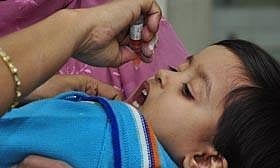
Director of the Expanded Programme on Immunisation (EPI) Dr Syed Abu Jafar Md Musa told bdnews24.com that they would observe the next NID in March and April 2013. On immunisation days, children under five years of age get oral polio vaccines (OPVs) in two rounds, two doses in each.
Under the routine programme, children get OPVs at the age of six weeks, 10 weeks, 14 weeks and after nine months.
The government has been observing NID since 1995, barring in 2005 when Bangladesh was found polio-free for five years.
According to the Global Polio Eradication Initiative's website, "Three to five years of NIDs are usually required to eradicate polio, but some countries require more time, especially those where routine immunisation coverage is low."
Asked why they have taken the decision despite polio-free status of the region, the EPI Director said, WHO representative in Dhaka and officials in the regional headquarters in New Delhi told them that 'there is still risk of re-emergence.'
"It's still endemic in Pakistan, and Afghanistan. So it can pass on to the neighbour India and then Bangladesh," he said.
Asked whether India conducts similar pricey campaign, the Director said, "India's provincial governments take special measures."
However, he could not confirm whether other countries of the region also conduct similar campaigns to get a polio-free certification from the WHO South-East Asia region that comprises 11 countries.
"Once we get a regional certificate, we will stop it," he said and that despite high coverage in routine immunisation, they took the 'epidemiological risk' in their consideration.
"We have huge success in the coverage, but there are some risk areas where we cannot reach in routine coverage.
"Special coverage helps us in this regard," he said.
He, however, said there were no 'in-depth' discussions on the 2006 cases where children were afflicted by the wild polio virus despite feeding several doses of vaccine.
bdnews24.com investigation recently found those children were fed as many as 23 doses of the vaccine, which suggests that it did not have anything to do with the absence of NIDs in 2005.
A technical committee member National Professor M R Khan earlier told bdnews24.com that Bangladesh didn't need NID as India was polio-free now.
However, the EPI Director said he did not attend the Wednesday's meeting.
One technical committee member present at the meeting told bdnews24.com that there were long debates on the issue in the meeting.
He said the decision finally came in favour of NID when WHO spoke about the risk and the government decided not to take the risk in the last year of its tenure.
Earlier, before the NID, the government used to tell the media that they had to continue with the campaign to get polio-free certification from the WHO. They also argued that the neighbouring India was not polio-free.
In reality, there is no such certification for a particular country. According to the Polio Eradication Initiative website, the WHO issues polio-free certificate to a region, not an individual country.
As on today, of the six WHO regions, three were awarded the certificate. The American region got the certificate in 1994 when 35 member states remained polio-free for three years, while Western Pacific region's 27 states collectively achieved the certificate in 2000 and Europe's 52 states in 2002.
According to WHO's Global Certification Status, this region's 11 countries are polio-free now, but will be certified only after maintaining the status for three years.
bdnews24.com/nih/nir/1844h