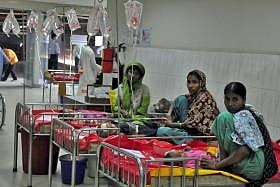
SPECIALHospitals to get nutritionist
The recruitment aims to ensure balanced diet for patients and counsel them on proper eating.
bdnews24.com News Service
bdnews24.com
Published :
04 Jul 2011, 11:58 AM
Updated :
10 Aug 2022, 05:03 PM
Nurul Islam Hasib
bdnews24.com senior correspondent
Dhaka, July 4 (bdnews24.com) – The government will appoint nutritionist to public hospitals to ensure appropriate diet for patients and counsel them on proper eating.
Director General for health services Khondaker Mohammed Shefyetullah told bdnews24.com on Monday that the appointment process would start –soon'.
"It will take time to complete the process since we have to develop job description and supervision system," he explained.
Prime minister Sheikh Hasina had spoken about the need of nutritionists at hospitals when she launched the World Breastfeeding Week in Aug 2010.
"The decision followed her instruction to appoint nutritionist at hospitals for proper diets and nutrition counseling," the director general said.
Chairperson of Bangladesh Breastfeeding Foundation Dr S K Roy said they had proposed the appointment of nutritionists as malnutrition is widespread in Bangladesh.
The latest Bangladesh Demographic and Health Survey (BDHS) says malnutrition renders 41 percent children aged below five underweight and stunts growth of 43 percent.
The findings also show one in four under-5 children in rich families is stunted which means poor feeding practice, instead of lack of food, is causing malnutrition.
"Even hospitals do not supply appropriate diets for patients," Dr Roy said.
Serving appropriate diet was 'imperative' in the overall management of patients, he added as 'it influences the treatment and recovery process of many illnesses.'
Bangladesh Health Watch Report 2009 showed patients with five specific diseases –diabetes, heart disease, kidney failure, liver disease and severe malnutrition – do not get appropriate diet in hospitals.
"It's (malnutrition) social and economic impacts are profound. Malnutrition reduces intellectual and learning capacity and causes lost productivity," sais Dr Roy, a senior scientist at the ICDDR,B.
According to him, malnutrition puts heavy costs on the health care system in terms of higher rates of illnesses, increased premature deliveries and elevated risk of diseases like diabetes.
"But even educated people lack knowledge about proper feeding practices until somebody teaches them," Dr Roy said.
On the contrary, he said, Bangladesh has been producing many nutritionists every year. "But we cannot use them. Nutritionists are necessary for the prevention and cure of a disease."
Director general Shefyetullah said initially they would start recruiting for 'tertiary' hospitals and some district hospitals.
Tertiary hospitals are fully departmentalised and equipped with the service capabilities needed to support certified medical specialists and other licensed physicians rendering services in the field of medicine, pediatrics, obstetrics and gynecology, surgery, their subspecialties and ancillary services.
There are 605 government hospitals across Bangladesh of which 18 are medical college hospitals, 62 district hospitals and 421 upazila health complexes, according to the Directorate General of Health Services,.
Bangladesh Health Watch Report 2009 also shows a few specialised hospitals have nutritionists, but most of them do not have an educational background in nutrition.
bdnews24.com/nih/bd/1721h