Dhaka, Nov 2 (bdnews24.com) – Bangladesh's first voluntary blood donation campaigner Sandhani has been advised to infuse its activities with innovative ideas to achieve the goal of 'self-less blood donation'.
Medical students-run Sandhani started voluntary blood donation on Nov 2, 1978 in the Dhaka Medical College Hospital, nearly two years after its inception at Dhaka Medical College.
The government in 1995 recognised Nov 2 as the National Voluntary Blood Donation Day.
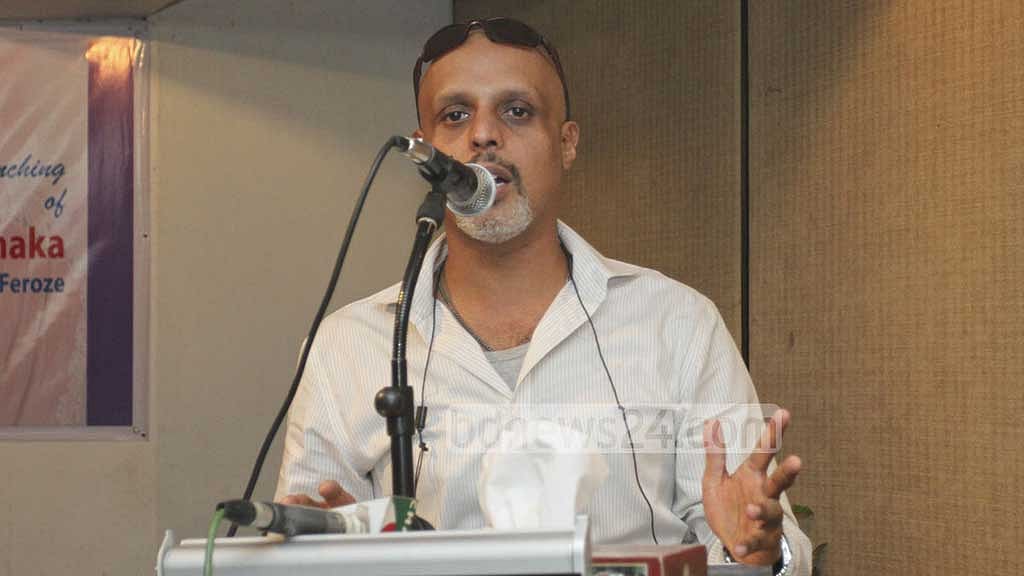
At a discussion, marking the day on Wednesday, Sandhani central committee's founder president Prof Abul Kalam Azad said there could be some problems with the organisation that hold back its progress.
Citing its annual report he said, "In 2006, Sandhani collected 40,000 units of blood, but it came down to around 30,000 in 2010, despite the organisation's expansion to newer medical colleges."
"Then what went wrong," he wondered and urged them (Sandhani members) to speak up as former members 'to solve problems, if any'.
Inspiring medical students to join Sandhani, Azad also an additional director general of the health directorate, said, "Those who worked with Sandhani are doing better in the profession."
"Their office attendances are higher than others. They behave well with patients."
A former member Dr Tosaddek Hossain Siddiki advised Sandhani to be 'innovative'.
"You should fix your problems that stand in the way of your expansion," he said without elaborating on details.
A Sandhani insider, however, told bdnews24.com that political influence has crippled the 'very' organisation that once boasted as a pioneer in voluntary blood donation campaign.
"Over the last decade, it (Sandhani) could not expand in activities, rather it (activities) shrank and failed to draw potential members from medical colleges," the insider, who cannot be quoted, said.
The national day celebration, which is also an annual gathering of the mega-organisation, saw presence of hardly 200 people including former as well as present Sandhani members from 19 medical college units and guests.
President of the Sandhani National Eye Donation Society, Sandhani's voluntary wing, Prof Kamrul Hassan Khan said in the present context, Sandhani should re-think how they would like to run their activities.
Although there is no official statistics about the annual blood demand, it is estimated that only 25 percent of the annual 500,000 units of blood demand is meet by voluntary blood donors in Bangladesh.
A major portion – 50 to 55 percent – of the blood demand is met with donors who donate for their relatives, finding no other option.
Rest 20 to 25 percent of the required blood comes from paid donors, a threat to public health.
In Nepal, there are no professional blood donors.
"About 85 percent of their required blood comes from voluntary blood donation and rest is being managed by relatives," director of Central Blood Transfusion Service of the Nepal Red Cross Society Dr Manita Rajkarnikar, earlier told bdnews24.com.
"We have donors' motivation programmes starting from schools," she said and that all programmes are run in a coordinated way.
"Once we also conducted motivation programmes at various places including educational institutions," founder president Azad told bdnews24.com lamenting, "Now all that's missing."
Speaking at the function, Bangabandhu Sheikh Mujib Medical University's vice-chancellor Pran Gopal Datta exhorted the medical students attending the discussion to overcome their hurdles and move forward.
A former general secretary of Sandhani's Dhaka Medical College Unit Dr Farzana Alam Tun recollected the memories of being a Sandhani member.
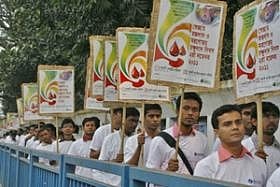
A traffic-friendly rally was also organised from National Press Club to Shahbagh that paraded on the pavements.
bdnews24.com/nih/nir/2116h