


Published : 18 Feb 2014, 09:25 PM
Updated : 23 Apr 2022, 02:18 PM


He appealed for greater allocation citing a measly government spending of just around one percent of the GDP on health services, while about four percent of the people, or 6 million, slipped into poverty each year in trying to meet treatment costs.
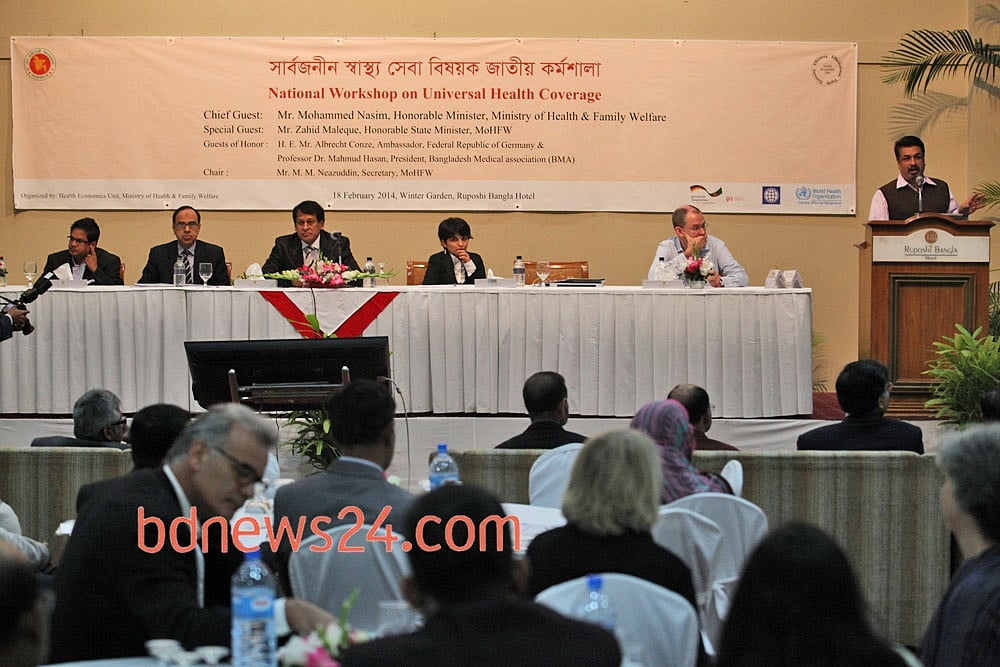
“I think the government should increase spending on healthcare,” Maleque said at a workshop on ‘Universal Health Coverage’ on Tuesday.
He also called upon the private sector and development partners to come forward.
The Ministry of Health and Family Welfare last year devised a healthcare financing strategy with a target to achieve “universal health coverage” by 2032.
According to the World Health Organisation (WHO), universal health coverage ensures that everyone gets health services without suffering financial hardship to pay for them.
But government statistics show people have to spend 64 percent from their own pocket for health services while government spends only 26 percent and the private sector eight percent.
Md Ashadul Islam, Director General of Health Economics Unit, said inadequate funding was the “most important” handicap for the health system.
“But it’s a common concern across the globe,” he said and that they were finding ways to halve the current out-of-pocket expenditure of a family for healthcare.
“It’s (universal health coverage) a continuous journey,” he said. “It’s not a thing that we can achieve next year”.
According to WHO, prepaid health financing mechanisms such as health insurance is the key route to universal health coverage.
German ambassador in Dhaka Albrecht Conze based on Germany’s more than 140 years of experiences in health insurance, however, said one size does not fit all.
He suggested finding Bangladesh’s own ways in this regard and said German development agency, GIZ, can help in this regard.
He said GIZ and Kfw gained “wealth of experiences” in health financing system in this region, as he said they worked in Indonesia, Pakistan, Nepal, Cambodia and Mongolia.
But financing is one aspect of universal health coverage as WHO says strong health system, well-trained manpower, and access to essential medicines and technologies would be needed to ensure the coverage for all.
Bangladesh is grappling to retain its manpower, particularly doctors, at rural workplaces.
Public health analyst Dr Muhammad Abdus Sabur told bdnews24.com that governance issue had to be addressed in Bangladesh’s health sector so that people had access to healthcare, a prerequisite for universal health coverage.
“It’s (keeping doctors at workplace) not a rocket-science. But it cannot be ensured because of politicisation,” he said.
Universal health coverage is firmly-based on the WHO constitution of 1948 declaring health a fundamental right and on the Health for All agenda set by the Alma-Ata declaration in 1978. Equity is paramount.
Health Economics Unit of the Ministry of Health and Family Welfare with the support of the GIZ, WHO, and World Bank has organised the workshop in Dhaka.










