


Published : 18 Apr 2021, 01:46 PM
Updated : 08 Apr 2022, 12:53 PM


The data was part of a coronavirus situation report released by the Institute of Epidemiology, Disease Control and Research, or IEDCR, on Saturday.
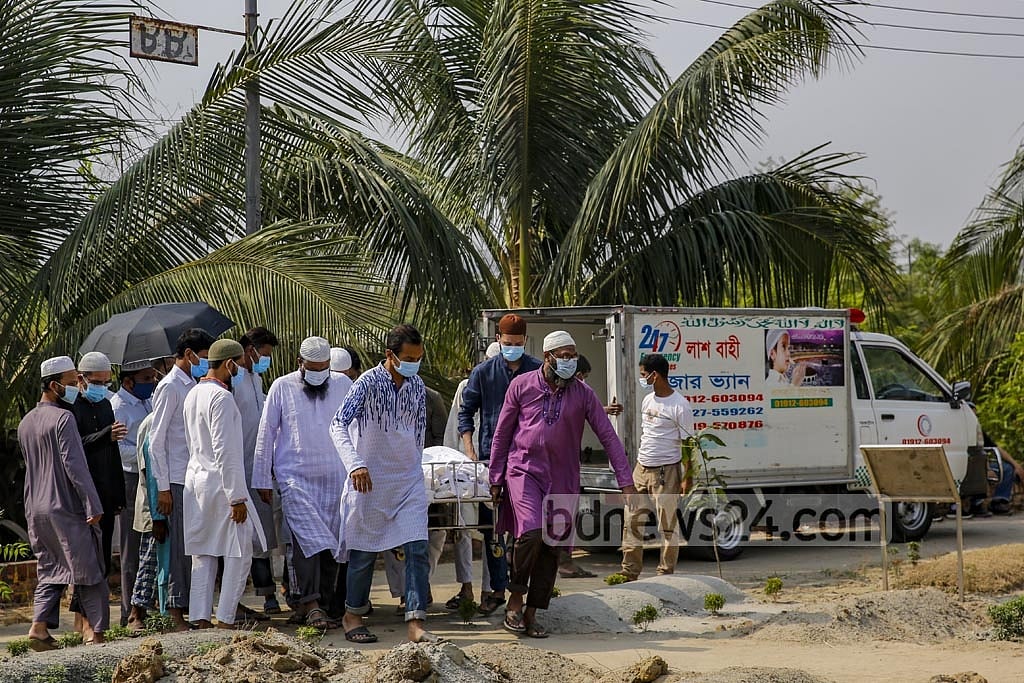
The report noted that there were 638 coronavirus-related deaths in March and 941 deaths between Apr 1 and Apr 15. That’s a 47.5 percent jump in just two weeks.
In addition, the death rate in April this year is nearly 50 percent higher than the peak recorded in the same month a year earlier.
The report also includes a comparison of the February to April periods of 2020 and 2021. In 2020, Bangladesh recorded no deaths in February, five deaths in March and 163 in April. This year, there were 281 deaths in February, 638 in March and 941 in April.
Nearly half of coronavirus patients between January and Apr 15 were hospitalised, the IEDCR noted, adding that 33 percent undertook institutional isolation, 17 percent stayed at home, and 6 percent sought other methods of treatment.
The report said that 52 percent of the patients who died from COVID infections were admitted to hospital within five days of showing symptoms, 26 percent were admitted within 5-10 days of showing symptoms, while 12 percent were admitted between 11-15 days.
The IEDCR stated that the trend indicated the disease had become more severe.
It also stated that 48 percent of deaths occurred within five days of hospitalisation, while 16 percent occurred within 5-10 days of hospitalisation. Both indicate that patients are dying quickly.
The report added that the pandemic was also having an impact on mental health.
It cited a 2018 survey by the National Institute of Mental Health that found 18.7 percent of adults experienced some form of mental health issue, with 6.7 percent experiencing depression and 4.7 percent experiencing anxiety.
The numbers were much higher among participants in the research conducted by the IEDCR during the pandemic, with nearly 46 percent showing signs of depression and 33 percent showing signs of anxiety.
“Fear of contracting the coronavirus, uncertainty about receiving treatment, fear of death, financial upheaval, and unemployment are exacerbating mental crises,” the IEDCR said.
“Healthcare workers providing coronavirus treatment at all levels are also experiencing stress and burnout, which is damaging their mental health.”













