


Published : 09 Jun 2015, 10:14 AM
Updated : 19 Oct 2022, 06:48 PM


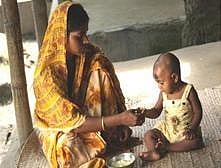
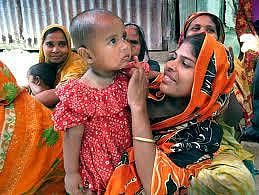
These children are at risk of death much more than a healthy child.
Around 600,000 children are suffering from acute malnutrition in Bangladesh, according to latest statistics.
Only a few can be admitted to a hospital for proper treatment. Even those admitted cannot stay indefinitely for a host of reasons.
So, a home-based approach focussed on frequent feeding of a highly nutritious and energy diet is the best solution.
The International Centre for Diarrhoeal Disease and Research (ICDDR,B) scientists led by nutritionist Dr Tahmeed Ahmed have developed two therapeutic diets to solve the problem.
The diets were revealed during a seminar on Monday in presence of State Minister for Health Zahid Maleque and representatives from the Unicef and DFID.
The announcement of these new diets follows controversies over a commercially available diet called ‘Plumpy Nut’, which is extensively used in Africa.
But a section of Bangladesh’s nutritionists have opposed introduction of 'Plumpy Nut' in this country.
No to 'ready-to-use therapeutic food'
One is based on rice and lentils while the other on chickpeas. Both contain milk powder, soybean oil and micronutrients.
Dr Ahmed said those diets do not contain any water, so can be stored in room temperature for long.
They do not need any cooking or mixing with water. The Unicef and UK Aid supported the research.
Nutriset, a French company, who marketed ' Plumpy Nut' have packaged these diets for the research.
ICDDR,B believes these diets were “a great step forward” in the control of childhood malnutrition in Bangladesh.
They will now be produced in bulk so that they can be available to children suffering from severe acute malnutrition free of cost at community clinics, primary health care outposts operated by NGOs, Upazila Health Complexes and hospitals throughout Bangladesh.
The diets are based on common staple food, which are also widely used in many countries in this region. So, they will also be acceptable for use in India, Nepal, Myanmar, Indonesia and other countries, ICDDR,B hopes.







