Published : 28 Oct 2026, 06:41 PM
Updated : 28 Oct 2026, 06:42 PM


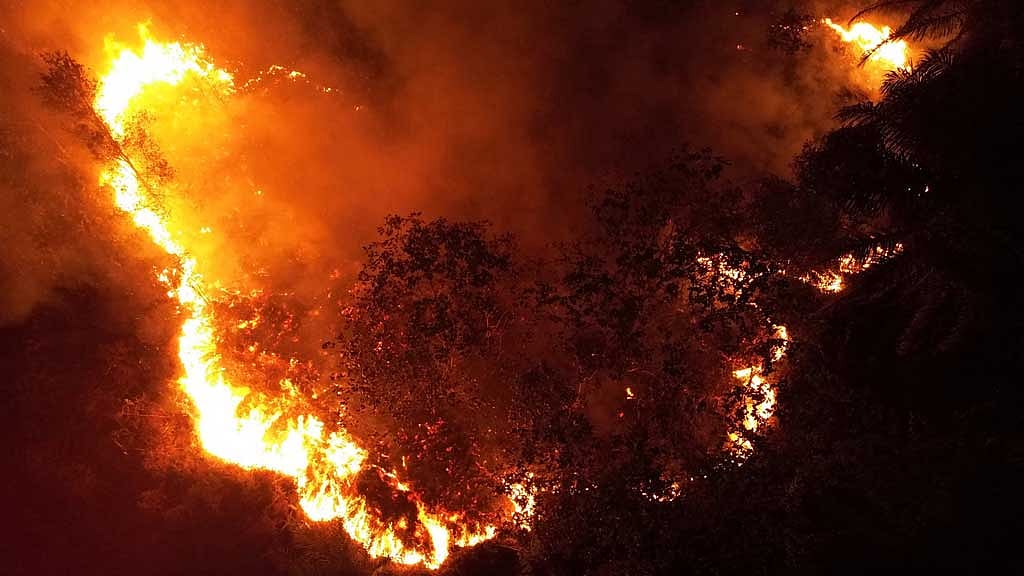
With wildfires becoming larger and more prevalent, a study suggests a link between exposure during pregnancy to harmful particles in smoke from the fires and autism in the women's children. A separate study may have discovered one way in which microplastics in our systems are causing health problems.
Wildfire Smoke in Pregnancy Linked with Autism Risk
Exposure to wildfire smoke during pregnancy, particularly during the second and third trimesters, was linked with a higher risk of autism diagnosis in children, according to a large new study.
Autism diagnoses in the United States have increased significantly in recent decades, intensifying public concern over factors that might contribute to its prevalence.
The new study, published in JAMA Pediatrics, included 893,212 mother-child pairs enrolled in Medicaid — the US and state healthcare programme for lower-income Americans — with children born across the United States between 2007 and 2014.
The researchers analysed estimates of weekly wildfire smoke concentrations for each mother's residential ZIP code, focusing on inhalable particles 2.5 micrometres or smaller in diameter.
Every 0.75-microgram-per-cubic-metre increase in the average concentration of wildfire-related fine particles during pregnancy was associated with a 30 percent higher risk of a child's autism diagnosis by age 8, the researchers found.
Fine-particle pollution from sources other than wildfires was associated with smaller increases in autism diagnosis risk, they also noted.
The study was observational and cannot prove whether or how wildfire smoke causes autism. Its focus on Medicaid enrollees may also limit how broadly the findings apply, given likely socioeconomic differences from the broader population.
Still, the researchers recommend that pregnant women be aware of wildfire events, limit their time outdoors during smoke episodes, check local air-quality reports and follow guidance for sensitive groups when pollution levels are elevated.
More toxic than normal air pollution, wildfire smoke can linger in the air for weeks and travel thousands of miles. Particles can penetrate deep into the lungs and contribute to inflammation throughout the body.
“Exposure may occur even when smoke is not visible,” study leader Stefania Papatheodorou of the Rutgers School of Public Health in New Jersey said in a statement.
She urges healthcare providers to incorporate discussions of environmental hazards into routine prenatal care.
“Sometimes clinicians are not even aware of these risks,” she said.
Microplastics and Water Generate Toxic Molecules
Researchers have uncovered new clues about how the tiny particles of plastic increasingly showing up inside humans and animals might be harming us, which they say may help inform the design of safer and more sustainable plastic materials.
When microplastic particles contact water, the resulting chemical reaction creates highly toxic molecules known as reactive radicals that trigger damaging chain reactions inside the body, the researchers discovered.
This is particularly noteworthy because blood is largely made up of water, they said.
“Our research found that when microplastics interact with water, as they do when they're in bottled water, or when they're absorbed into our bloodstream, they spontaneously generate these high-energy reactive radicals,” Naixin Qian, a postdoctoral researcher at Columbia University, said in a statement.
“These are textbook examples of the kinds of molecules that can damage animal and human tissue.”
In their report in the journal Nature, the researchers said their findings "challenge the prevailing paradigm of plastic inertness (and) identify a possibly overlooked mechanism for the detrimental effects of microplastics on health and the environment."
The data should contribute to a fundamental understanding of how water molecules interact with plastic, they said.