Published : 29 Mar 2026, 07:06 PM
Updated : 21 Aug 2026, 03:31 PM


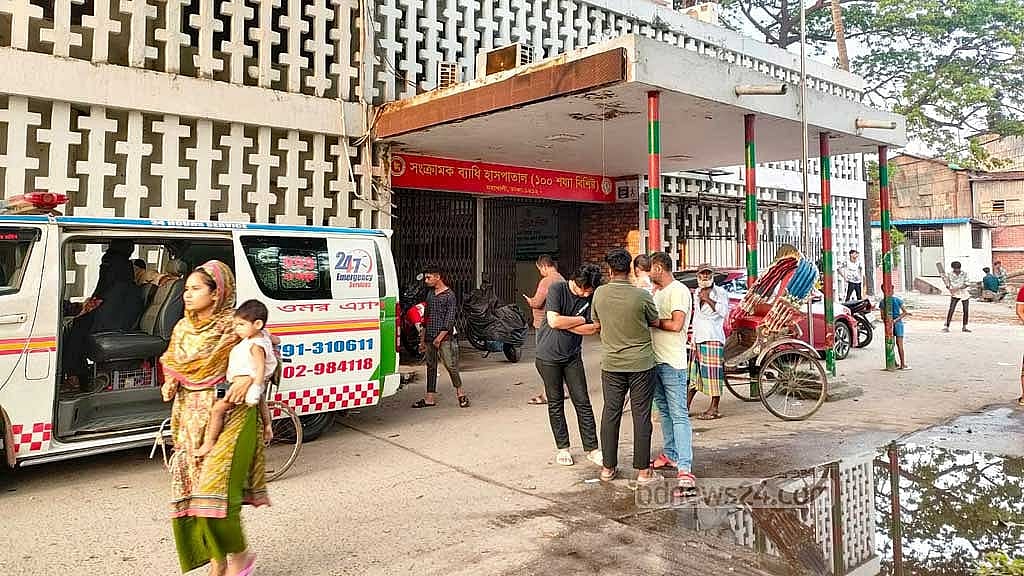
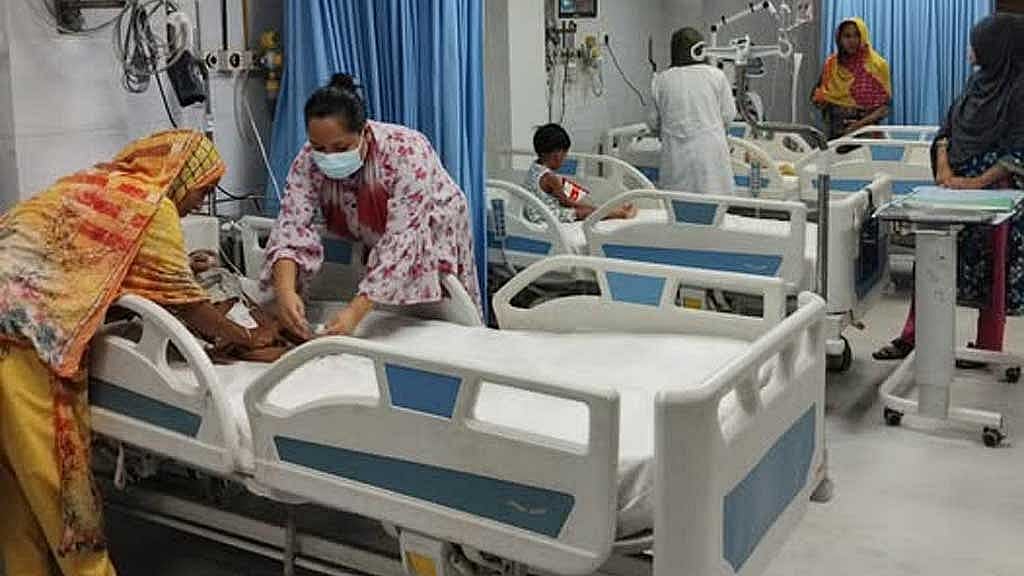
In the narrow corridors of Mohakhali’s Infectious Diseases Hospital, children lie on thin mattresses as anxious parents clutch oxygen masks. Hallways have become makeshift wards, every cough and fevered whimper signalling another life at risk.
With measles spreading rapidly through Dhaka, doctors scramble to contain a crisis growing by the hour, while families watch helplessly as hospitals reach breaking point.
In Mohakhali, children make up the bulk of the admitted patients. By Friday afternoon, over 150 patients were admitted, according to ICU nurse Mahbuba Akter.
She told bdnews24.com, “The measles outbreak is ongoing. Out of the admitted patients, 130 are measles cases, most of them children. Since after Eid, many have been coming in. We are struggling to manage the influx.”
Wards are now fully occupied. With no beds available, patients are being treated on verandas and in the corridors.
A 1-year-old patient from Patuakhali Sadar Upazila, Rafia, has been in the hospital for five days, lying in a third-floor corridor.
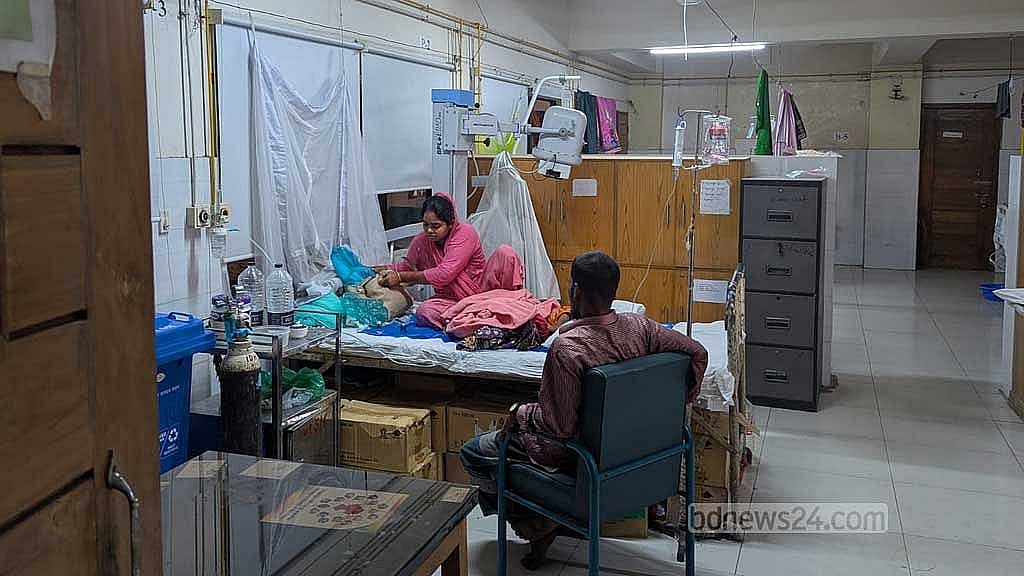
Her mother, Sumaiya Begum, said: “We came to this hospital five days ago. The child’s condition has improved a little. We haven’t gotten a bed, so we are in the corridor.”
Another child from Mirpur 2, Muntaha, is receiving intensive care.
Her aunt, Hena, told bdnews24.com, “Before Eid, the child had pneumonia and was treated in a private hospital. The day before Eid, measles symptoms appeared. Her condition suddenly worsened, so on Eid day we admitted her here.
“She has been in the ICU for three days. Today the doctor said her heart has failed. Now everything is in Allah’s hands.”
Doctors confirm that the severity of cases is also rising, not just the number of patients.
ICU Junior Consultant Dr Tanzina Jahan said on Friday afternoon, “We are struggling with measles patients. One patient came a short while ago with oxygen saturation at 50 percent. We are making every effort to save lives.”
Measles: Symptoms and Treatment
Measles is a highly contagious viral disease, primarily spread through coughing, sneezing, and airborne droplets.
• According to the World Health Organization (WHO), around 9 million people are infected globally each year, with over 100,000 deaths.
• Key symptoms include high fever, cold, cough, red eyes, and a red rash across the body.
• Symptoms appear 10–14 days after exposure, starting with fever of 103–105°F (38-40°C), runny nose, cough, red eyes, and small white spots inside the mouth (Koplik spots).
• After 3–4 days, a reddish rash spreads from the mouth to the entire body.
• Patients can transmit the virus 4 days before and up to 5 days after rash onset.
• Without proper care, complications include pneumonia, brain inflammation (encephalitis), ear infections, or severe dehydration.
There is no specific cure for measles.
Treatment focuses on alleviating symptoms, providing fluids, and vitamin A supplements under medical guidance.
The most effective prevention is timely MMR vaccination: the first dose at nine months, and the second at 15 months.
Infected individuals should be isolated, hydrated with liquids, and promptly receive medical attention if necessary.
Desperate Search for Treatment
On Mar 19, 11-month-old Abdur Rahman from Hajiganj, Chandpur, died at Padma General Hospital.
Relatives said the child first suffered dengue before Ramadan, then received 15–20 days of treatment at Maynamati Hospital in Cumilla. After discharge, he fell ill again with pneumonia and breathing difficulties.
Masum Billah, a relative, said: “Within two to three days of returning home, signs of infection appeared on Rahman’s mouth and body. He stopped eating and drinking.”
After repeated hospital visits, the family brought him to Dhaka, eventually to BIRDEM-2.
Oxygen levels dropped on his first night. He required life support. Despite two nights on life support, he passed away the next morning.
Masum explained, “Abdur Rahman had not received the measles vaccine. When vaccination was scheduled, he had a fever. Vaccines were also reportedly insufficient at the time.”
The family suspects he may have contracted measles from a neighbouring child in the hospital, though no official records confirm this.
“They think the infection could have come from that child,” said Masum.
Why the Outbreak?
Director of Disease Control at the health directorate Dr Md Halimur Rashid said while infections are concentrated in Dhaka, cases have also been reported in Rajshahi and Mymensingh.
“The outbreak began rising since January,” he told bdnews24.com Friday.
“Currently, there may be around 400 cases, though exact figures are unavailable.”
Public health expert Dr Mushtuq Husain believes vaccine shortages are a key factor. Many children who should have received immunity through vaccination did not, creating an opportunity for the virus to spread.
“If vaccines are insufficient, supplies must be replenished immediately,” he said.
Expanded Programme on Immunization (EPI) deputy director Dr. Mohammad Shahriar Sajjad added that while there is no immediate vaccine crisis, routine supply uncertainties persist.
“We have ample campaign vaccines. Routine vaccination will continue when supplies arrive; if delayed, campaign vaccines can temporarily fill the gap.”
Dr Shahriar expressed concern over rising infections among children under nine months, who are not yet eligible for vaccination.
“This trend is observed not only in Bangladesh but also in neighbouring countries. Experts are evaluating whether the vaccination schedule should be advanced.”
He noted additional factors may include reduced exclusive breastfeeding, malnutrition, vitamin deficiencies, and increased post-Eid travel, all contributing to the spread.
“A single measles patient can infect 13–18 others. Post-Eid travel likely fueled this surge,” Dr Shahriar said.
Authorities have instructed hospitals to keep isolation wards ready and maintain full preparedness for treatment and prevention.
Samples have also been sent abroad to identify any new viral strains or genomes. A specialist review committee is scheduled for Apr 5 to make further determinations.
Containment Measures
Dr Mushtuq emphasised that beyond vaccination, containment requires strict measures:
• Children with measles must remain home, avoiding school or outdoor exposure
• Poor families are particularly vulnerable; community-level isolation and care for mother and child together are essential
• Provision of food, basic support, and health worker follow-up at home is critical
“Rapid vaccination and community-based isolation are key to reducing transmission,” he said.
Expanding ICUs and Vaccine Efforts
On Mar 17, the health ministry announced that the ICU at the Infectious Diseases Hospital had been made operational within 24 hours.
The ICU, previously closed under the ERPP project and Global Fund support, now operates as a five-bed unit with three doctors, a junior consultant, an anaesthetist, and full equipment.
Meanwhile, DNCC Hospital has been prepared to accommodate measles patients, while ICUs and wards are being expanded elsewhere to prevent treatment delays.
Health Minister Sardar Sakhawat Husain Bakul said, “This is not simply a result of temporary vaccine shortages. There have been chronic gaps in collection and supply for years.
“We are working urgently to procure vaccines and enhance ICU and ward capacity. Measles services are also being initiated in dedicated DNCC facilities and other locations.”