


Published : 20 Apr 2016, 01:19 AM
Updated : 11 Apr 2022, 09:50 PM


This would surpass the previous record of 119 signatures on an opening day of signing of an international agreement as was set by the Law of the Sea, in Montego Bay, in 1982.
Selwin Hart, Director of the UN Secretary General's Climate Support team, said in a video conference from New York on Tuesday that the signing would be the “first step” toward ensuring last December’s Paris agreement comes into force as early as possible.
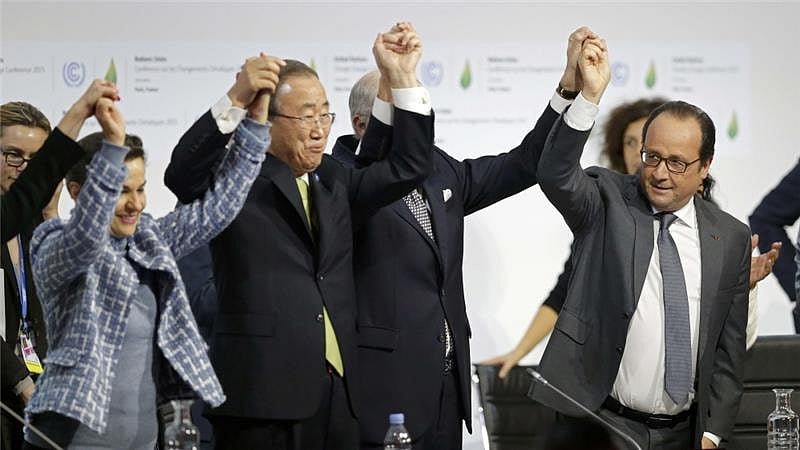
The historic agreement, reached after years of negotiations, provides a pathway for countries to reduce emissions so that global temperature rise is kept below 2 degrees Celsius.
The agreement has to be signed and ratified by the countries.
Heads of State and Government will attend the signing ceremony hosted by Secretary-General Ban Ki-moon at the UN headquarters in New York.
Environment and Forests Minister Anwar Hossain Manju will represent Bangladesh.
Hart, in the video conference attended by Dhaka journalists as well at the UN Information Centre, said the agreement demonstrated the political commitment of the countries to address climate change.
He said small island countries that are the most climate-vulnerable also deposit their instruments of ratification with the signing.
“It shows their confidence on this agreement,” Hart said, despite the fact that developing countries like Bangladesh were not major contributors to climate change.
“Climate change is a global challenge and its impact is local. If countries around the world don’t reduce carbon emission and address climate change, the impact will be severe locally.”
He said developed countries should take the lead in fighting climate change, while all countries join the efforts.
“The developing countries’ efforts must be supported through finance and capacity building,” he said, sounding optimistic about poorer countries getting funds from richer nations.
“I am confident,” he said, as analysts maintain the success of the Paris deal rests on solving the money question – whether the industrial nations would live up to their promise.
Six years ago, those rich nations had promised to mobilise $100 billion by 2020 to help developing nations cut greenhouse-gas emissions and adapt to the effects of climate change.













