


Published : 01 Nov 2021, 09:23 PM
Updated : 14 Oct 2022, 07:01 PM


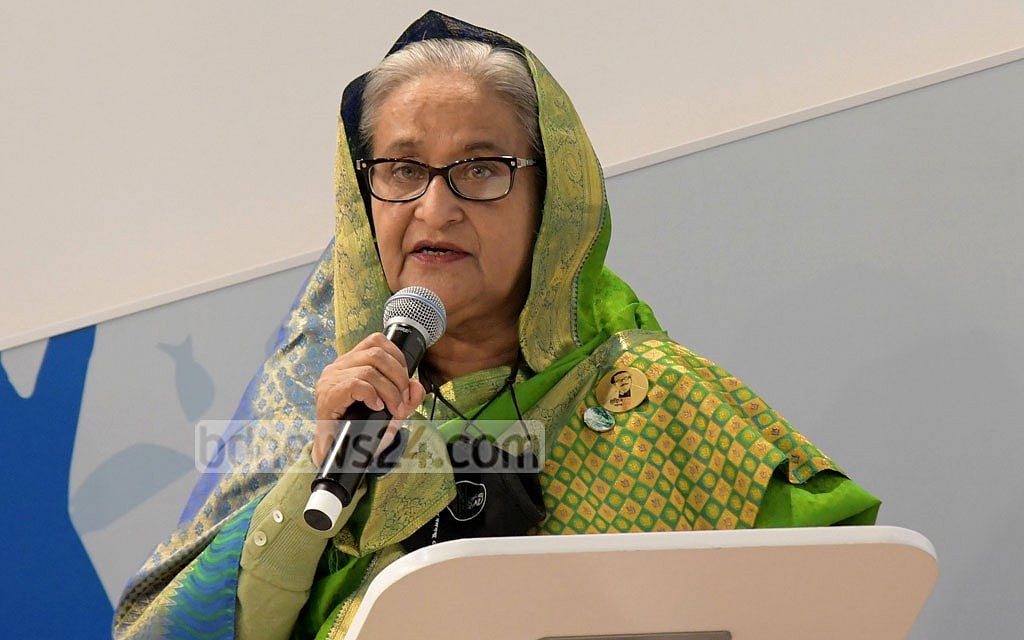
She says 48 poorer nations, who are members of the Climate Vulnerable Forum, are exposed to the worst despite the fact they account for only 5 percent of global carbon emission.
Climate change poses “fundamental threats to our lives and livelihoods” which could be negated by adequate and promised financing alongside technology transfer by richer nations, said Hasina, head of the CVF, BSS reports.
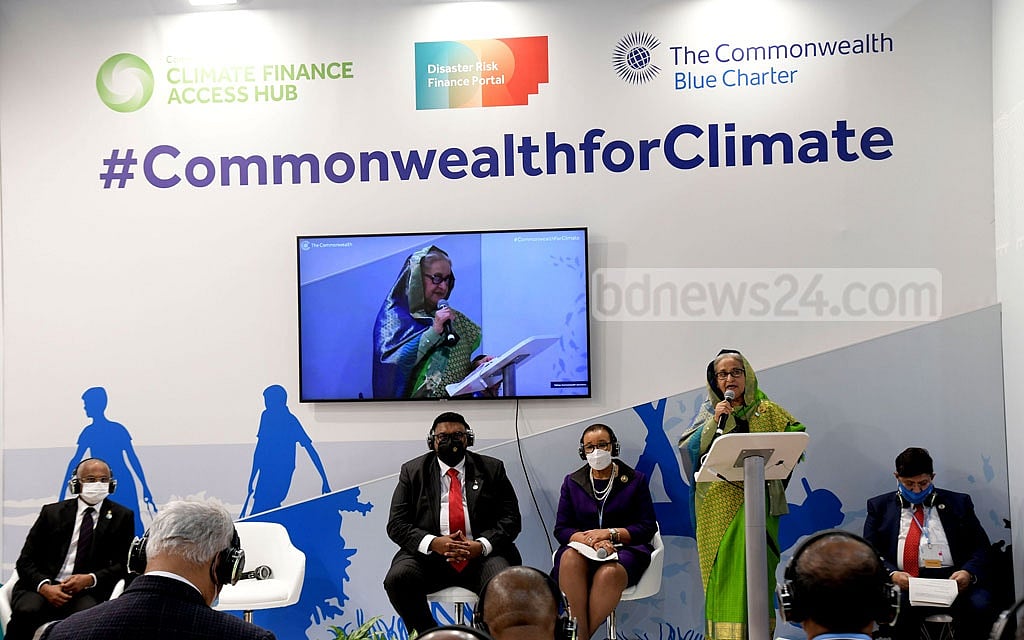
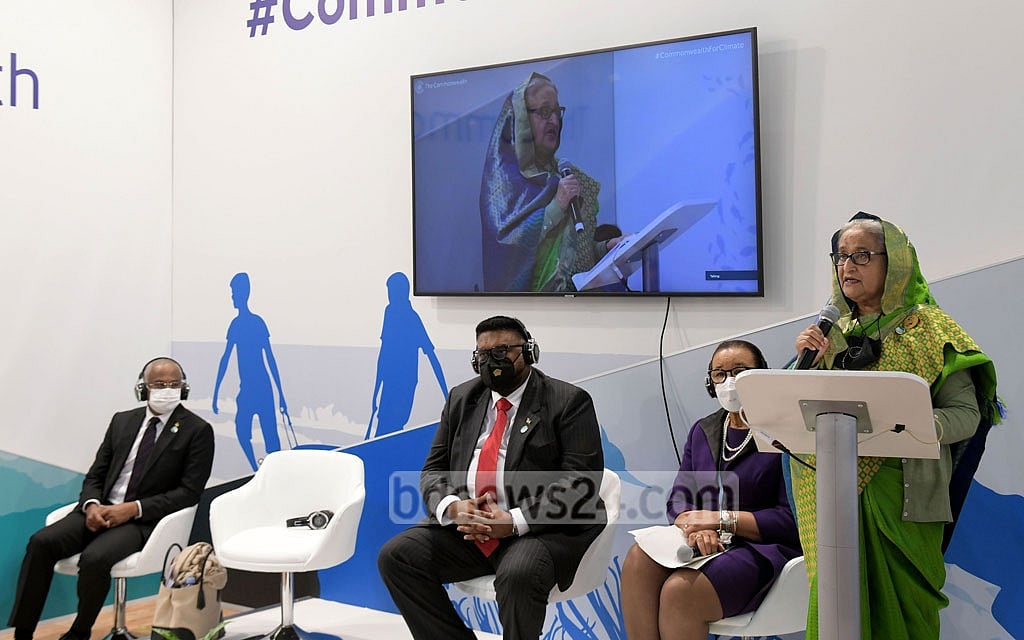
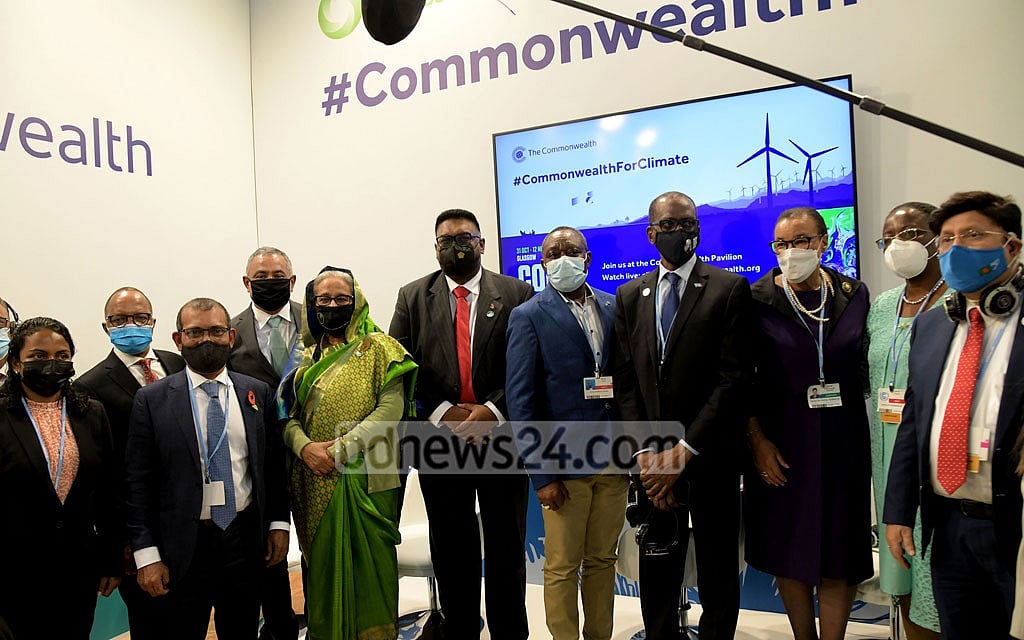
She was speaking at a CVF-Commonwealth high-level panel discussion on climate prosperity partnership on the sidelines of COP26, United Nations climate change conference, in Glasgow on Monday.
“Our (CVF nations’) vulnerability and necessity for adequate climate finance and technology transfer must be recognised by the international community,” she said.
The prime minister said the industrialised countries that account for most of global carbon emission need to fulfil “their obligations to support us in our efforts to cope with the effects of climate change”.
A common position of the climate summit could help the poorer nations secure the $100 billion annual financing to fight the effects of climate change as promised in the 2015 Paris summit.
The financing must be in addition to the existing and future overseas development assistance, she said. Bangladesh has pushed for 50 percent of the fund for adaptation and the rest for mitigation.
Hasina is the incumbent chair of the CVF which unites developing nations from Africa, Asia and Latin America while the grouping wants countries to ramp up their plans for emission cuts at every annual UN climate summit through to 2025.
The CVF campaigns to meet the 2015 Paris Agreement goal to limit global warming to 1.5 degrees Celsius this century.
But close to 50 of 190 countries, which signed the accord, are yet to submit new or updated emissions reduction goals and among those who submitted their plans, a few large emitters show low -- or no -- fresh ambition.
Hasina said Bangladesh is often referred to as the “Ground Zero” for adverse impacts of climate change and despite its vulnerabilities and resource crunch, it has taken exemplary initiatives to tackle climate change. It also submitted an ambitious and updated Nationally Determined Contributions to the United Nations Framework Convention on Climate Change.
The prime minister asked the COP26 to find pragmatic, inclusive and locally-led solutions alongside a joint move of CVF and the Commonwealth countries to implement the Paris Agreement in tackling the climate change onslaughts, according to the BSS report.
She reminded the world leaders that climate change is a global and cross-border issue now and no country is immune from its “grave consequences” while the COVID-19 pandemic proved the crucial need for effective cooperation and collaboration, and robust, bold and responsive actions.
But, she said, the increasing number of climate disasters and their impacts brought the most vulnerable countries to a tipping point of irreparable damage, which is affecting global food, energy, health and economic securities.
Hasina noted the recent Intergovernmental Panel on Climate Change report gave a clear message that all have to take urgent and decisive actions to save the planet for future generations.
The world has already heated up by just over 1C from preindustrial times and is set for a warming of close to 3C, even if emissions-cutting pledges made so far are delivered, the UN has warned.
Hasina pointed out that over one-third of the CVF member states are members of the Commonwealth, which, she said had a history of commitment and contribution in addressing climate change challenges.
“I firmly believe that the joint efforts of the CVF and the Commonwealth members can act as a catalyst for the implementation of the Paris Agreement.”
The prime minister sought increased knowledge-sharing, research and capacity-building and technology transfer among them to achieve sustainable, green and nature-based solutions to the climate crisis.
Climate change intensified migration, forcing people to move away from their ancestral homes and traditional jobs due to sea-level rise, increasing salinity, river erosion, floods and droughts.
“There has to be global responsibility for rehabilitation of these people,” Hasina said.
United actions of the CVF nations can act as a force for the major emitters to declare ambitious and aggressive NDCs to keep the global temperature rise at 1.5 degrees Celsius, the prime minister said.
She said the transfer of clean and green technology transfer to developing countries at affordable costs, including for meeting energy requirements, is very important.
“Finally, together we must try to find out pragmatic, inclusive and locally-led solutions to tackle climate change.”
[With details from BSS]







