


Published : 18 Oct 2021, 01:02 AM
Updated : 14 Oct 2022, 07:00 PM



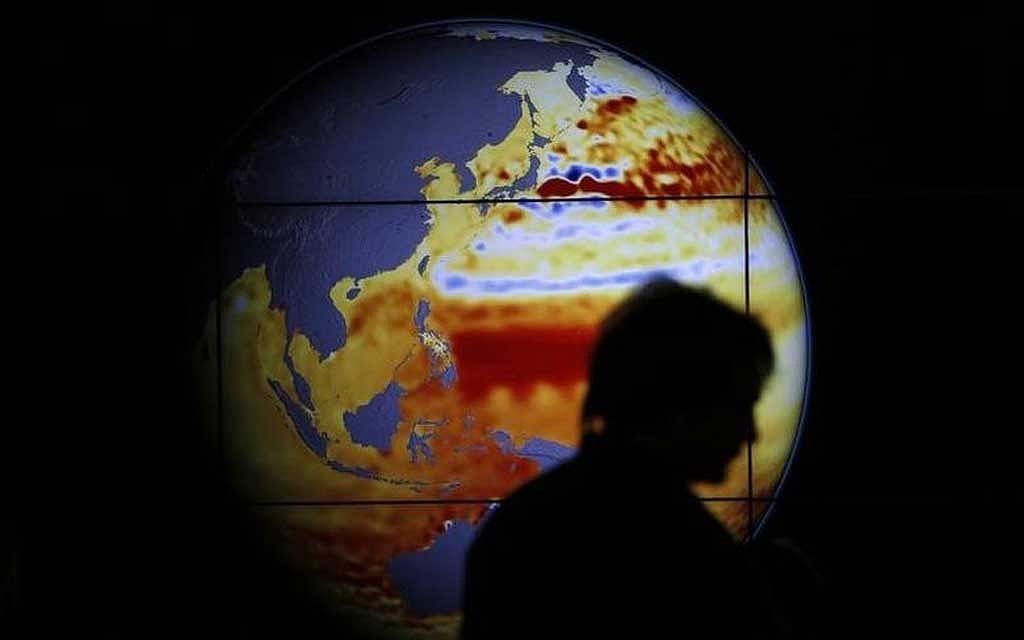
Bangladesh ranks among the countries most vulnerable to the adverse effects of climate change and so it must now make a serious and concerted push to hold developed nations to account over their pledges on greenhouse gas emissions to avert a catastrophe, according to an expert.
In an interview with bdnews24.com, Dr Ahsan Uddin Ahmed, a member of the independent technical advisory panel of the Green Climate Fund, discussed the urgent need for climate action and the challenges ahead of the 2021 United Nations Climate Change Conference, also known as COP26.
Securing global net-zero by midcentury and keeping the goal to limit global warming to 1.5 degrees Celsius within reach, adapting to protect communities and natural habitats, mobilising finance, and working together to deliver are among the main agendas of the Glasgow conference.
But Dr Ahsan believes the focus will shift to reducing the gap between the pledges of the developed world and the expectations of the vulnerable nations.
He sees no reason to consider the conference just as talks. He says Bangladesh’s approach must be "diplomatic, serious and multidimensional”.
The researcher is, however, frustrated as he sees no possibility yet on major progress in achieving the goals to protect the vulnerable nations from the effects of climate change during COP26.
The world needs to be more ambitious to put a check on global warming, Dr Ahsan said.
“We have failed to meet expectations and the discussion didn’t progress at all. A goal was to be set for adaptation but the countries with a strong economy had zero participation in it.”
“Advance information shows that the report won’t be a strong or detailed one. We presume the presentation of information on reducing the climate damage will be quite weak.”
“And that gives us an impression that we are going to fail to meet our expectations. We have been falling behind at least for 10-15 years in achieving our goal.”
Even if the countries aim for an ambitious goal to reduce emission based on the Paris Agreement, the borderline for rising global temperature has been set at 2.7 degrees Celsius by 2050, according to the data. There is no realistic chance of lowering the target any further.
“We’ll probably fail to reach the 2050 target if every country works in its own way. This shows that our ambitious endeavours are not enough. We are supposed to ensure the rate of global warming remains below 2 degrees Celsius until 2100, but that target will be surpassed by 2050. The world will definitely move towards a severe catastrophe.”
FINANCE AND NEGOTIATION
A global agreement was made years ago for the developed countries to provide 0.7 percent of their average national income in compensation to the poor countries with a fragile economy, who had been colonised and stripped of resources over centuries, as long as global poverty had not alleviated, said Dr Ahsan.
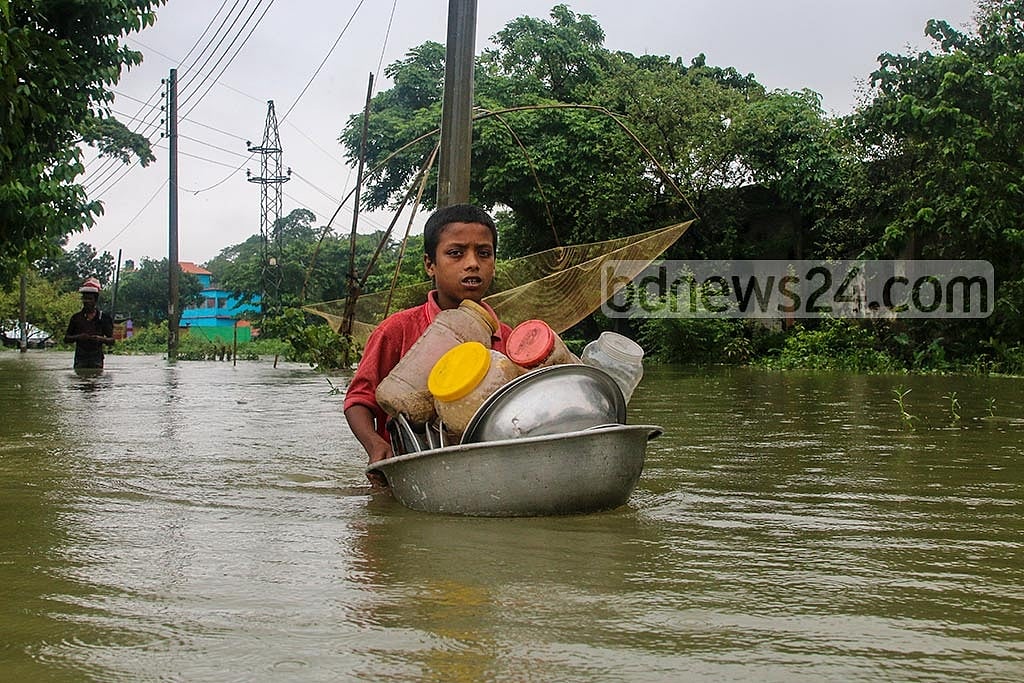
Vast crop fields are deluged. Locals are worried about their future as they have lost their crops.
“As of now, the funding is stuck below $80 billion and at least three-fourth of the amount is given to the corporate sector,” he said.
“Therefore, developing countries are not getting the funds to facilitate state-run initiatives focussing on adaptation."
“Half of the fund should be used for adaptation, but no one is paying any heed to it. Globally, funding for adaptation hovers around 13 percent. This is not acceptable. The disparity in funding shows that the full amount, if donated every year, would propel the adaptation work further,” he said.
The nominal funds allocated for adaptation work is mostly spent in the Asia Pacific region, according to him. "Africa, however, is suffering from drought or flood multiple times a year and needs immediate funding to save its agriculture and to rebuild people’s livelihood. But not enough importance has been given there.”
“Therefore, the developing countries are troubled by the lack of funds along with disagreements and differences of opinion over funding. Their troubles are lingering,” Ahsan said.
Ahsan pointed out that funding is the most essential tool in the fight against climate change followed by the use of technology.
"Now, this technology has been researched and developed by rich countries. We’ll be cornered if they want to sell that technology at a high cost. So we need assistance there as well.”
“In this case, there will be a small reduction carbon emission reduction as we won’t have interest in buying the expensive technology. The developed countries will blame us, saying they wanted to sell the technology but we are not buying. This blame game will continue forever.”
WHAT BANGLADESH CAN DO
To protect its interests, Bangladesh, as a developing country expecting cooperation, must enhance its image in the global arena and provide detailed accounts of the challenges it faces, Dr Ahsan said.
“We have to be prepared. We have to reiterate the issues we’re well aware of. We have to talk about assistance, climate disaster and at the same time, we have to work together with them,” he said.
“The international community will listen to us only if we present ourselves in a good light. They won’t listen if we just hang around the conferences. We’ll have to return empty-handed instead of getting help if our statements and our analysis are not detailed and interesting,” Dr Ahsan said.
The expert also suggested highlighting Bangladesh’s work in the climate sector.
“We have to participate, raise our voice and point to the fact that we’re trying our best [to fight climate change],” said Dr Ahsan, a member of the Green Climate Fund.
He recommended intense climate diplomacy and training and courses to the stakeholders if needed.
Ahsan stressed the need to focus on climate diplomacy and if necessary, to provide training and courses to officials on the key issues and challenges at hand.
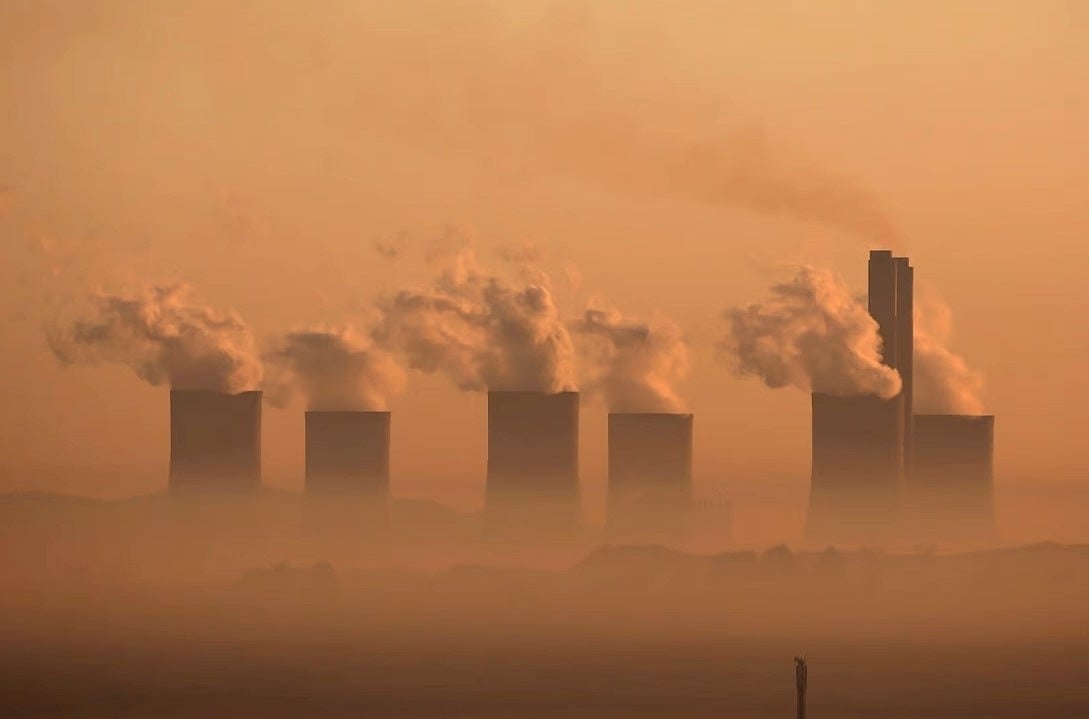
Steam rises at sunrise from the Lethabo Power Station, a coal-fired power station owned by state power utility Eskom near Sasolburg, South Africa, March 2, 2016. Reuters
Bangladesh should consider how much information should be disseminated to the public as well as ways to involve them in the fight against climate change before it heads to the COP26, according to Ahsan.










