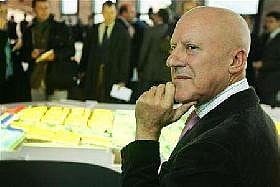
Architect Foster sees future in green desert city
Imagine a city of 50,000 with no cars, no carbon, no waste, a green city of the future. Now imagine it in the Gulf desert, where summer temperatures can hit 50 degrees and 24-hour air conditioning is a way of life.
bdnews24.com News Service
bdnews24.com
Published :
23 Jan 2008, 06:03 PM
Updated :
24 Apr 2022, 08:06 PM
Lin Noueihed
DUBAI, Jan 23 (bdnews24.com/Reuters) - Imagine a city of 50,000 with no cars, no carbon, no waste, a green city of the future. Now imagine it in the Gulf desert, where summer temperatures can hit 50 degrees and 24-hour air conditioning is a way of life.
British architect Norman Foster has his work cut out in Masdar City, a project the Abu Dhabi government hopes will bring the United Arab Emirates' carbon footprint down to size.
"We are involved in a number of projects in Abu Dhabi and this is
without question the most idealistic. It is probably the most
idealistic project in the world today and the most relevant to any
conferences from Kyoto to Davos," Foster told Reuters.
"This is not about fashion, this is about survival."
The rapid economic growth of the United Arab Emirates and fellow Gulf Arab countries flush from record oil prices comes at a time of
mounting international concern over climate change.
The UAE is among the highest per capita emitters of greenhouse gas in the world but the capital Abu Dhabi announced on Monday it would be investing $15 billion in developing renewable and clean energy, including Masdar City, scheduled to be built in seven phases from 2008 to 2018.
To do that in a desert climate is no mean task and the formidable
Foster, whose firm is behind a slew of famous designs from London's Millennium Bridge to Berlin's rebuilt Reichstag, says he went back to basics in designing Abu Dhabi's green city.
"This is a specific response to a place that is more climatically
demanding in terms of achieving zero carbon. It is more difficult in
the desert than in temperate environments. it would be easier in the
Mediterranean or northern Europe," he said in a telephone interview.
"But I think it is all about working with nature, working with the
elements and learning from traditional models."
Masdar will be a walled city in traditional Arab style. With no cars
allowed, it will be a compact city, with narrow, shaded streets
amenable to walking, not dissimilar to the way urban spaces were
traditionally organized to shelter shoppers and pedestrians from the
harsh sun of the Middle East.
It will also feature eco-friendly transport systems to ferry people
around, including a light railway, unusual in a part of the world
where public transport is minimal and people rely heavily on big cars.
Rather than spreading out buildings, which is common in Gulf Arab
countries that have plenty of empty desert to work with, Masdar will
go for density not sprawl.
It will draw its power from solar panels in a part of the world with
year-round sunshine, will harness wind and thermal power and rely on photovoltaic farms, all with the aim of making it self-sustaining.
"Take Venice. You don't feel any deprivation in Venice because there are no cars. Quite the reverse. It is so attractive it is in danger
from being too popular," Foster said.
"We are talking about the technology to do more with less."
bdnews24.com/fmk/2317hours