Published : 07 Aug 2026, 02:47 AM
Updated : 08 Sep 2026, 11:24 AM


Wanting to act in plays, he fashioned a screen from his mother's saree at the age of 10 and put up a stage; the pull, though, had taken root even earlier, sitting in his mother's lap and watching plays unfold.
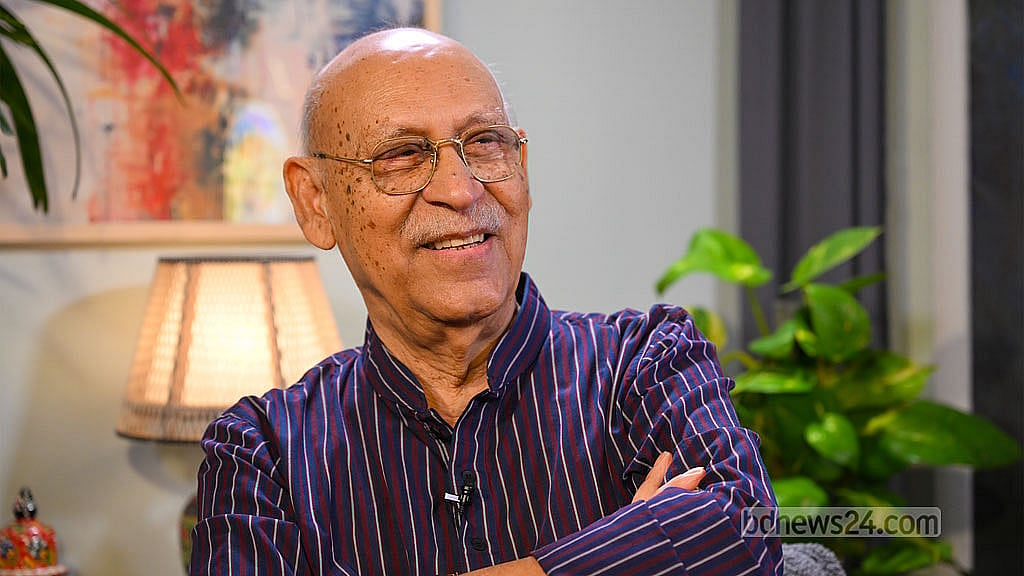
He is Abul Hayat, the commanding actor of stage and screen.
His story begins in 1965, at Chattogram Radio. Over the following decades, he worked tirelessly across stage and television.
Amid all this, he made his big-screen debut under celebrated filmmaker Ritwik Ghatak.
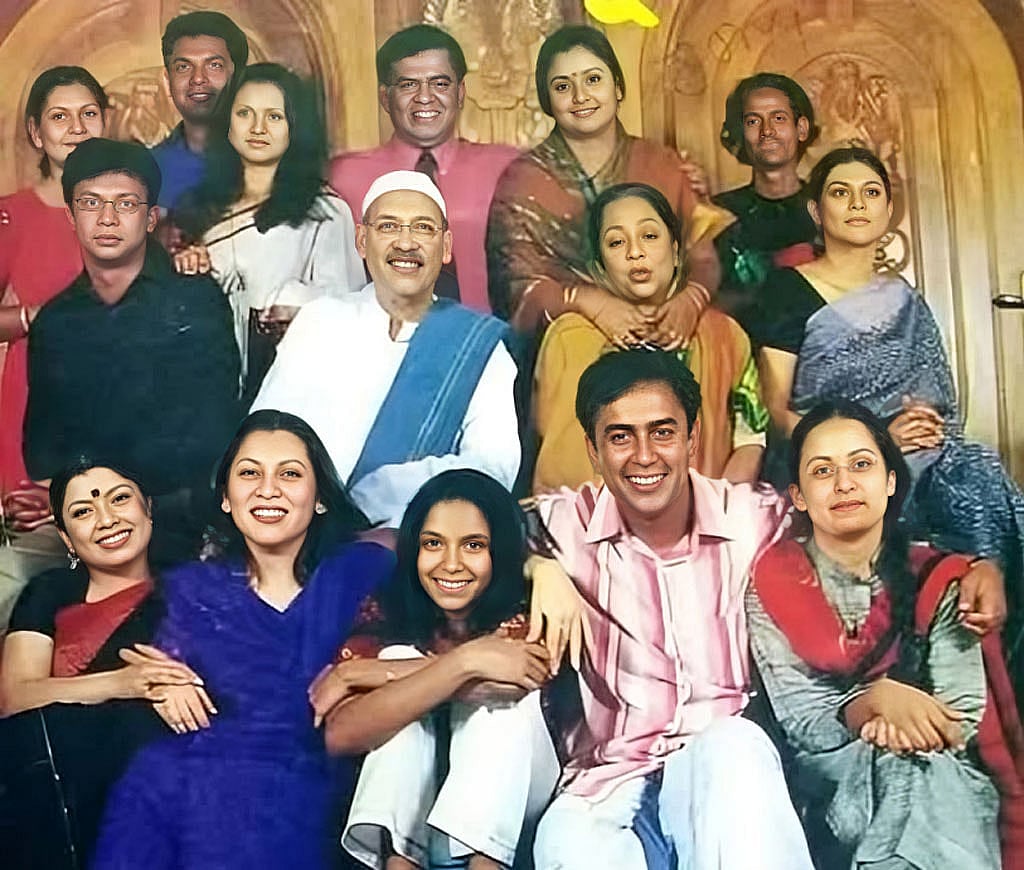
To a generation of viewers in Bangladesh, he is a familiar face for playing the father in television dramas.
But the natural-born character actor has no complaints about that; by his own reckoning, he has always been the “hero”.
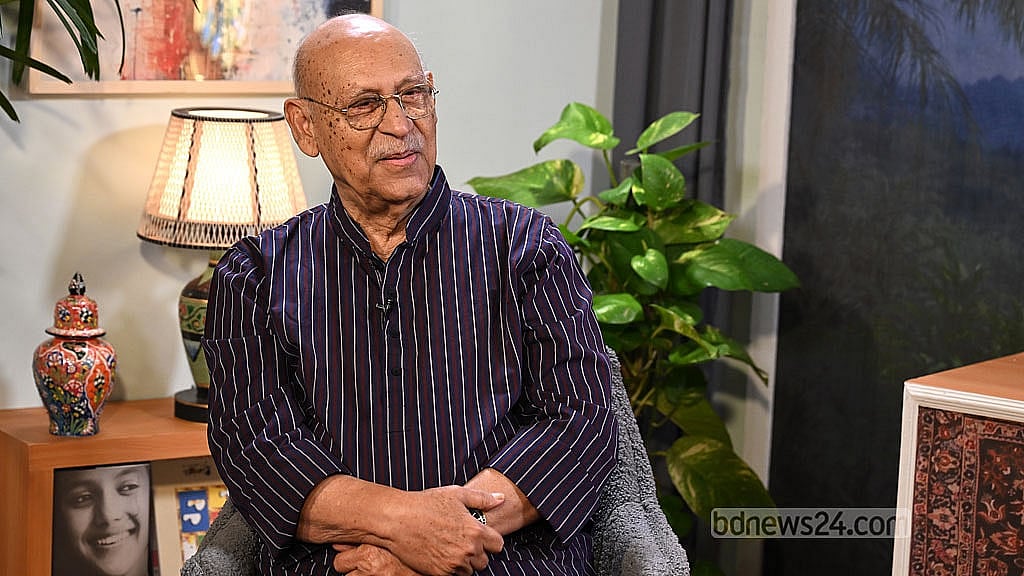
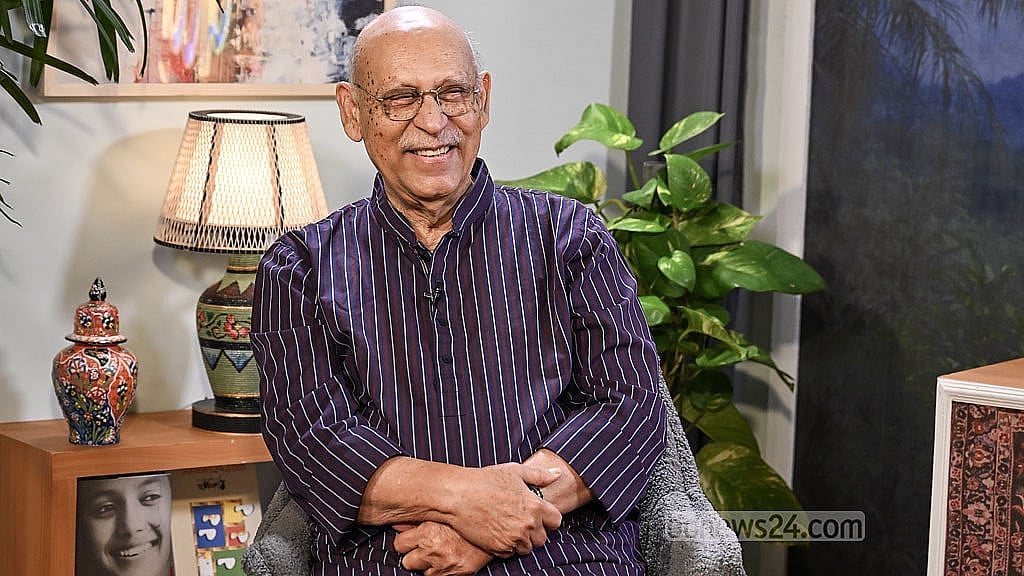
Appearing as a guest on bdnews24.com’s Glitz interview series “Adda Nama”, Abul Hayat shared fragments of his life story and his philosophy of working for joy.
His life story in the interview begins from age 3.
He spoke of family, kin and the roots of his cultural sensibility.
Despite working across so many mediums, he spoke of why he still considers theatre his roots, and why the television screen feels closest to his heart.
Abul Hayat did not speak only of himself; his story is threaded through with references to predecessors and contemporaries alike.
He recalled events surrounding the birth of his daughter Bipasha Hayat, when he himself lay critically ill, and revealed the secret behind staying energetic even at 82.
"Adda Nama”, hosted by actress Nima Rahman and supported by Alok Healthcare and Hospital, premiered on Thursday night.
The programme is available on bdnews24.com's website, as well as on Facebook, YouTube and Instagram.
'The Engine Hooted, and I Leapt Into My Mother's Lap'
Born on Sept 7, 1944, Abul Hayat was only 3 when his family moved to Chattogram during the Partition.
"I understood nothing back then. All I understood was this much, that we boarded a train with our belongings, a black engine let out a loud hoot, and I screamed and leapt into my mother's lap.
“That's the only image I have from when I was three."
Though he does not remember the train journey itself, the actor still vividly recalls the steamer ride from Goalanda to Chandpur.
From there, it was straight to Chattogram, where his childhood and adolescence unfolded.
His father Khondkar Mohammad Abdus Salam and mother Shamsun Nahar Begum raised four daughters and a son in a household steeped in culture.
In Abul Hayat's words, his father, who worked as a railway office superintendent, was a man mad about theatre.
He served as general secretary of the Railway Employees' Club's Waziullah Institute, and was the lead organiser behind every cultural event in the Chattogram railway colony.
It was his father's inspiration that drew Abul Hayat into the cultural sphere, and to this day, he considers his father his life's role model.
A Screen From His Mother's Saree
At 10, Abul Hayat was captivated by actor Amalendu Biswas's stage presence at the Chattogram railway colony's theatre.
"I would often watch this man on stage. I can never forget him. His name was Amalendu Biswas. A man on stage, with a booming voice, a striking face, a distinct walk, a distinct build!
“I would think, my God, how does this man do it! Everyone applauded him, applauded his acting. That's when I thought, well, we could do this too.
"So my friend Mintu, that is, Jamaluddin Hossain, and I, we grew up in the same neighbourhood since childhood, decided to put on a play together. An uncle at home found us a play script, ‘Chhotoder Tipu Sultan’."
The two young actors then built their own stage at home, using a wooden cot, a mat, his mother's saree as a screen, and a bedsheet as a curtain.
They staged "Chhotoder Tipu Sultan" themselves.
He was 10; his love affair with theatre had only just begun.
Abul Hayat's first formal stage appearance came later, while in class ten, with the play “Kolir Jinn”.
Explaining how acting entered his blood, the veteran actor looked back six or seven decades.
"How culturally rich we were! Every year, every area of the railway held a variety programme. Those events inspired us. Practising songs, drama and comedy among ourselves, acting seeped into our blood."
'Theatre Was Thriving At BUET'
After finishing school and college in Chattogram, Abul Hayat moved to Dhaka, enrolling at the Bangladesh University of Engineering and Technology (BUET) to study civil engineering.
His passion for theatre only deepened during his time there.
He said theatre was "thriving" at BUET, with a group of friends, including Jamaluddin, Sirajul Mazid Mamun, Abul Kasem and Golam Rabbani, regularly practising drama together.
After every staging, they would sit in restaurants for hours analysing the performance.
His last play during his BUET years was Rabindranath Tagore's “Shesh Rokkha”.
He joked: "Back then, people would see us and say, 'There goes the Ghetu party crowd.'"
'We All Became Nagorik'
Abul Hayat's next turn came with Chattogram Radio in 1965, followed by a stint at Dhaka Radio, where he read the news for seven days.
Within three years, in 1968, he made his connection with the medium that would come to define his acting career.
He would even think that if he could sustain himself purely by acting on television, who would bother with a job!
As he spoke of television, the host steered him back to stage drama.
Abul Hayat said around the time he started in television, he heard Nagorik Natya Sampradaya was looking for artistes.
"Playwrights Zia Ansari and Ataur Rahman were both looking for people to form a group. They roped in me, Enam Ahmed, Enamul Haque, [Rabbani] and a few others. We would attend meetings, sit at the back.
“Then I saw how much labour pain goes into forming a group! Quarrels, near-fights, that sort of thing. Then the group fell apart before it was even properly formed. Half of it broke away, half stayed.
"So Zia Bhai and Ata Bhai asked us 'Will you stay with us or not?' I turned to Enam Bhai and asked what he thought. Enam Bhai said 'I'll stay’. I said, then I'll stay too. Rabbani Bhai said 'I'll stay as well’.
“So we all became Nagorik."
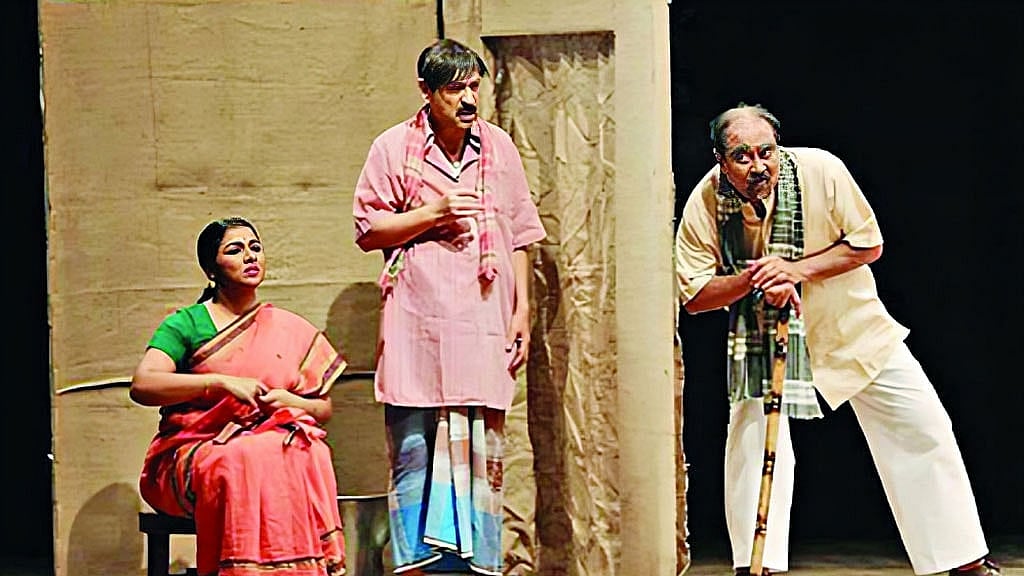
They brought their productions to the stage after independence, in 1972. Working on plays like "Buro Shalikher Ghade Ro" and “Baki Itihash”, he became a regular stage actor.
It was his performance in "Baki Itihash" that earned Abul Hayat his first recognition, the Sequence Award of Merit.
He went on to act in popular stage plays including “Bohipir”, "Dewan Gazir Kissa”, “Ochalayatan”, “Mukhosh” and “Mother Courage”.

Abul Hayat recalled an incident tied to “Bohipir”.
He said the play, one of his stronger works, had run for 10 or 15 shows before being shut down over entertainment tax.
"A magistrate came into the hall. Two policemen marched in with rifles in hand. He said ‘Stop the play’. Our children, Bipasha and Shomi, got frightened seeing police. So we halted the play and sat there.
"Later I requested him ‘Let us at least finish the play’. After we finished, he came to the makeup room and said ‘You people dodge taxes worth crores. You're earning so much money, this can't go on. It's shut down’.”
Abul Hayat still regrets the abrupt closure of “Bohipir”, calling it “an utterly needless act”.
Around that time, the Mahila Samity premises on Bailey Road had its doors locked, a restriction lifted only after Bangabandhu Sheikh Mujibur Rahman intervened.
The actor said, "All theatre was shut down, Mahila Samity was shut down. The only option left was to go to Bangabandhu directly. Everyone knew he loved theatre.
“So we went to him as a group. Bangabandhu said 'What! My boys want to do theatre, and there's a tax on that? Go!' With that single word, Jatra was freed of tax too."
Working 'Flat Out' on Stage, Television
Because of his love for theatre, Abul Hayat sought a job that wouldn't involve transfers, and he found exactly that.
"I was working at Dhaka [Water Supply and Sewerage Authority] then. I actively pursued that WASA job, even though I had several other offers, but most of them were outside Dhaka.
“I said no, whatever the job, I need to stay in Dhaka. So the WASA job suited me perfectly, since it had no transfers out of Dhaka."
He later resigned from that government post to devote more time to acting.
He briefly moved abroad for work at one point, but returned home, drawn back by theatre, since by then acting had become inseparable from his life.
He never wanted to leave the capital to keep his theatre practice going.
He later joined the private sector at 10 times his previous salary, which eased his life considerably.
Abul Hayat said that across his long acting career, he devoted the most time to television.
"In our group, I was the only one who worked flat out on both stage and television together."
He also faced plenty of criticism from friends for working in television.
"Many of my friends used to curse me out for acting on television, and later many of them scrambled to get into television themselves. I remember all of that.
“Anyway, I always thought, ah, if only acting on television alone could sustain a livelihood, who would bother with a job."
‘I Look Better Without Hair’
Abul Hayat's big-screen debut came in celebrated filmmaker Ritwik's “Titas Ekti Nodir Naam”.
Describing the moment, the actor said: "It began under a famous man's hand, that too was luck."
Actor Syed Hasan Imam connected him with Ritwik.
"Hasan Bhai came to me and asked 'Hayat, will you do films?' I had never once thought I would act in films or become a film artiste. He said ‘Ritwik Babu is here, come let him take a look at you’. I leapt at it."
At FDC, Abul Hayat had to wait a long while in makeup.
"He was busy shooting for about an hour. Then he came and asked 'Where's that boy? Where's that boy?' I was sitting there with my hair done and makeup on.
“He looked at me, held my chin, turned my face this way and that, then yanked off the wig on my head. He said ‘You look better without hair, you look like a Zamindar with it, lose the hair. Pass, go’.
“I passed. I was in the film.”
Soon after, an offer came for Rajen Tarafdar's “Palanka”.
Abul Hayat went on to act in films by Baby Islam, Majed Mallick, Subhash Dutta and Kazi Zahir.
‘The Hero'
A generation has mostly seen Abul Hayat play father figures. The host asked him: "Did you ever want to be the hero?"
Abul Hayat's quick reply, "I've always been the hero."
He said that in dramas, he has played actress Ferdousi Rahman's husband in one, a father in another.
He played father to Suborna Mustafa in her first television drama, “Idiot”, while in “Aaj Robibar”, he played her love interest.
Similarly, alongside the late actress Sharmili Ahmed, he played both her father and her son in two separate dramas.
"Many actors refuse to play the father, or something like that. I never had that problem. I always leaned more towards character acting, because for an artiste, what matters is how convincingly you can make your character believable to the audience.
“So everything depends on how much I can deliver through my body language, my dialogue, my delivery."
How did he master this "natural, effortless" acting style?
He said, "Honestly, there's nothing to master, it's God-given. I always say it's God-given.
"When I was in Class 10, I worked on stage with my father. All the big artistes on that stage, my father's contemporaries, watched me act.
“They told my father ‘Your son acts so well, it doesn't even feel like acting’. I truly understood this when I started working with Zia Bhai [playwright Zia Ansari].
“Learned people say that the biggest compliment is when your acting doesn't feel like acting at all."
'Joy In Work'
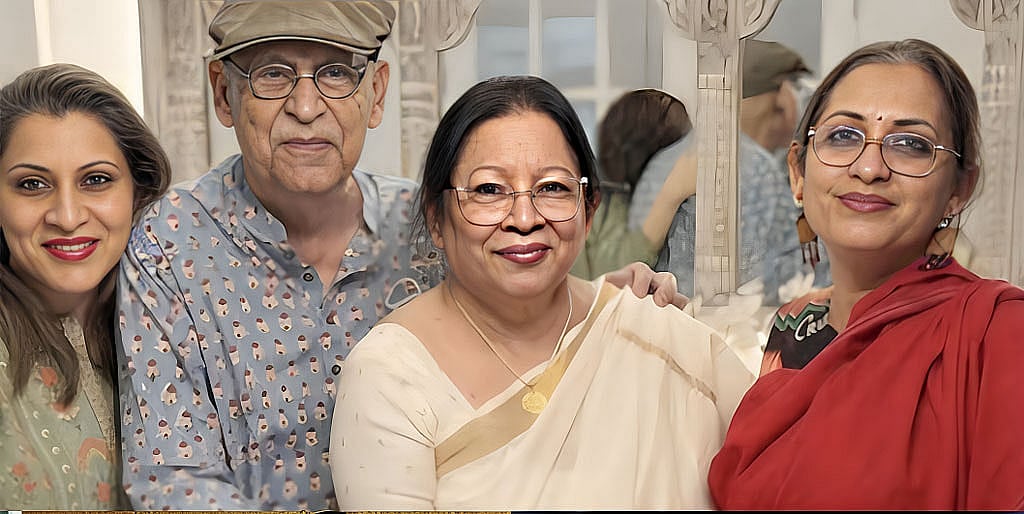
Abul Hayat said he considers writer Sanjeev Chattopadhyay his Guru, and follows one piece of advice from him closely.
Once, while visiting Chattopadhyay's home in Kolkata with his wife, a remark from the writer stayed with him.
Abul Hayat said, "He told me ‘Mr Hayat, listen, if you want to live long and live well, find joy’. I asked how. He said ‘Joy comes from work itself. That joy will give you a healthy life, and a long one’.
“I have followed that ever since. I try to find joy through my work."
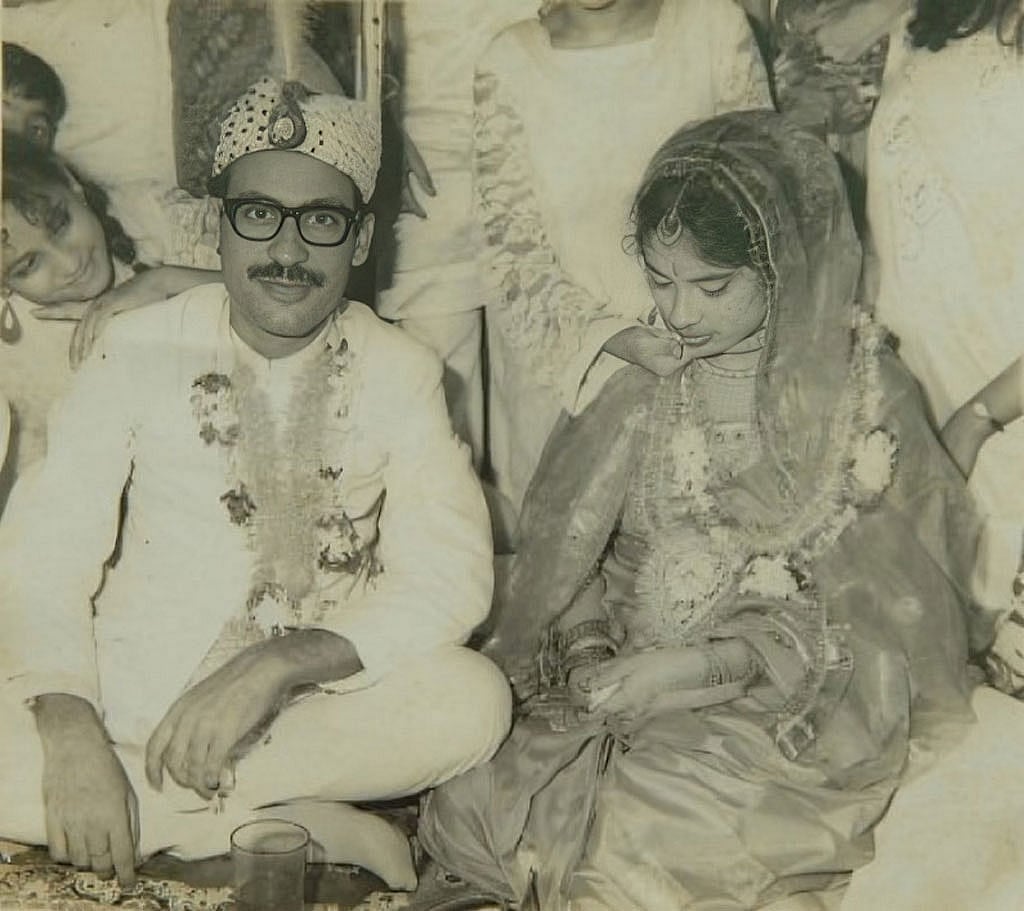
Abul Hayat married in 1970. Joking about it, he said: "I married once, and I fell in love only once."
'Here, Take Your Bipasha'
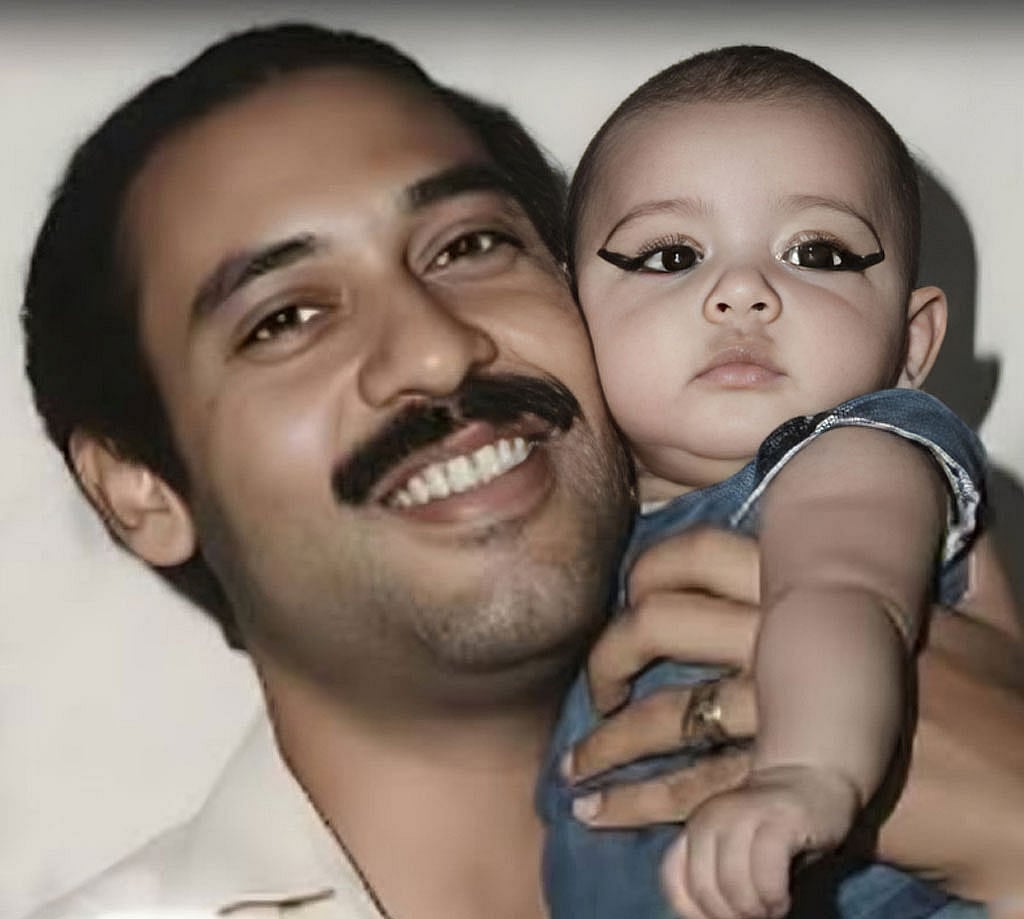
Abul Hayat faced a harrowing experience around the time of his daughter Bipasha's birth.
In March 1971, preparations were under way at Central Shaheed Minar for a staging of “Rakto Dilam Swadhinatar Jonno” directed by Hasan Imam.
But 10 days into rehearsals, Abul Hayat suddenly began bleeding from his nose.
"No treatment could stop the bleeding. By Mar 23, my condition had become so critical that physician Shaheed Fazle Rabbi examined me and said ‘He is a lost case’.”
His wife Shirin Hayat was pregnant at the time and was admitted to Holy Family Hospital.
Meanwhile, the actor's condition worsened so severely that he gradually lost consciousness.
Before losing awareness entirely, he only learnt that his daughter had been born at the hospital.
Abul Hayat said he remained in what he called a "coma" for five to six days.
When he regained consciousness on Mar 29, Dhaka was tense and subdued.
He was taken to his in-laws' village of Beraid in Rupganj, where his family had already relocated.
He saw his daughter for the first time in Beraid, seven days after her birth.
"They lowered me from the boat on a wooden chair, there was no stretcher. They set me down in my in-laws' courtyard, where thousands of people had gathered, shouting 'The son-in-law has come, the son-in-law has come!' There was an uproar.
“My mother was crying, my mother-in-law was crying, my wife was crying. Suddenly my aunt-in-law came and placed a baby in my lap, saying ‘Here, take your Bipasha’.
"We had already picked the name beforehand, in case we had a daughter. That's the name they gave her."
A Passion for Writing
Abul Hayat chose acting as his profession and writing as his passion.
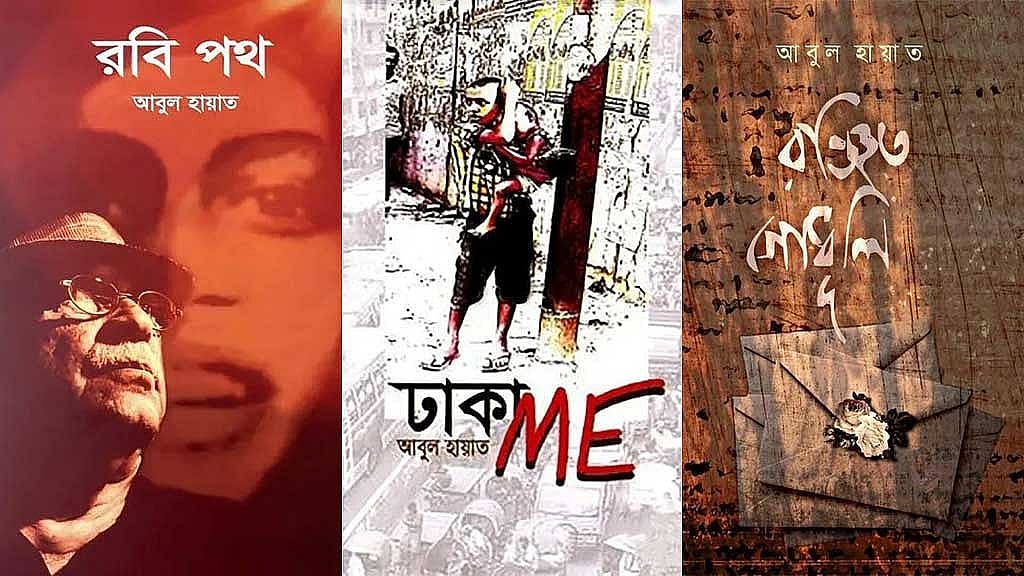
He has published 40 books to date, including memoirs.
The actor believes his writing will outlast everything else.
"Films will remain. The saddest part is that theatre, the thing we love most, will leave nothing behind at all."