


Published : 13 Sep 2020, 10:51 AM
Updated : 08 Apr 2022, 02:43 AM


And some districts that started online are planning to switch to in-person instruction. Just two weeks into the fall term, Anjie Juarez, a parent in El Cajon, California, learned that her son’s school would resume in-person classes in mid-September. She warned him it was going to be completely different; he wouldn’t be able to play tag with his friends, for instance. But he wasn’t fazed.
“At a certain point, he was like, ‘That’s fine. I don’t care, Mom. I just want to go back,’” Juarez recalled recently. “He’s so craving school.”
Still, some parents have remained hesitant to send their children back. One national poll conducted in July showed that 76% of parents of colour and 51% of white parents would prefer that schools delay reopening to minimize the health risk — most likely reflecting the disproportionate toll the pandemic has taken on Black and Hispanic communities.
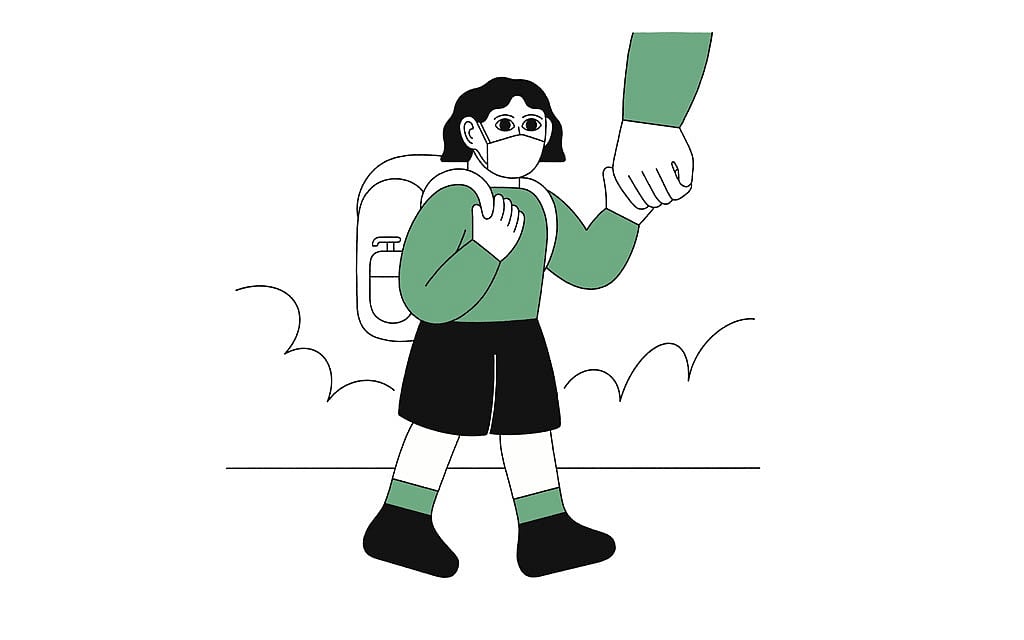
But with more and more children heading to school buildings across the country each morning, here are some tips for how to facilitate their transition, gleaned from medical experts and parents.
Practice what you learned this summer.
For six months, children (and parents) have been building good habits: wearing a mask properly, washing hands and practicing social distancing. Reinforce those behaviours as the first day of school approaches, correcting children as needed and praising them for getting things right, suggested Dimitri Christakis, director of the Center for Child Health, Behavior and Development at the Seattle Children’s Research Institute. (Even after the term begins, keep modelling consistent mask wearing and thorough hand-hygiene practices.)
Elizabeth Goldberg, a parent of three and an emergency physician in Providence, has reviewed removing masks by the ear loops (to avoid spreading germs to or from the mask’s surface) with her kids. Her youngest daughter, 3, has been allowed additional screen time while wearing her mask to get accustomed to how it feels over longer periods; the older kids, 5 and 8, got ample practice wearing them at tennis camp this summer. Some days, they came home and forgot to take them off.
“Kids are actually so much more malleable and adaptable than we give them credit for,” Goldberg said.
Maintain back-to-school rituals.
“Pandemics rob us of so much,” said Megan Goslin, a clinical psychologist in the trauma section at the Yale School of Medicine’s Child Study Center, including many of our daily routines. Still, try to observe the usual back-to-school traditions, whether they involve picking out a new outfit for the first day of school or a celebratory dinner.
As part of back-to-school shopping, consider having your children choose a new mask they’ll be excited to wear at school. (Perhaps surprise them with another one a couple of weeks into the fall term, to keep it interesting.)
Do a dress rehearsal.
To help quell back-to-school jitters, visit the school building before the term starts, in person or virtually.
“Often, what we’re worried about is the uncertainty,” said Rachel Busman, senior director of the Anxiety Disorders Center at the Child Mind Institute in New York.
When the first day of school arrives, you can coordinate a drop-off time with one of your child’s best friends, if he or she is also attending school in person. That way, they can enter the school building together.
Let the kids lead.
It can be exasperating, as a child, to hear your parents remind you of something you think you already know — so instead, whether regarding hand hygiene or social distancing, ask kids what they should do and let them lead the conversation. This helps reinforce habits and allows them to take ownership of the process.
“They’ll start to identify with it as their own set of goals or standards,” said Jennifer Lighter, a paediatric epidemiologist at NYU Langone Medical Center.
The same goes for conversations about their concerns. Many children are excited to go back to school, rather than fearful. By asking questions instead of making statements, “you’ll have less opportunity to transmit some of your own worries,” Busman said. (Seek other outlets for your own anxieties; you’ll be in the best position to support your child’s return to school if you feel supported yourself.)
Keep communicating.
Over dinner, Goslin has regularly asked her children, ages 5 and 8, to share two thoughts about going back to school: one thing they’re excited about, and another they’re wondering about. This kind of regular check-in — with your children, as well as with their teachers — can be valuable after school has resumed, too, helping you understand how they’re faring and how you can best support them.
It may assuage your own anxieties, too. Nikesha Elise Williams’ son started kindergarten in person last month in Jacksonville, Florida. When he gets home from school, Williams, a writer, asks him about his day.
“If he’s not tripping about it, then I’m not tripping about it,” she said.
Celebrate getting through it.
On a Friday night in August, after her son’s first full week of kindergarten, Williams took him out for ice cream, his favourite treat. As you reach the end of Week 1 (or even Month 1; Goslin noted the period it usually takes for kids to adjust to school might be extended this year), mark the achievement with a safe, socially distanced outing for a meal or dessert, get takeout and rent a movie or even plan a socially distanced play date.
And whatever concerns you may have about your child returning to the classroom, “trust your decision,” Williams said. “Especially as mothers, we always get the guilt over any decision that we make.”
© 2020 The New York Times Company













