Published : 22 Sep 2026, 03:38 AM
Updated : 22 Sep 2026, 03:38 AM


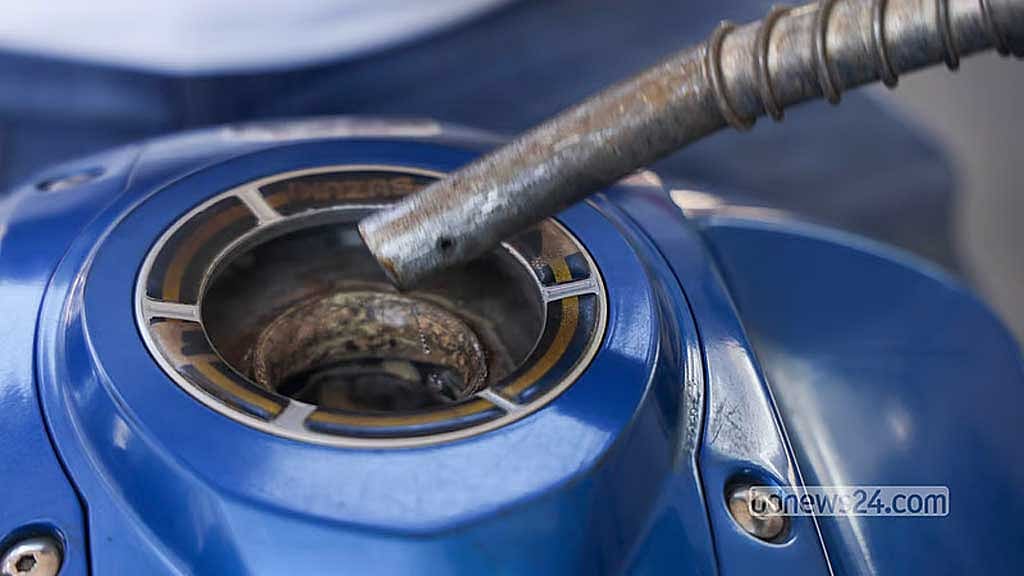
The government has raised fuel prices by Tk 20 per litre at a time when Bangladesh's economy is under pressure and the purchasing power of low-income people is steadily shrinking.
The decision, which is expected to put further pressure on consumers, had already triggered discussion the night before the increase.
People on limited incomes began the day fearing another rise in prices, while economists questioned how far inflation could climb.
The increase also raised questions about whether the government could have taken other measures instead of raising prices by such a large amount at once.
International fuel prices began rising after the war involving Iran, which started towards the end of February, disrupted oil and gas supplies from West Asia.
This put pressure on Bangladesh to adjust domestic fuel prices. But there has been debate over whether the international situation alone justified such a large increase.
There was also pressure from the International Monetary Fund (IMF) to reduce fuel subsidies.
The international lender cancelled its previous loan agreement made during the Awami League government, while the BNP government has begun negotiations for a new loan.
Questions have therefore arisen over whether reducing fuel subsidies has again emerged in those talks.
On Sunday night, the government raised the retail price of diesel, kerosene, petrol and octane by Tk 20 per litre each.
The new prices are Tk 135 for diesel, Tk 155 for kerosene, Tk 160 for petrol and Tk 165 for octane.
Prices had also been raised in June.
Diesel was kept unchanged at Tk 115, while kerosene rose from Tk 130 to Tk 135, petrol from Tk 135 to Tk 140 and octane from Tk 140 to Tk 145.
Those prices remained in place for three months before the latest increase. This time, even diesel, the most widely used fuel, became more expensive.
Successive governments have subsidised diesel because of its importance to agriculture and transport. There have also been instances when Bangladesh Petroleum Corporation (BPC) continued selling fuel at higher prices and made profits even as international prices fell.
Some analysts have questioned the justification for raising domestic fuel prices on the grounds of international price increases, particularly when inflation was already expected to rise after government employees received pay increases of double or more.
What Does the Government Say?
State Minister for Power and Energy Aninda Islam Amit pointed to BPC's previous profits when explaining the increase.
He said BPC had been able to avoid adjusting prices for some time because it had money in its coffers.
“BPC was able to incur losses of Tk 228.75 billion. How could it afford that? It was able to do so because at one point it had made profits or had excess money in its coffers,” he said.
The government says international prices of all types of fuel, as well as shipping costs, rose significantly from March after the war in West Asia began and have remained high.
It says that although international fuel prices more than doubled, it did not raise domestic prices in the public interest. As a result, BPC incurred losses of about Tk 228.75 billion between March and August.
However, discussions with officials from the finance ministry, National Board of Revenue (NBR) and the Ministry of Power, Energy and Mineral Resources indicate that reducing losses was not the only factor behind the increase.
Officials said the government was under pressure from higher import costs caused by rising international fuel prices. At the same time, the power and energy ministry sought funds for subsidies but did not receive approval from the finance ministry.
The government is also facing financial pressure from implementing a new pay structure, increasing spending on development projects and fulfilling several election pledges, including family and agricultural cards.
Revenue collection has also been sluggish. Despite two and a half months of the new fiscal year having passed, the NBR has yet to publish revenue figures for its first month.
Unpublished figures for the first two months indicate that VAT collection alone fell by about 22 percent. Compared with July-August of the previous fiscal year, VAT collection in the same period this year was roughly one-quarter lower.
Against this backdrop, the fuel price increase is also being seen as a way to raise revenue.
It will reduce the government's subsidy burden while increasing revenue from each litre of fuel sold.
Energy-sector analysts also say the increase will boost revenue.
They, however, have suggested specifying VAT and taxes rather than increasing the burden of higher costs on consumers.
Taxes and duties account for about 30 percent of the total cost from fuel imports to retail sales. As a result, when prices rise under the current system, tax and duty collection also increases.
M Tamim, chairman of state-owned energy company Meghna Petroleum PLC, told bdnews24.com that the government should make VAT and taxes fixed rather than allowing them to rise with fuel prices.
“If VAT and tax do not increase with the price, people will get some relief,” he said. “If they rise with the price, the government's revenue will certainly increase. That gives them an opportunity.”
Energy expert M Shamsul Alam accused the government of behaving like a “businessman” and “profiteer”, saying it earns corporate tax, dividends, VAT, taxes and duties from the sector.
“The government has so many roles in the same body. This is one of the major reasons for price increases and exploitation or plunder in the oil sector,” he told bdnews24.com.
Shamsul, energy advisor to the Consumers Association of Bangladesh, called for electricity and energy services to be made non-profit.
He said the government should recover only the cost of providing energy services, along with a reasonable amount of revenue needed to run the state.
Why Has the Government Raised Prices Three Times?
The BNP government has raised fuel prices three times in seven months after assuming power in February, citing the war involving Iran.
The government says the conflict has caused crude and refined fuel prices and shipping costs to rise abnormally in international markets.
It has also said prices needed to be adjusted as BPC's losses increased.
Another concern is fuel smuggling because prices in Bangladesh remain lower than in neighbouring countries.
At a news briefing on Monday, State Minister Amit said failing to raise prices would have disrupted or suspended subsidised government programmes, including vaccination, social security and low-cost food distribution.
He said there was effectively no alternative to the decision.
He also raised concerns about the risk of fuel being smuggled because prices in Bangladesh remain lower than in neighbouring countries.
Asked whether any smuggling had already taken place or whether the government had stopped attempts to smuggle fuel, he said the authorities had detected the risk through multiple sources which they considered responsible.
What are Officials Saying?
The government says BPC lost Tk 22.87 billion in the six months from March to August.
At current international prices, the loss on diesel is about Tk 89 per litre, or roughly Tk 1.09 billion a day. This means the government would have to provide about Tk 400 billion in annual subsidies for diesel alone.
The government estimates that raising the price by Tk 20 per litre will reduce annual losses by about Tk 100 billion. Even after the adjustment, however, a deficit of about Tk 300 billion a year would remain.
As the war in West Asia continues, subsidies for fuel and electricity are rising while revenue collection is declining.
An official from the Finance Division said an assessment made for the March-June period after the war began showed an additional subsidy requirement of Tk 385.42 billion for fuel oil, gas, electricity and fertiliser. The same trend has continued into the current fiscal year.
Several finance ministry officials said the energy ministry had sought about Tk 220 billion in subsidies for the new fiscal year, but the finance ministry did not approve it.
They said the previous IMF loan agreement is no longer active, so its conditions are not currently being taken into account. According to the officials, the main reason for the fuel price increase is the lack of funds.
How do Analysts View the Increase?
The IMF had recommended introducing an automatic fuel-pricing mechanism. It identified rising import costs and inadequate pricing at the consumer level as major reasons for losses at state-owned companies.
However, energy expert M Tamim does not believe the latest increase should be viewed as pressure from the IMF.
He said international commodity prices had risen sharply, although crude oil prices had now fallen below $100 a barrel. Petrol, diesel and octane prices, however, remained high.
“Crude oil supply and the supply of finished products are two different things,” he said.
According to him, the supply crisis had started earlier, but developed countries had been using their stockpiles. Those reserves were now running down.
“If this war continues for longer, the whole world will face an extreme crisis, with an energy crisis being a major part of it,” he said.
‘Plunder’, Not Public Welfare
Energy expert M Shamsul Alam repeated his long-standing allegation that successive governments had moved towards “plunder” rather than using energy security for public welfare.
He said the government had failed to establish energy services as a means of benefiting the public.
“We want the government to free itself from the stigma of plunder and profiteering. If it had done so, fuel, electricity and gas prices would not have reached this level,” he said.
He argued that money saved through better management could have kept the electricity and energy sector financially sustainable without requiring higher prices to reduce government subsidies.
He added that the gas development fund, power development fund and energy security fund had failed to achieve their intended objectives, contributing to the current energy-security crisis.
Could the Government have Done Something Else?
The latest increase has raised questions about whether the government could have reduced or removed the roughly 30 percent in duties, VAT and taxes collected across fuel imports, refining and sales.
The previous Awami League government reduced duties on diesel imports during the Ukraine war. The possibility of a similar measure has now been raised again.
Asked why the BNP government had not reduced duties after raising fuel prices three times in seven months, an energy ministry official said the government also needed revenue to run the state.
The tax-to-GDP ratio remains below 7 percent, compared with more than 15 percent in neighbouring countries, the official said.
Therefore, there was little scope to remove duties and VAT on fuel.
Several NBR officials said there had been no discussion about reducing VAT and duties on fuel. The state minister gave a similar indication at Monday's briefing.
Asked whether VAT and duties could be reduced to provide consumers with some relief, Amit said that was a matter for another ministry and that it would consider the option if there was scope.
M Tamim also opposed giving up revenue, but said taxes and duties should be fixed at specific rates so that rising fuel prices do not automatically increase the tax burden on consumers.
He said Bangladesh was already providing substantial subsidies for LNG imports amid the global energy crisis, so reducing revenue from fuel would effectively add to the subsidy burden.
An NBR VAT order from 2019 says petroleum products include 15 percent VAT at the production stage within the government-determined tax-inclusive price, while 2 percent VAT at the business stage is included in the retail price.
Based on the latest notification, VAT at the production stage for diesel is about Tk 16.12 within its ex-refinery tax-inclusive price of Tk 123.58. Adding the Tk 2.65 business-stage VAT means total VAT is about Tk 18.77 per litre, roughly 14 percent of the retail price.
The corresponding figures are about Tk 22.78 for octane, Tk 22.05 for petrol and Tk 21.79 for kerosene.
Because VAT is value-based, government revenue per litre rises when prices increase. This means the government benefits from higher revenue as well as lower subsidy costs.
Fuel imports are also subject to import duties and advance income tax, all of which rise or fall with changes in prices.
Tamim said the government could instead have introduced “specific VAT and taxes”.
Energy expert Shamsul Alam, however, criticised the government for raising prices without consulting stakeholders.
Asked what else the government could have done, he said fuel-price changes should be taken to the Bangladesh Energy Regulatory Commission (BERC), allowing the public to scrutinise whether the proposed prices were justified.
He accused the government of depriving people of that right.
“The law has given BERC the sole authority to increase, change, control or determine prices,” he said. “The government has kept that system dysfunctional under various pretexts.”
He alleged that this had deprived people of their rights and prevented them from obtaining what he described as fairness in energy pricing.