


Published : 14 Jan 2014, 02:09 PM
Updated : 08 Aug 2022, 06:23 PM


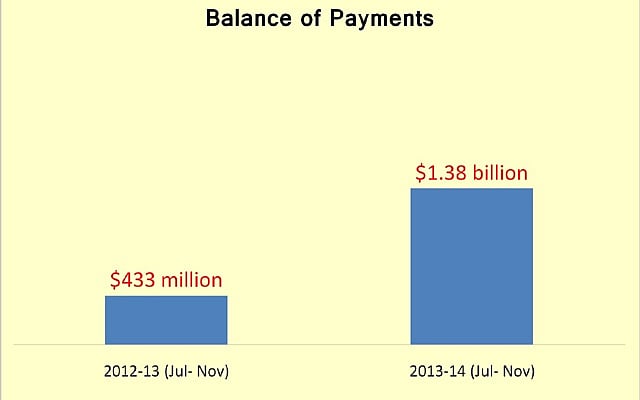
The surplus in foreign transactions was registered at $1.38 billion in the first five months (July-Nov) of the 2013-14 fiscal, which is three times higher than the corresponding period of the last fiscal.
The surplus was $433 million in the July-Nov period of 2012-13 fiscal.
This was evident from the latest data released by Bangladesh Bank on Monday.
Economist Zaid Bakht said the surplus has been created because of a positive trend in export earnings as well as drop in import costs.
“Generally if there is a huge surplus in a country’s foreign transactions the economy of the country is considered to be healthy. But we cannot say this under the current circumstances for Bangladesh,” Bakht told bdnews24.com.
He said business groups have incurred huge losses in the last several months due to political instability in the country over the national polls.
Investment also remained stagnant resulting in a drop in import expenditure and rise in surplus.
“It cannot be said for sure whether the situation will improve. Entrepreneurs appear to suffer a lack of faith, that’s why they are importing less. It has made a negative impact on investment.”
If investment does not increase, Bangladesh will not be able to achieve the targeted GDP growth rate of 7.2 percent in the current fiscal, said Bakht, who is with the Bangladesh Institute of Development Studies.
An analysis of the central bank’s data shows that Bangladesh started 2013-14 fiscal with a foreign transaction surplus brought forward from the last fiscal.
The surplus was $674 million crore in July-August period, $933 miilion in July-October. The surplus has risen to $1.38 billion at the end of Nov' 2013.
Regular export-import and other earnings and expenditures are included in the current account.
The surplus in the current account means Bangladesh need not to take loans for daily transactions.
If there is deficit the government has to recoup it by taking loans.
The total surplus stood at $2.52 billion in 2012-13 fiscal while in 2011-12 there was a deficit of $447 million.

File Photo










