


Published : 10 Jan 2015, 08:29 PM
Updated : 08 Aug 2022, 04:36 PM


The decision comes after political parties turned a deaf ear to their requests on numerous occasions.
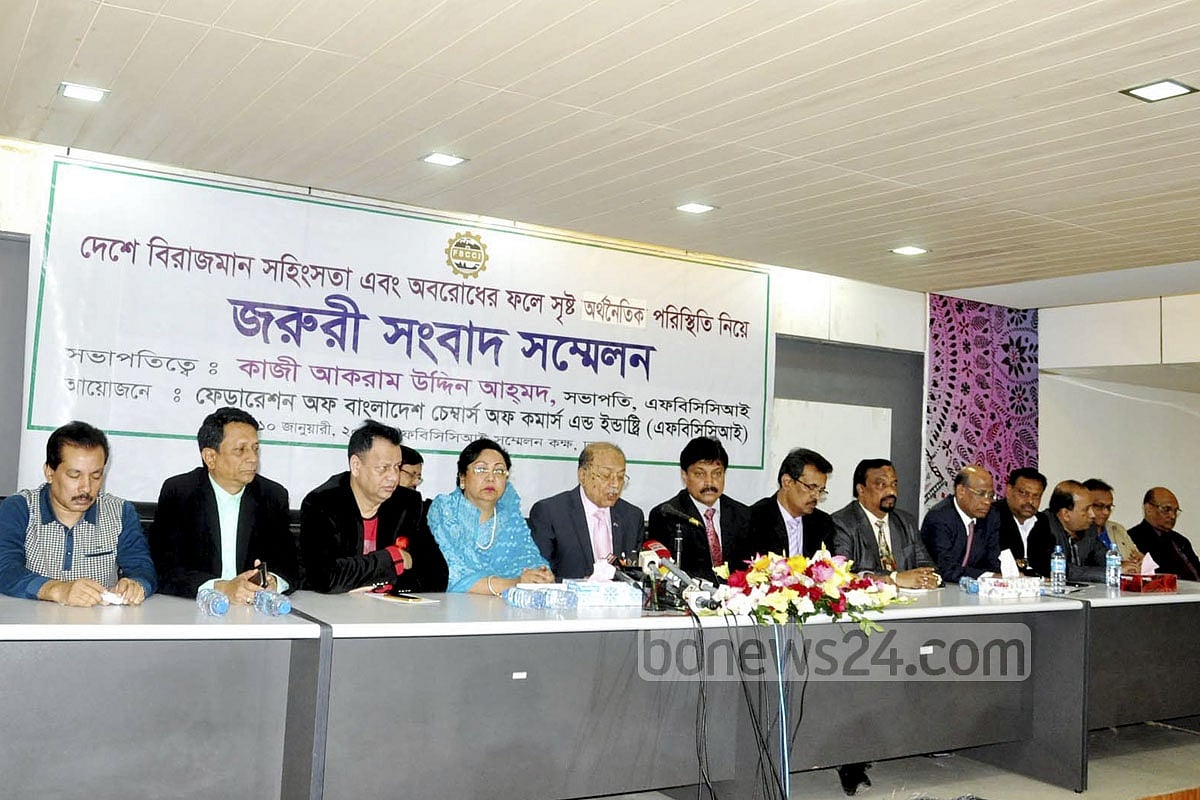
FBCCI President Kazi Akram Uddin Ahmed announced the decision at a press conference in Dhaka on Saturday.
Businessmen had called for an understanding between Awami League President Sheikh Hasina and BNP Chairperson Khaleda Zia in 2013 when they were at loggerheads over poll-time administration. But that did not lead to any positive results.
After a relative calm in 2014 following the controversial last general election, strikes, blockades and violence springing from the disagreement between the two major political parties have given 2015 a shaky start.
Businessmen have been expressing deep concern for the last few days.
Ahmed said, “This time we aren’t going to try and press for a settlement. We are losing money in our businesses. We can’t sit idle in this situation. We are considering taking legal steps.”
The decision was taken at a meeting of the FBCCI Board of Directors, he said, adding that they would take the necessary steps soon after checking the legal issues.
Earlier, the business leaders had met the two leaders of the Awami League and the BNP on several occasions and held peaceful protests demanding an end to political violence. But their efforts had no effect.
The FBCCI president said three sectors – transport, production and tourism – were bleeding the maximum because of strikes and blockade.
“Over 200,000 buses, trucks, covered vans are grounded and more than two million transport workers are jobless currently. This sector is facing a Tk 2-billion loss every day,” Ahmed said about the transport sector.
About the tourism sector, he said about 300 hotels in Cox’s Bazar were passing the season without tourists. “The sector is losing up to Tk 20 billion daily for strikes and blockades. And it’s the businessmen who are losing the most.”
He could not immediately give the exact extent of losses in the other sectors but added that agriculture and readymade garment sectors were also among those affected.
The year began with a nationwide general strike called by the Jamaat-e-Islami protesting the death sentence on its Assistant Secretary General ATM Azharul Islam given by Bangladesh’s war crimes tribunal for crimes against humanity committed during the 1971 Liberation War.
After that BNP chief Khaleda Zia had called her supporters to enforce the nationwide indefinite transport blockade on Jan 5, after failing to organise a party rally on the first anniversary of the last general election it had sat out.







