


Published : 03 Jun 2016, 04:54 PM
Updated : 19 Oct 2022, 05:18 PM


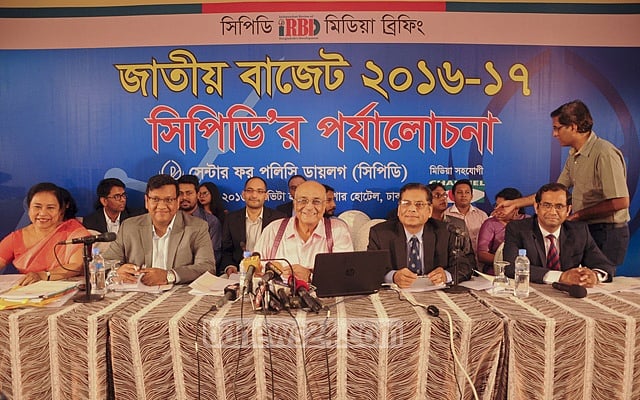
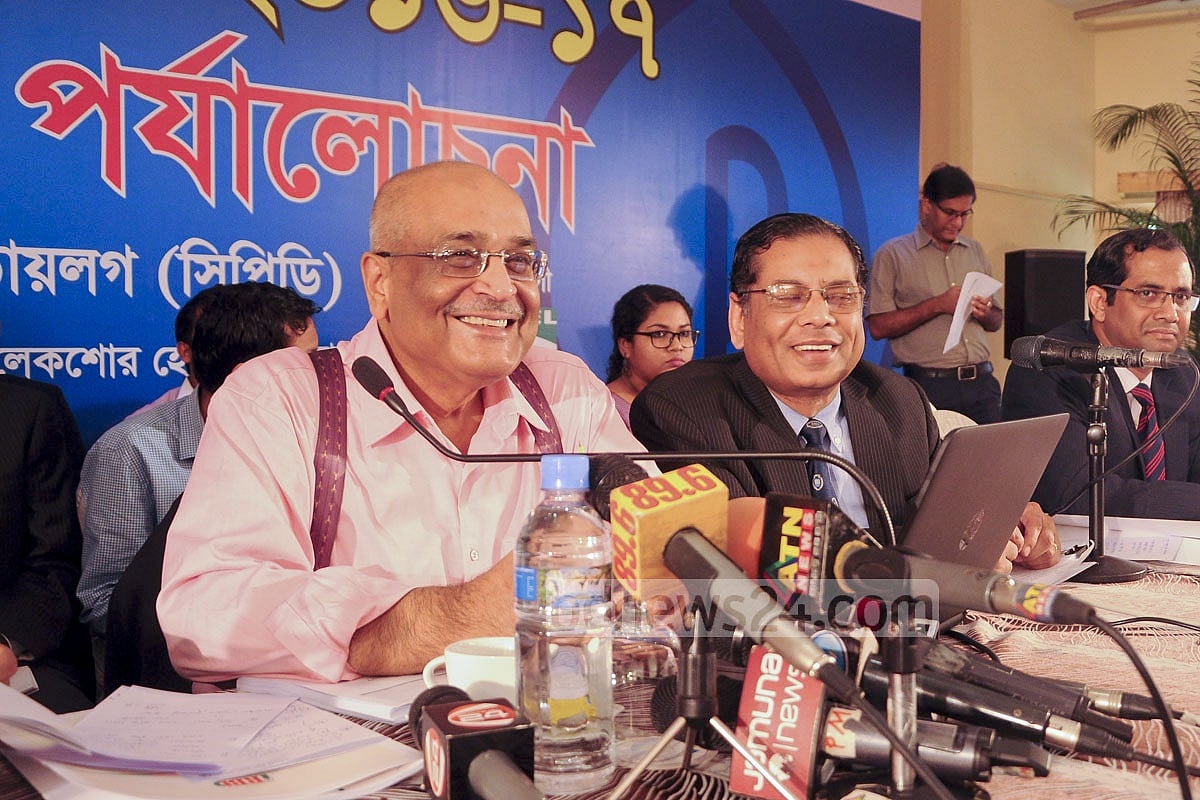
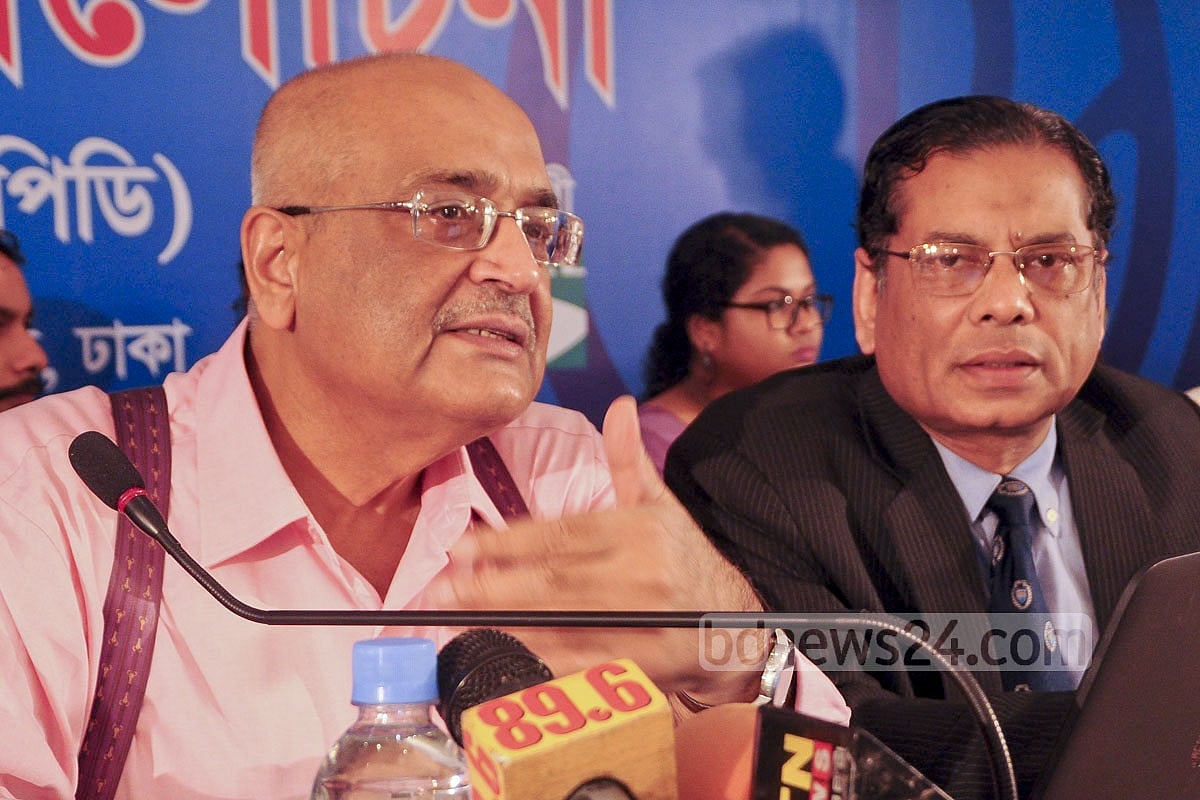
CPD Fellow Debapriya Bhattacharya explained his organisation’s views in a post-budget discussion on Friday.
He said ‘overestimation’ and the failure to achieve targets at the end of financial years was creating a ‘crisis of confidence’.
He said he differed with those who described Finance Minister AMA Muhith’s Tk 3.4 trillion budget as ‘big’ or ‘historic’ because, despite an increase in monetary outlay each year, budgets had remained confined to 14 percent of the overall size of the economy.
The CPD, however, has welcomed an increase in allocations for education, technology, social welfare, transport and communication, and the funding of mega projects proposed in Muhith’s budget of the 2016-17 FY presented in Parliament on Thursday.
But it has criticised the budget’s lack of clarity on the utilisation of foreign aid, implementation of the ADP, private investments and tax-gathering mechanism, as signs of overestimation.
He said: “If a policy is announced and not implemented, the forces within and outside the administration responsible for executing them lose confidence when such policies are announced again the next year. They begin to feel a lack of compulsion to fulfil them.”
If a policy had to create confidence, it had to be ‘specific’ and ‘firm’, he said.
“Many say that high projections result in some amount of work being done. If projection were to be made by strictly adhering to calculations, there would be no eagerness to perform. But we don’t go by that logic.”
The CPD fellow said the loss of confidence in projections had undermined the ‘efficiency of policies’.
Drawing an analogy, he said India could execute over 80 percent of its Annual Development Programme (ADP) and attain 93 percent of tax collection target against 73 percent and less than 80 percent respectively in Bangladesh.
India can spend up to 93 percent of project allocation while Bangladesh can only 81 percent, he added.
Dr Bhattacharya said it was obvious that the size of budget, revenue collection target and expenditure projection would be bigger with the increase in the size of the economy every year.
But he suggested it should be seen whether the projected increase in income and expenditure matched the economic growth.
The analyst feared that the recent appreciation of the Taka may have a negative impact on exports and inflation.
The prices of petroleum products in the domestic market did not match those in the international market, he added.
Bhattacharya does not see any clear strategy in the budget to increase investment in the private sector that would help the government to attain the revenue collection target of Tk 2.32 trillion.
He described ADP implementation as ‘weak’ and said the banking sector was seeing an ‘acute lack’ of governance.
Dr Bhattacharya identified financing of the budget deficit as one of its main weaknesses.







