Published :
11 Nov 2013, 03:02 PM
Updated :
09 Aug 2022, 11:18 AM
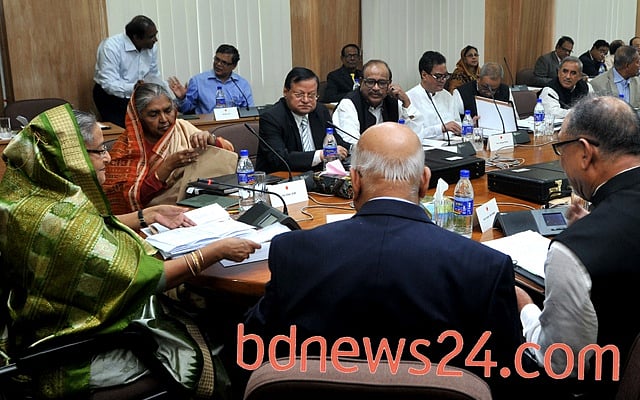
Monday's Cabinet meeting, chaired by Prime Minister Sheikh Hasina, gave the final nod to the 'Pollishonchoi Bank Act 2013' draft.
The specialised bank is being set up to help the 'one house one farm' project participants, Cabinet Secretary Muhammad Musharraf Hossain Bhuiyan said after the meeting.
He said the participants will be able to take loan from the bank.
Forty-nine percent of bank will be owned by the cooperatives of the project's participants.
The bank will have an authorised capital of Tk 10 billion and a paid-up capital of Tk 2 billion.

Prime Minister Sheikh Hasina had talked about setting up of village savings banks last month to strengthen the rural economy.
The Finance Ministry approved the bank last week.
The proposal would be tabled in Parliament now.
Secretary Bhuiyan said the bank would have a 15-strong board -- eight of them government-appointed and the rest from the cooperatives.
The board will appoint a Managing Director from among the board members. However, it will need clearance from the Bangladesh Bank.
Bhuiyan said the rural savings bank was different from the Grameen Bank -- that shared a Nobel peace prize with its founding Managing Director Muhammad Yunus.
The Grameen Bank runs its microcredit operations on collateral-free basis at the retail level.
But the Pollishonchoi Bank will give loan at the cooperatives-level both with and without collateral, he said.
There are differences between the two banks in terms of the government's ownership, he added.
At present, there are over one million families participating in the 'one house one farm' project run under the local LGRD ministry.
A Tk 13.32 billion fund was created for the project.
The bank is being set up to ensure that the project's participants can continue their economic activities even after the project's tenure ends.
These families will be able to deposit their savings in this bank and will also be able to take loans.
In its 1996-01 term, the Awami League government had started the ‘one house one farm’ project, but it was shelved by the BNP-Jamaat coalition government that came to power in 2001.
The Awami league revived it after coming back to power in 2009.