


Published : 29 Oct 2021, 10:45 PM
Updated : 08 Apr 2022, 01:18 PM


From Oct 18 through Sunday, more than half the world’s new confirmed cases were reported in Europe, a World Health Organization report said, and it was the only region that reported an increase in both new infections and coronavirus deaths.
Low vaccination rates in Eastern Europe are partly to blame for the grim numbers.
Although several Western European countries have reported a rise in cases, they have fully immunised the majority of their adult populations and have seen relatively low numbers of deaths and hospitalisations.
The picture is starkly different in the East, where vaccinations are readily available, but many people remain hesitant to get shots, mainly because of widespread mistrust of the authorities.
“The global number of reported cases and deaths from COVID-19 is now increasing for the first time in two months, driven by an ongoing rise in Europe that outweighs declines in other regions,” WHO Director-General Tedros Adhanom Ghebreyesus said in a briefing Thursday. “It’s another reminder that the COVID-19 pandemic is far from over.”
Europe recently overtook the United States in daily cases per capita, with nearly 29 cases per 100,000 people, compared with about 22 in the United States, according to Our World In Data.
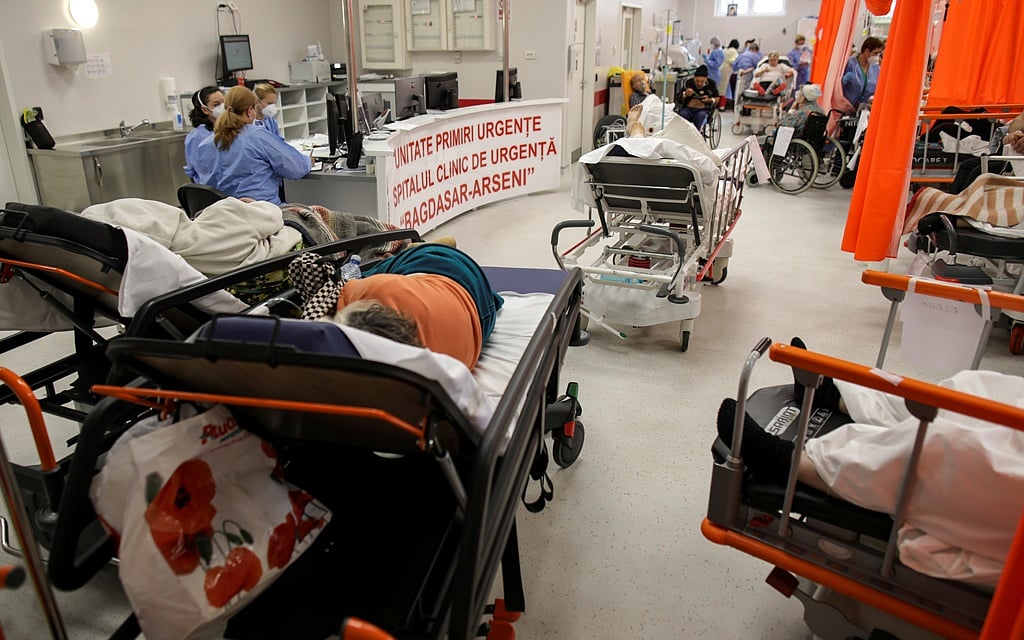
The countries hit hardest now are concentrated in Eastern Europe, and there are serious concerns that another surge could shatter their underfunded and understaffed health care systems.
The Baltic nations — Estonia, Latvia and Lithuania — are each averaging more than 100 new daily cases per 100,000 people, according to a New York Times database.
Latvia became the first European Union member to institute a general lockdown Oct 21, and Estonia has also put new restrictions in place. Latvia’s vaccination rate is among the lowest in the EU, with just under half its population fully vaccinated; the figure across the bloc as a whole is around 64%.
In Romania, where only 30% of residents are fully immunised, the situation has become so dire that this month the government asked for emergency help from other EU countries. On Oct 19, as hospitals were running out of beds, the country recorded its highest death toll since the beginning of the pandemic.
And in Poland, the health minister said last week that the country was facing “an explosion of the pandemic,” after it recorded 85% and 100% weekly increases in new cases.
The picture grows grimmer beyond the EU borders. In Russia, which recorded the highest death toll in Europe, the Kremlin this week issued a stay-at-home order for workers until Nov. 7. And in neighbouring Ukraine, only 16% of the population has been fully immunised.
But the recent spike in cases is not limited to Eastern Europe. In Germany, cases have doubled since Oct 1. Britain is averaging 66 new daily cases per 100,000 people, and its positivity rate has been persistently high since the delta variant swept through the country over the summer.
And in Belgium, the government re-imposed restrictions Tuesday that had been removed only weeks ago, with cases steadily increasing.
©2021 The New York Times Company












