


Published : 08 Mar 2022, 01:41 AM
Updated : 21 Oct 2022, 03:38 PM


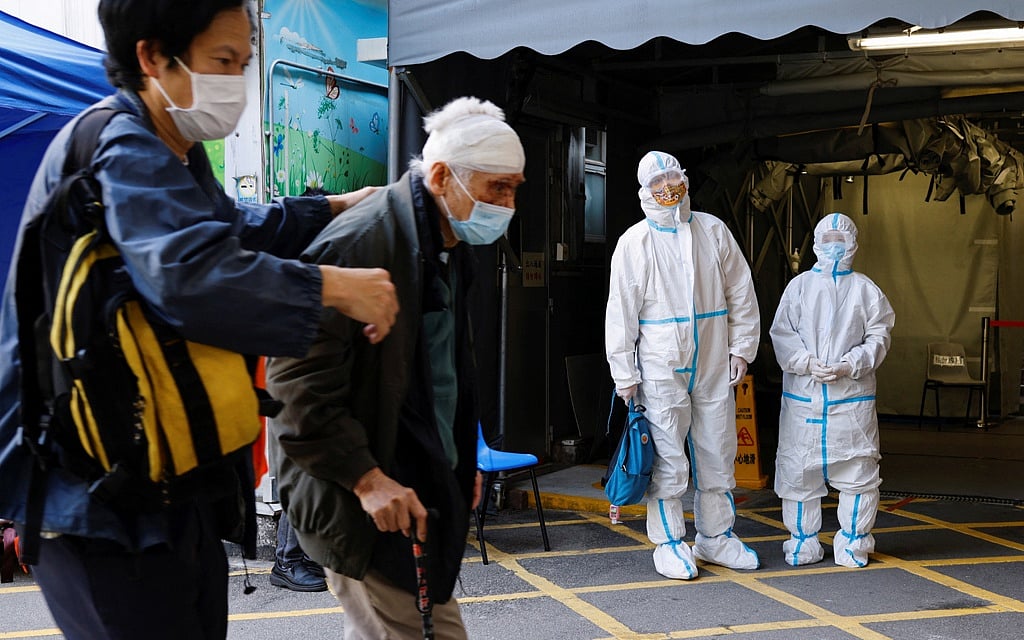

Most of the new infections have been fuelled by the omicron variant, which has been identified in nearly a dozen major cities, including Shanghai, Xi’an, Suzhou, Qingdao and Wenzhou. A few cases of the delta variant have been reported near China’s borders with Mongolia and Myanmar.
“Right now the epidemic situation is severe and complex, with many uncertain factors,” said Wu Jinglei, the director of the Shanghai Health Commission.
The current surge, while smaller than recent waves in other countries like the United States, Germany and South Korea, is the biggest challenge to date to China’s “zero COVID” policy.
The rise of infections, including new cases reported over the weekend in 17 of China’s 31 provinces, has occurred as China’s leaders have gathered in Beijing for the National People’s Congress.
China’s national news media organizations have focused their attention almost exclusively on the session over the last several days, scarcely mentioning the resurgence of the pandemic. But the weekend surge in infections, which spared the city of Beijing, has been announced by the National Health Commission and reported by local news media.
Corpses are moved to a refrigerated container outside a funeral home, as mortuaries run out of space amid the coronavirus disease (COVID-19) outbreak in Hong Kong, China, March 5, 2022. Reuters
China’s premier, Li Keqiang, said in his annual speech to the congress on Saturday that cities should not be too quick to impose drastic measures in response to outbreaks, but should respond in a “scientific and targeted manner.” Instead of locking down entire cities, government officials have focused on quarantining housing complexes and workplaces with confirmed cases.
Xi’an, a northwestern city of 13 million people, locked down its population for nearly five weeks in response to dozens of reported cases last December. After six cases were reported there over the past three days, the city ordered 13,000 people not to leave their homes.
Shenzhen, the mainland city bordering Hong Kong, announced last Tuesday the introduction of extensive security measures, such as border patrols, surveillance cameras and searchlights, to ensure that visitors from Hong Kong underwent at least two weeks of quarantine when crossing the border.
A video that has gone viral shows Chinese health workers in biohazard suits conducting house searches to make sure everyone has been tested and no one has entered from Hong Kong without quarantine.
© 2022 The New York Times Company







