Published : 19 Sep 2026, 01:07 PM
Updated : 19 Sep 2026, 01:07 PM


For university students struggling to make ends meet, money worries may extend far beyond how to pay the next bill.
They can mean difficulty buying study materials, worrying about food or transport costs, borrowing money, putting off tuition payments or even skipping meals.
Those pressures may also be intertwined with students' mental health and academic performance, according to new research involving 400 undergraduates at four public universities in northern Bangladesh.
Nearly half of those surveyed screened positive for probable major depressive disorder, while greater financial vulnerability was associated with more severe depressive symptoms.
Students who ate a wider variety of foods, meanwhile, tended to report less severe depressive symptoms.
Financial vulnerability, dietary diversity and mental health were also independently associated with academic performance in the study, published in Scientific Reports on Sept 15.
The findings do not show that money problems or a less varied diet cause depression, or that depression causes poorer grades. Rather, they offer a snapshot of how financial, nutritional, psychological and academic pressures overlapped among the students surveyed.
Researchers questioned 400 second, third and fourth-year students in March 2026, with 100 participants drawn from each of four public universities.
The universities, which were not named to preserve confidentiality, were selected from northern Bangladesh. The researchers caution that the findings should not be treated as representative of all university students in the country.
When Money Worries Follow Students into Class
To measure financial vulnerability, researchers used an eight-question index covering
difficulty meeting basic expenses and affording food, transport and communication costs; problems buying academic materials; delayed tuition payments; borrowing; skipping meals because of insufficient funds; and trouble concentrating because of financial stress.
Worry about finances was the most frequently reported strain, followed by money problems interfering with concentration in class.
Skipping meals because of insufficient funds and delaying tuition payments were less frequently reported, though the researchers said both still affected a "non-trivial" proportion of respondents.
Greater financial vulnerability remained associated with more severe depressive symptoms after researchers accounted for a range of demographic and lifestyle factors.
It was also independently associated with poorer academic results. A 10-point difference on the study's financial-vulnerability scale corresponded to an estimated 0.19-point difference in cumulative grade point average (CGPA), after accounting for mental health and other characteristics.
What's On The Plate?
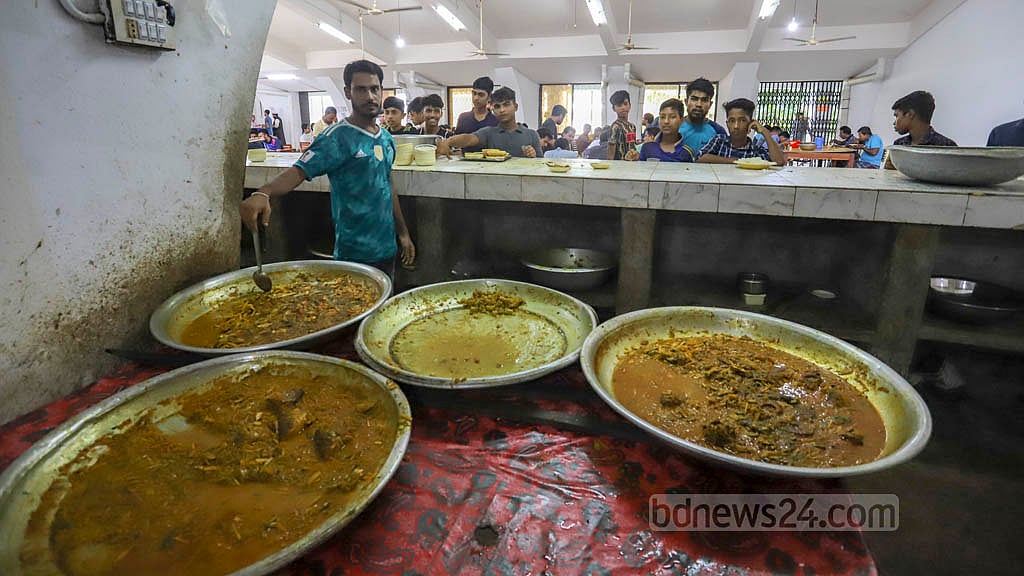
Food told another part of the story.
Students were asked which of 12 food groups they had eaten in the previous 24 hours.
Cereals and grains were consumed by 97 percent of participants and vegetables by 78.8 percent.
But fewer than half had eaten fruit, at 46.2 percent; milk or dairy products, at 42.2 percent; or meat and poultry, at 38.8 percent. On average, students had consumed food from 7.67 of the 12 groups.
Greater dietary diversity was associated with less severe depressive symptoms even after researchers adjusted for factors including age, gender, academic year, accommodation, parental education, study time, sleep and physical activity.
It was also independently associated with better academic performance. Each additional food group was associated with a 0.031-point higher CGPA in the adjusted analysis, while a five-group difference corresponded to about 0.15 points.
But dietary diversity is not necessarily the same as a healthy diet.
The measure records whether someone ate from different food groups over a 24-hour period. It does not measure portion sizes, nutrient intake or someone's usual long-term diet. The 12 categories also include oils and fats, sweets, and spices, condiments and beverages.
Nearly Half Cross Depression Screening Threshold
Researchers also used the nine-item Patient Health Questionnaire (PHQ-9), a widely used tool that measures the frequency of depressive symptoms over the previous two weeks.
Of the 400 students, 31.5 percent fell into the minimal or no-depression category and 19.8 percent into the mild category.
Another 16.2 percent had moderate symptoms, 16.5 percent moderately severe symptoms and 16 percent severe symptoms.
Overall, 48.8 percent scored 10 or above, the standard screening threshold for probable major depressive disorder.

That does not mean nearly half had been clinically diagnosed with major depression. The PHQ-9 is a screening tool, not a diagnostic assessment.
Some 28.7 percent also gave a positive response to the questionnaire's ninth item, which asks whether, during the previous two weeks, they had thoughts that they would be better off dead or of hurting themselves in some way.
Mental health was also closely associated with academic performance.
Each step up through the five depression-severity categories was associated with a 0.095-point lower CGPA after adjustment for other factors.
Across the full range, researchers estimated that a student in the severe category had, on average, a CGPA about 0.38 points lower than an otherwise comparable student in the minimal or no-depression category.
A Snapshot, Not Cause and Effect
The researchers stress that the study cannot establish which factor caused another.
All the information was collected at one point in time, meaning poorer mental health could contribute to academic difficulties while struggling academically could itself worsen psychological distress.
Much of the information, including diet and CGPA, was also self-reported. The dietary measure captured only what participants had eaten in the previous 24 hours, rather than their usual eating patterns.
The four universities were deliberately selected rather than forming a nationally representative sample, while private universities and institutions in other parts of Bangladesh were not included.
Researchers also acknowledge that unmeasured factors including family income, academic workload, social support, personality and previous mental-health history could have influenced the relationships they observed.
The financial-vulnerability index developed for the study, while showing high internal consistency among these participants, has also not undergone formal psychometric validation.
Still, the researchers say the findings point towards a broader way of approaching student wellbeing rather than treating financial assistance, food access, mental-health support and academic performance as separate concerns.
They suggest need-based financial assistance, affordable nutritious food and accessible mental-health screening and counselling as possible measures universities could consider.
But the researchers say longer-term and intervention-based studies are needed to determine whether such measures can actually improve students' mental health and academic outcomes.