


Published : 02 May 2020, 01:09 AM
Updated : 08 Apr 2022, 02:29 AM


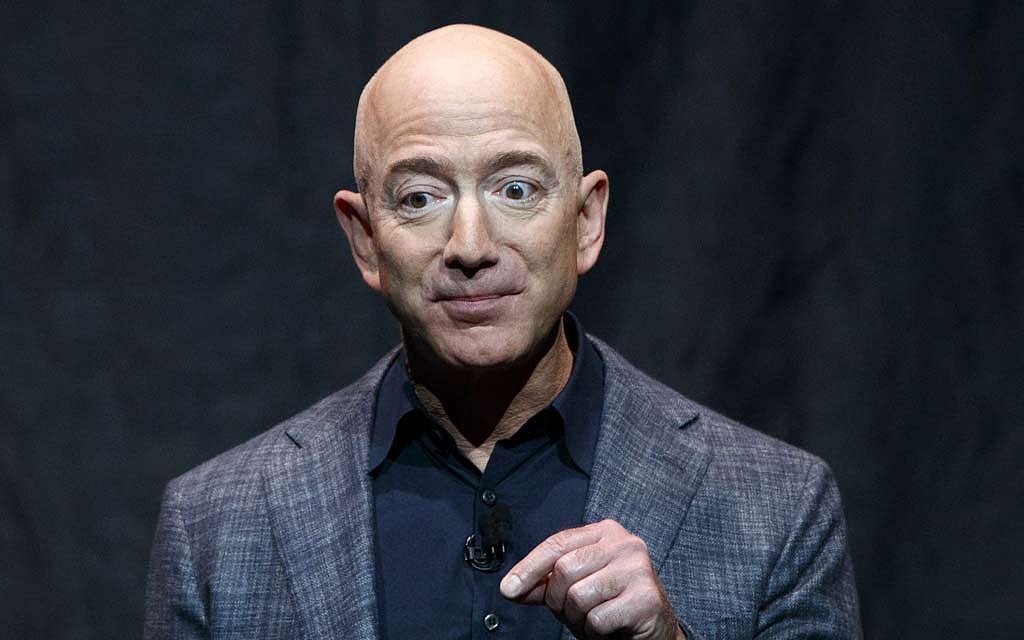
Bezos, the world’s richest person, is the highest-profile executive called to testify as part of the investigation. It would allow lawmakers to question him about accusations that Amazon abuses its market power in online retail, mistreats warehouse workers and hurts small businesses.
Many other tech leaders, including Tim Cook of Apple, Mark Zuckerberg of Facebook and Sundar Pichai of Google, have appeared before Congress in recent years, answering questions under oath on issues like privacy and the spread of disinformation. Bezos has not yet endured the same spotlight.
The panel’s antitrust subcommittee has for months been investigating the power of Amazon, along with that of Facebook, Google and Apple. Last year, lawmakers requested a slew of internal documents from the companies, including emails between top executives. The letter to Bezos was a sign that the inquiry had not stopped because of the coronavirus pandemic.
A bipartisan group of lawmakers led by the Democratic chairman of the committee, Rep. Jerrold Nadler of New York, threatened to use the panel’s power to legally compel Bezos to testify if he did not do so willingly, a serious step in any congressional investigation.
“Although we expect that you will testify on a voluntary basis, we reserve the right to resort to compulsory process if necessary,” the lawmakers wrote to Bezos.
An Amazon spokeswoman did not immediately offer a comment on the committee’s demands.
Bezos has traditionally relied on his deputies, like Jay Carney, a former White House press secretary, to interact with policymakers. He has done few in-depth interviews about Amazon in recent years. But he has made moves toward becoming a greater presence in Washington.
He bought The Washington Post in 2013 and keeps a sprawling home in the city’s upscale Kalorama neighbourhood. Earlier this year, he hosted an after-party for the annual Alfalfa Club dinner at his mansion, drawing business and political leaders.
President Donald Trump has frequently targeted Bezos with criticism and tried to link Amazon to the Post when attacking the paper. (The publication is owned by Bezos personally and has no corporate relationship with Amazon.)
In the fall, the Pentagon awarded a $10 billion cloud computing contract to Microsoft over Amazon’s rival bid; Amazon has sued, saying Trump’s antagonism was a factor.
The decision to call Bezos to testify comes after an article in The Wall Street Journal detailed how Amazon employees had used data from third-party sellers to hone its private label offerings, potentially contradicting testimony given by an Amazon lawyer to the committee last year.
The lawmakers said in their letter that if the “article is accurate, then statements Amazon made to the committee about the company’s business practices appear to be misleading, and possibly criminally false or perjurious.”
Amazon executives have said that they did not believe the allegations in the article were accurate, but the company announced an internal investigation into the issues.
So far, the antitrust investigations have been largely a bipartisan affair. But there are signs that is changing. A few Republicans on the committee signed the letter, though Rep. Jim Jordan, the Ohio lawmaker who just took over as the panel’s top Republican, did not.
Russell Dye, a spokesman for the committee’s Republicans, said, “our members have questions for Amazon and want to get answers for the American people,” but “we wonder what Judiciary Democrats’ true motivations are.”
Dye said that earlier this year, Democrats said that “companies like Amazon should not exist and should be broken up simply because they are large successful businesses.”
The public has increasingly turned to Amazon’s online store during the coronavirus pandemic. Millions of homebound Americans have used the company’s delivery service to order food and other essential items, pushing its network of warehouses to its limits. From his Texas ranch, Bezos has spent the majority of his time managing the company’s response to the virus.
On Thursday, Amazon reported that it had $75.5 billion in sales in the latest quarter, up 26% from the same period a year earlier.
But Amazon’s critics have seized on this moment, as well. This growing coalition of workers, activists and lawmakers say the company has not done enough to protect its front-line workers, calling on the company to offer hazard pay and to better communicate with warehouse staff.
In the financial report Thursday, Bezos said that the company planned to spend $4 billion or more in the next quarter “on COVID-related expenses getting products to customers and keeping employees safe.” He said those costs could mean that the company would have no profit.
“Amazon often acts as though it’s above the law,” Stacy Mitchell, co-director of the Institute for Local Self-Reliance and a longtime critic of the company, said in a statement. “Today, the House Judiciary Committee firmly demonstrated that it’s not.”
©2020 The New York Times Company










