Published : 26 Nov 2026, 10:27 AM
Updated : 26 Nov 2026, 10:27 AM


Share markets cobbled together a rare rally in Asia on Thursday as the latest salvo of US tariffs looked less damaging than first feared, while the Thanksgiving holiday offered a welcome break from the AI pain trade.
White House proposals for new tariffs on 14 major trading partners including China, Japan and the European Union sprang no nasty surprise and, crucially, will not stack on top of those imposed in July. The new rates are also unlikely to be imposed until February or March.
"The macro impact from this increase is likely to be modest, particularly given the fact that the investigations have been telegraphed well in advance," said analysts at JPMorgan.
"Several key imports are still exempt from tariffs, including tech goods, and the administration has shown itself to be sensitive to market disruptions," they added. "This sensitivity should limit the severity of tariff increases going forward."
European EUROSTOXX 50 futures responded by climbing 2.3 percent, while DAX futures gained 2.1 percent and FTSE futures added 1.4 percent.
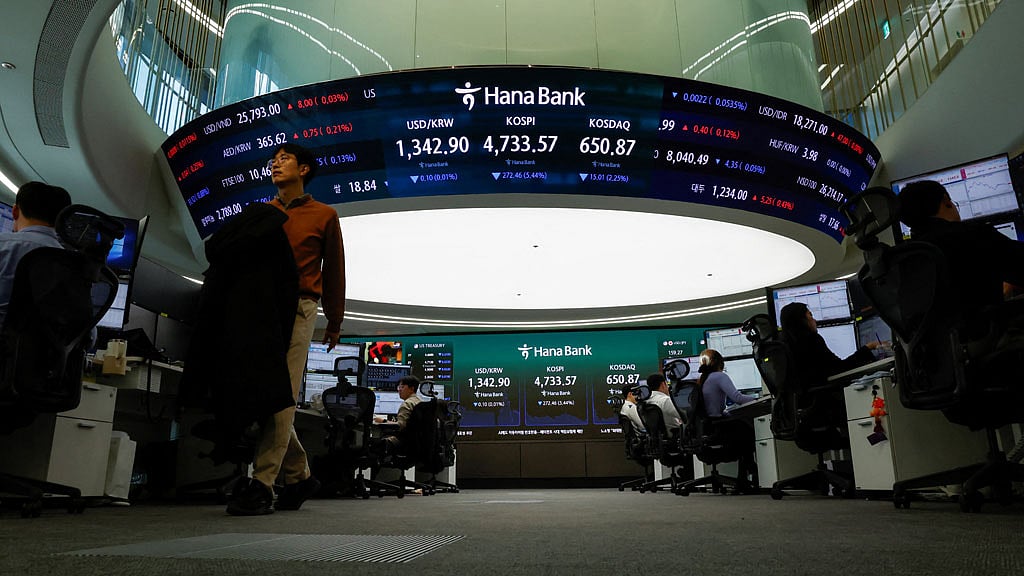
In Asia, Japan's Nikkei gained 1.6 percent, while South Korea's main index rose 1.9 percent and Taiwan added 1.4 percent. Any bounce was welcome given Japan is down 8 percent for the month, while South Korea has shed 16 percent and Taiwan 15 percent.
Asia-Pacific shares outside Japan rose 1.5 percent, and Chinese blue chips 0.6 percent.
S&P 500 futures added 0.6 percent and Nasdaq futures rallied 0.8 percent, having come back from sharp early losses during the previous session.
Tech giant Nvidia remained a source of unease after S&P put its credit rating on watch for a possible downgrade citing weaknesses in the chipmaker's management and board.
Nvidia stock ended down 3.9 percent at $149.30 on Wednesday, a staggering $2.3 trillion short of its October peak of $243.37.
Bonds Bet AI Jitters Will Restrain Fed
Bond investors are wondering if the broad losses in global stocks this month coupled with doubts about the durability of AI-driven business investment might temper the hawkishness of central banks.
It was notable that Treasury yields hit multi-week lows on Wednesday even as US economic growth for the third quarter was revised up sharply to 4.3 percent, while the Federal Reserve's favoured measure of core inflation hit an uncomfortably high 3.3 percent.
While futures imply a 98 percent chance the Fed will raise rates by 25 basis points in December, speculation of a half-point increase has faded.
Yields on 10-year paper were off at 4.848 percent, having touched an 11-week trough overnight.
Still, the prospect of extra tariffs was not exactly helpful to the outlook for inflation.
"The latest US tariff announcement is not as alarming as it looks, and the increase in the effective tariff rate looks set to be a touch lower than we've been assuming," said Stephen Brown, chief North America economist at Capital Economics.
"The additional tariff burden is likely to be small, but will still provide a marginal boost to prices and keep core goods inflation firm into next year."
In currency markets, the dollar's recent strength was tempered somewhat by the drop in Treasury yields, with the dollar index easing a touch to 103.71.
The safe-haven Swiss franc was a major gainer as the dollar eased to 0.8312 francs, while the euro steadied at $1.0970 from its recent low of $1.0881.
The dollar flatlined on the yen at 159.17, with the risk of intervention keeping 160.00 resistance intact.
In commodity markets, oil prices held firm after Yemen's Houthis said they had attacked Saudi Arabia's largest oil refinery, raising concerns about unexpected Middle East supply disruptions.
Brent futures rose 0.2 percent to $94.83 a barrel, while US crude futures added 0.5 percent to $84.10 a barrel.
Non-interest-bearing gold firmed 0.5 percent to $3,598 an ounce, having fallen over 7 percent so far this month.