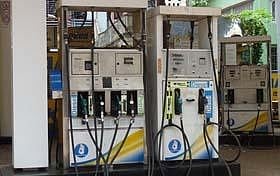
'Oil prices will stoke market fire'
Latest hike in oil prices will raise transport, production cost and add further to already high prices, warn economists
bdnews24.com News Service
bdnews24.com
Published :
30 Dec 2011, 01:58 PM
Updated :
10 Aug 2022, 06:01 PM
Abdur Rahim Harmachi
bdnews24.com chief economic correspondent
Dhaka, Dec 30 (bdnews24.com) – A day after the prices of fuel went up for the fourth time this year, economists and businessmen worry that the latest round of hike will spark further inflation.
The hike in oil prices would lead to a rise in transport and production costs, which would in turn escalate prices of essential commodities, the experts said on Friday.
Former economic advisor to the caretaker government A B Mirza Azizul Islam and Bangladesh Garments Manufacturers' and Exporters' Association (BGMEA) chief Shafiul Islam Mohiuddin said the government had little option but to raise oil prices in an effort to bring down subsidies to the sector.
The Bangladesh Institute of Development Studies (BIDS) researcher Zaid Bakht, however, said the government could cut expenses by reducing funds for "unnecessary" projects undertaken for political reasons.
The government on Thursday night announced rise in fuel oil prices by Tk 5 per litre.
Azizul and Bakht said the effect would show adversely in the inflation rate.
According to Bangladesh Bureau of Statistics (BBS), the inflation rate was 11.58 percent in November, and has remained in the two-digit bracket for the last nine months or so.
'VICIOUS CYCLE'
"The government had no way but to raise fuel oil prices. The money earned from the last two hikes has been consumed by the decrease in value of taka against dollar," Azizul told bdnews24.com on Friday.
He said the government could have borrowed money from banks instead of raising oil prices but its borrowing has already neared the target set in the budget.
"Flow of loans into the private sector would decrease if the government borrows more from banks," he explained. "In addition, it will put pressure on the next budget since the government will have to pay interest on the loans."
The government, he said, chose to raise oil prices keeping these things in view.
"Actually," Azizul said, "the government has fallen in a cycle of raising oil prices."
TIMING NOT RIGHT
Slamming the timing of the hike, BIDS's Bakht said, "People are already burdened with high inflation. And after this hike in oil prices, transport fares will rise further, which will lead to more inflation."
Asked about the reason behind the hike, he said, "The government is under pressure. It has to subsidise more than the target set in the budget, so it has to cut expenses.
"But the government could have released pressure from the budget by cutting expenses for unproductive sectors and projects taken under political consideration."
PRESSURE ON PRODUCTION COST
The demand of fuel oil almost doubled in the current fiscal, Bakht said. "The demand was 3.8 million tonnes in the last financial year, which went up to 7 million tonnes this fiscal," he said. "It actually increased to supply fuel oil to rental power plants."
He said prices of fuel have not gone up in the international market. "The finance minister himself is concerned over the inflation rate," he said.
Asked to comment on the latest hike in fuel prices, a seemingly annoyed BGMEA chief Shafiul said: "Inflation will rise (after) the hike in prices of fuel oil; daily expenses of workers will rise; transport cost will rise -- altogether, our production cost will rise."
He said the present situation is "unbearable" for both the government and businessmen.
"The government has no way but to raise fuel prices to reduce subsidies, considering prices in the international market," Shafiul said.
But with Bangladesh's economy not in pinkest of health, and Europe and the US swimming amid "economic depression", he said in this scenario it will be "difficult to hold market once production cost increases".
"I feel the government should think hard on this issue," Shafiul said.
In a statement issued on Thursday, the government reasoned that the latest round of hike in fuel prices were necessitated by the hefty subsidy that the fuel sector needs at present, rise in oil prices in the international market and depreciation of dollar against taka.
"The government will face a huge lose due to the import of fuel. Therefore, it is tough for the government to further subsidise the fuel sector from the current earnings," the statement said.
bdnews24.com/arh/ost/std/bd/1825h