High subsidies to eat into next budget
Govt decides to transfer part of its expenditure from this budget to the next one but economists remain apprehensive. Abdur Rahim Harmachi reports
bdnews24.com News Service
bdnews24.com
Published :
14 Mar 2012, 07:24 AM
Updated :
09 Aug 2022, 03:33 PM
Abdur Rahim Harmachi
Chief Economics Correspondent
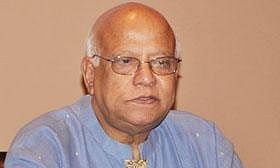
Dhaka, Mar 14 (bdnews24.com) — Subsidies are set to hit Tk 400 million, which is almost a fourth of the national budget, by the end of this financial year, says finance minister Abul Maal Abdul Muhith.
But a portion of the subsidies will be paid out from the next year's budget, he said.
Economists say that such a measure would mean that the new year will begin amid much pressure from the outset leading to indiscipline in economic management. This measure only burdens the younger generations with consequences of our excesses, they say.
"Subsidies are turning out to far outstrip the initial projections, so the finance minister has been compelled to transfer part of that burden to the next year," said AB Mirza Azizul Islam, a former finance adviser to a caretaker government.
He apprehended that government even two years down the line might be burdened with old debts if this practice continued.
The finance minister presented a progress report on the budget implementation for this fiscal's first half on Sunday at the parliament.
Muhith, in the report, said that subsidies were increasing and mentioned that they constituted 1.2 per cent of the GDP in 2009-10, 2.1 in 2010-11 fiscals, beginning in July every year. Initially subsidies for 2011-12 were projected to be 2.3 percent of the GDP amounting to Tk 204.77 billion. But it appears that they will eventually be as much as Tk 385 billion — 4.3 percent of the GDP.
"About 3.2 percent of the GDP will be paid off for subsidies but the 1.1 per cent will be paid off next year," said Muhith.
The demand for subsidies from different agencies is almost double the initial projection, he said. As a result deficit in the revised budget could rise up to Tk 463.28 billion from Tk 452.05 billion, meaning from 5 to 5.1 percent of the GDP.
The finance minister said that subsidy payments would be prioritised depending on the government revenues according to the July-December report.
The finance minister also indicated further increases in power and fuel tariffs keeping with the international trends to ease the government's pressure.
"We have rationalised the prices a few times already. This will continue till the local prices and import prices are at the same level."
Fuel prices increased four times last year. Power tariffs increased on Feb 1 for the last time.
Muhith said that rising fuel and food prices in the international market gave rise to some unexpected risks for the entire economy. Furthermore, he noted that the current debt crisis in Europe and slow US economy only added to worries over the external sector.
The finance minister said he had undertaken a number of appropriate measures to cope with the situation. "At times these measures have been difficult but I firmly believe that they will help attain the high growth we aspire for."
"We should remember that a single year is not the end when it comes to economic development. It is what we have achieved in the medium-term and long-term that is important."
Of the Tk 1635.9 billion budget, the report says, the government has spent Tk 620.76 billion in the first six months. Compared to the same period last year, expenditures have increased by 57.7 percent which is mostly due to the large amount of subsidies.
Mirza Azizul Islam said that the finance minister had admitted to the extra pressure on the economy due to power and fuel subsidies. "The finance minister is transferring that pressure on to the next year."
The former adviser suggested that instead of raising fuel and power prices randomly there should be a decision to keep fuel prices floating so that they are perpetually in synch with the international prices and increase or decrease accordingly.
Zaid Bakht, research director of the Bangladesh Institute of Development Studies (BIDS), said that sudden contraction of external aid was one of the reasons that the economy was in such a crisis.
He said that on the one hand there was this huge amount of subsidy while on the other hand there is the decreasing foreign aid.
"Thus the government has been forced to transfer part of this burden on to the next year," he said.
The finance minister said that the just over a quarter of the annual development programme had been implemented. The rate implementation remains the lowest in the last four years. "As a result the ADP has been scaled down by Tk 55 billion to Tk 405 billion."
bdnews24.com/arh/ta/1215h