


Published : 11 Apr 2020, 02:27 PM
Updated : 17 Oct 2022, 11:05 AM


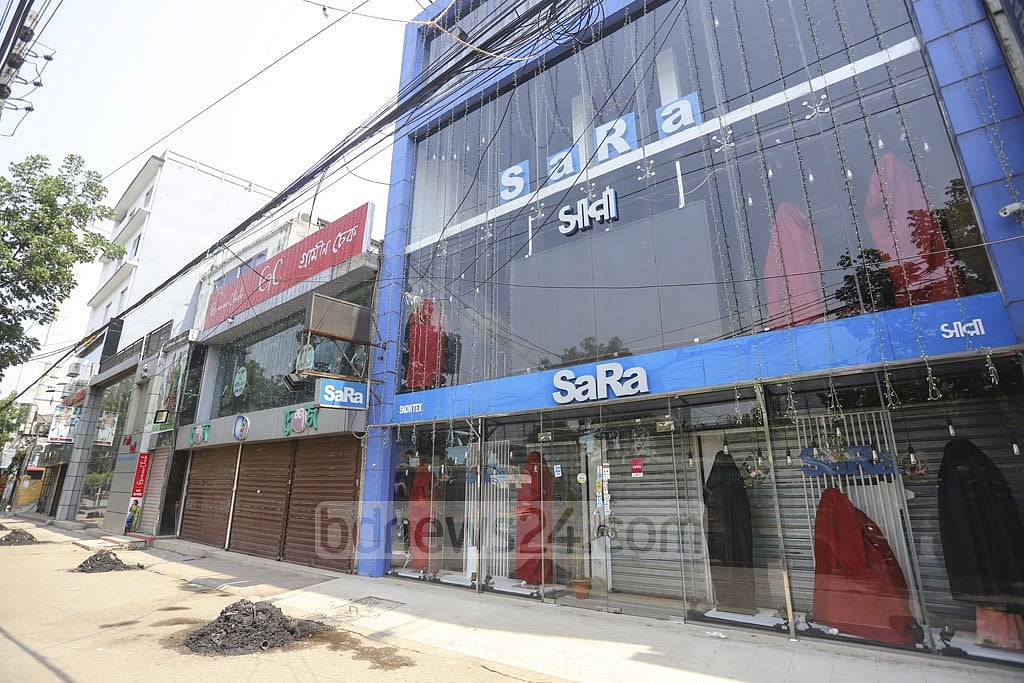


Local fashion brands have invested millions over the last two months to create products for Pahela Baishakh, one of the biggest cultural events of the year in Bangladesh.
But now that markets are totally shut down, unsold attires designed specifically for the festival are likely to set fashion houses back millions of takas in losses.
Bangladesh reported its first cases of the coronavirus on Mar 8. But the number of customers in shops began to dwindle this month, prompted by a surge in infections.
The government recently extended a nationwide shutdown to Apr 25 in a bid to limit the spread of the infection, allowing only a handful of emergency services and daily staple shops to operate during the lockdown.
The coronavirus has infected 424 people and killed 27 in Bangladesh so far. Under the circumstances, the government has suspended the festivities and mass gatherings for Pahela Baishakh and Chaitra Sankranti, which fall in the coming week.
Bangladesh Shop Owners' Association also ordered superstores, malls and markets across the country to shut down from Mar 25, with low cutomer attendance being one of the main reasons behind the decision.
Fashion houses in Dhaka’s Mirpur-2 are usually packed with customers during this time of the year. But the suspension of Pahela Baishakh celebrations due to a nationwide coronavirus outbreak has left them empty and forlorn this year. Photo: Asif Mahmud Ove
The top 10 local fashion brands, including Anjan’s, Kay Kraft, Banglar Mela, Rong, Shadakalo, Bibiana, Nipun, Deshal, Prabartana and Shristi, sell their products from a common shop named ‘Deshidosh.’
The fashion sector in the country makes half of its annual sales during Pahela Baishakh and Eid, AKM Golam Mowla from Deshidosh told bdnews24.com. This year, they had a sales target of Tk 20 million, he said.
“We have been preparing our products, worth about Tk 25 million for the upcoming Eid and Pahela Baishakh since February, and now we’re stuck with them at the store.”
“We create the design and buy the materials which are crafted by small producers. Thousands of people are involved in the entire process from production to marketing,” he said.
Banglar Mela has prepared products worth Tk 15 million to be sold in its 12 shops across the country for Pahela Baishakh.
“If we can’t sell the Baishakhi products now, we have to wait till next year. In that case, the colour and quality of the products will suffer,” said Saidur Rahman, marketing officer of the Banglar Mela outlet in Jamuna Future Park.
More than a hundred people work in the 12 branches of Banglar Mela, he said.
Fashion houses in Dhaka’s Mirpur-2 are usually packed with customers during this time of the year. But the suspension of Pahela Baishakh celebrations due to a nationwide coronavirus outbreak has left them empty and forlorn this year. Photo: Asif Mahmud Ove
“Products made for Baishakh have unique designs which are not in demand later. The products just started to reach showrooms when the outbreak hit and everything came to a standstill. There haven't been any sales so clothes worth 20 billion are just lying in stores,” he told bdnews24.com.
“We don’t know when the world will overcome this pandemic. We’ll make plans to overcome the losses after this period of stagnation ends,” said Shaheen.
Swadeshi is a platform of eight local fashion brands, Anya Mela, Adroit, M Craft, Nabarupa, Blue Eyes, Smartex, Shoilpik and Studio Emdad, that sells clothing items for Pahela Baishakh.
They set a sales target of millions every year and in most cases, 80 percent of it is fulfilled, said Raju Banik, manager of Swadeshi in Jamuna Future Park. The sales started on Mar 20 and peaked in April last year, he said.
This year, the products are ready as planned but there haven't been any sales, he told bdnews24.com.
“This has never happened in the history of our fashion business. We always had strikes and blockades during periods of political upheaval but business continued. If the shops were closed during the day, we opened them at night. It never remained closed for this long,” said Sanaul Kabir Kiran, an official of Annamela.
No sale of fashion products had an impact on the salespersons as well, he said.
“Those who work in the sales can make a threefold earning during the Pahela Baishakh as they get a commission on the sales. This year they got deprived of it,” said Kiran.













