Eastern Europe finds no love in EM rally
Signs the world recession may be easing have investors snapping up emerging market assets -- provided, that is, the assets are not from Eastern Europe.
bdnews24.com News Service
bdnews24.com
Published :
19 Jun 2009, 09:13 AM
Updated :
12 Aug 2022, 01:19 PM
By Vivianne Rodrigues and Steven C. Johnson
NEW YORK, June 19 (bdnews24.com/ Reuters)— Signs the world recession may be easing have investors snapping up emerging market assets -- provided, that is, the assets are not from Eastern Europe.
Portfolio managers and analysts at the Reuters Investment Outlook Summit in New York this week who were bullish on China's growth prospects or Brazil's high interest rates drew the line at the ex-East bloc countries on Europe's periphery.
Once investment darlings boasting double-digit annual growth, countries such as Hungary, Romania, Latvia and Ukraine are struggling with massive deficits, overvalued currencies and rapidly shrinking economies.
Latvia's economy alone is expected to shrink 20 percent this year, and the country had to bring down a huge deficit to clear the way for emergency International Monetary Fund and European Union loans.
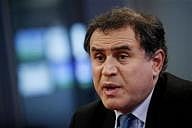
"There are two groups in emerging markets -- those that have better financial and policy fundamentals, and countries mostly in emerging Europe that have fundamental weaknesses: current account and fiscal deficits and currency mismatches," said Nouriel Roubini, chairman of the research firm RGE Monitor.
Unlike Brazil or China, whose export-driven economies are fundamentally sound and whose banking systems are relatively healthy, the East Europeans in recent years embraced the Anglo-American model of credit-driven, consumer-led growth.
Businesses and households took on massive foreign currency debt, mainly in euros or Swiss francs, inflating credit and housing bubbles and leaving the economies dependent on large capital inflows.
As the crisis hit, countries with floating exchange rates such as Hungary were forced to cut spending and hike interest rates, with dire economic consequences.
Latvia, with its currency pegged to the euro, faced strong devaluation pressure and has burned through much of its foreign currency reserves defending the lat for fear devaluation would cause massive default among those with foreign currency debt.
The IMF and EU fear devaluation would spark contagion, threatening the currency pegs in Estonia, Lithuania and Bulgaria and hurting euro-zone banks with regional exposure.
Roubini said "devaluation in Latvia is unavoidable at this point, adding that the situation resembles past episodes in Argentina, Korea, Russia and elsewhere.
Once a currency peg becomes unsustainable, it will collapse sooner or later, he said. "If you don't let the steam out early, a (worse) crisis will occur. We've seen this story many times before -- defense of an indefensible peg is not going to work."
IMF HELP
All of that makes investing in the region an endeavor only for the very brave. Even in countries such as Poland and the Czech Republic, whose economies are in firmer shape, economic indicators continue to deteriorate, suggesting lower interest rates ahead.
"Interest rate differentials will start to matter more and more," said Alberto Bernal, head of emerging market fixed-income research at Bulltick Capital Markets. "There's not much of a competition given that right now; you can buy Brazilian reals, open an overnight account, and get 9.25 percent back."
Compare that, he said, to 1.5 percent rates in the Czech Republic and 3.75 percent in Poland. Bernal also favors Mexico, Chile and Colombia over Eastern Europe.
One hopeful sign in Eastern Europe, investors said, was the quick response of the IMF, which has made emergency loans to a host of countries in the region, including Latvia, Romania, Ukraine and Hungary.
Eastern Europe "was a much bigger worry until the IMF came around," said Steven Englander, chief currency strategist at Barclays Capital. "The presence of the IMF gives the market some confidence that if not all bad outcomes can be averted, then the worst outcomes will be averted."
Roubini said the IMF has learned its lesson and has shown it by acting quickly and by lending significant amounts of money to the countries in need. For example, in 1998, Korea got only $10 billion in emergency aid, while this time, Romania, an economy 10 times smaller, got $20 billion.
Still, the money alone won't save the day.
"Some of these countries need the support of the IMF, together with significant policy adjustment to avoid a more severe crisis," Roubini said. "Lots of money without policy adjustment... it's not going to work."
bdnews24.com/bd/1450h.