Central banks have lost control: George Soros
Business leaders rattled by a slump in global markets urged the U.S. and other central banks on Wednesday to get a grip on the global economy and some accused the Federal Reserve of losing its nerve.
bdnews24.com News Service
bdnews24.com
Published :
23 Jan 2008, 09:05 PM
Updated :
24 Apr 2022, 08:06 PM
Natsuko Waki and Ben Hirschler
DAVOS, Switzerland, Jan 23 (bdnews24.com/Reuters) - Business leaders rattled by a slump in global markets urged the U.S. and other central banks on Wednesday to get a grip on the global economy and some accused the Federal Reserve of losing its nerve.
With share prices tumbling again despite an emergency U.S. interest rate cut on Tuesday to counter fears of recession, top executives expressed alarm at an annual gathering in the Swiss resort of Davos.
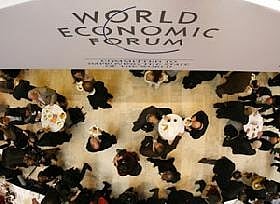
"Central banks have lost control," said financier George Soros, echoing the concerns of many of the more than 2,000 business and political leaders arriving in the snow-clad mountain town for the World Economic Forum meeting.
In a debate on the U.S. economy, 59 percent of participants agreed with a motion that central bankers had lost control.
Another panel agreed a lack of international economic policy coordination was the biggest risk to the world economy in 2008.
Top Washington officials sought to counter the talk of a recession.
Secretary of State Condoleezza Rice -- in a rare foray into economic issues -- said the U.S. economy remained in shape.
"The U.S. economy is resilient, its structure is sound, and its long-term economic fundamentals are healthy," Rice said.
David McCormick, U.S. Undersecretary of the Treasury for International Affairs, adopted the same tone.
"While we continue to believe the U.S. economy will grow, it will grow at a slower pace and there is no doubt downside risks have increased," he said.
But many executives said the surprise decision by the U.S. Federal Reserve on Tuesday to cut interest rates by 75 basis points looked like a panic move.
"I'm sort of worried that all they did yesterday was to hit the snooze button. (This is) excessive monetary accommodation that just takes us from bubble to bubble to bubble," said Stephen Roach, Asia head of U.S. bank Morgan Stanley.
Lawrence Summers, a former U.S. treasury chief, was critical too: "It's hard to give a high grade (to central banks) for what's happened in the last six months."
Another former head of the U.S. Treasury, John Snow, was more supportive of the U.S. central bank.
"What yesterday's action shows us is the Fed is focused but they are aware of negative trends in the economy and prepared to take bold steps," he said.
NO MORE RELAXED CHATS
Business and political leaders in Davos face what many fear could be the biggest financial crisis since World War Two.
Policymakers accustomed to relaxed chats in the winter splendor of the Swiss Alps will this year face a more torrid time as business leaders fret over the outlook.
"The thing that markets are desperate for right now is leadership, whether globally or regionally, and it seems this is lacking," said John Studzinski, head of U.S. private equity firm Blackstone's advisory business.
The Fed's unilateral action on Tuesday, when it cut rates by 75 basis points, was its biggest emergency cut in two decades.
It has put more pressure on the European Central Bank to relax its view against cutting rates and coordinate a response.
But ECB chief Jean-Claude Trichet, speaking in Brussels on Wednesday before departing for Davos, refused to buckle, saying low inflation remained the bank's priority.
Business leaders said even if the U.S. economy began to shrink, the impact for the rest of the world would be less than in the past, thanks to the booming economies of developing countries such as China and India.
"I think there is certainly better than 50 percent chance that the U.S. is headed into a recession," Coca-Cola Co. Chief Executive Neville Isdell told Reuters in Davos.
"But does this signal we are going to have significant contagion around the world, which means we are going into a global recession? I don't believe that is the case."
Martin Sorrell, CEO of the world's second-biggest advertising and marketing company WPP Group Plc, said he saw no sign of a slowdown in his bellweather industry, although 2009 might be a different picture.
"We as an industry probably would be a lead indicator of recession and I think it is interesting that we have not seen a significant shift in purchasing intention in the advertising and marketing services industry as yet," he said.
bdnews24.com/ad/0257 hours