


November 21, 2026

Business leaders key to BCIM

Businesspersons hold the key to the progress of the proposed Bangladesh-China-India-Myanmar (BCIM) economic corridor, a senior Yunnan-based official and researcher says.

Nurul Islam Hasib

from Kunming

bdnews24.com

Published : 09 Jun 2014, 09:17 AM

Updated : 08 Aug 2022, 06:51 PM

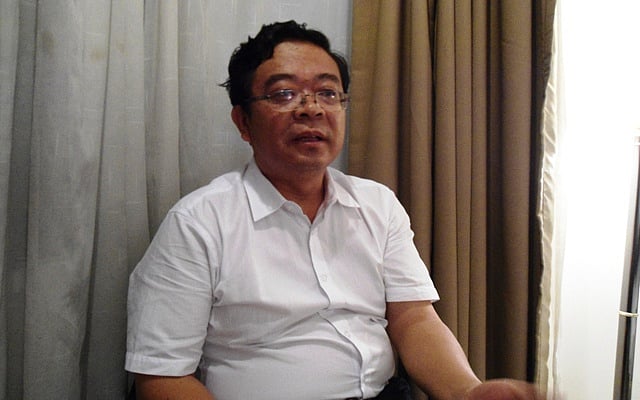
Prof Kong Can, Vice Department-General, of the provincial government’s think-tank Development Research Centre believes the whole process would be expedited once businesspersons joined political leaders to push the pace.

“The gas pipeline project from Kyauk Pyu (Rakhine state, Myanmar) to Kunming (Yunnan) was finished because the Chinese, Indian, Myanmar and even South Korean businesspersons found business opportunities there. They pushed the project forward, though many academics had doubts about this project,” he told bdnews24.com in an exclusive interview.

“The businesspersons were an important driver for the connectivity,” he said.

Kong Can has advocated BCIM cooperation since 1999 when the first meeting of the initiative held in Kunming, China’s gateway province to Southeast and South Asia.

“Since then we are talking but there is no highway, no railway there,” he said.

“We need some economic forces to support the political plan,” he said.

"Politics is often an obstacle rather than a driver, it is economics and business that will drive the BCIM process."

Kong Can also pitched for some projects that would give immediate results.

He identified tourism and joint industrial zones along the proposed route of the BCIM connectivity and also 'medical cooperation'.

“We cannot just start the connectivity project. It’ll take time,” Kong Can said

But above all he stressed on knowing each other as he found Chinese people do not know about South Asia particularly Bangladesh.

He said every year China holds 60 to 70 meetings abroad and three to five millions Chinese go to Thailand.

But only 100,000 Chinese go to South Asian countries.

“If we focus on it then it would be easy to attract some meetings and Chinese tourists to Bangladesh, India, Nepal and Sri Lanka”.

He said a Chinese company planned to produce 10,000 pieces of battery powered bi-cycles which is very popular in China and will have good market in South Asian countries, particularly India and Bangladesh.

He is looking for a partner in these countries to open factories for local marketing in South Asia.

He said even 'medical cooperation' can be developed based in Kunming, the 'city of eternal spring'.

“We can appoint South Asian nurses in Kunming,” he said.

Nurses in Kunming don't speak English, which those from South Asia.

If Kunming has to develop as an advanced medical hub, it will need professionals from South Asia to interact with foreign patients, Kong Can said.

“We should do something together immediately to get the hang of cooperation”.

“Infrastructure development from Kunming to Dhaka, both road and rail connectivity will take at least 10 years and even longer than that.

“It will need political will but that must be backed by economic forces to support”.

But businesspeople would also need support from the governments, Kong Can said.

“If economic exchange is the driving force for the economic corridor, then government should also do something to support the businessmen”.
Image
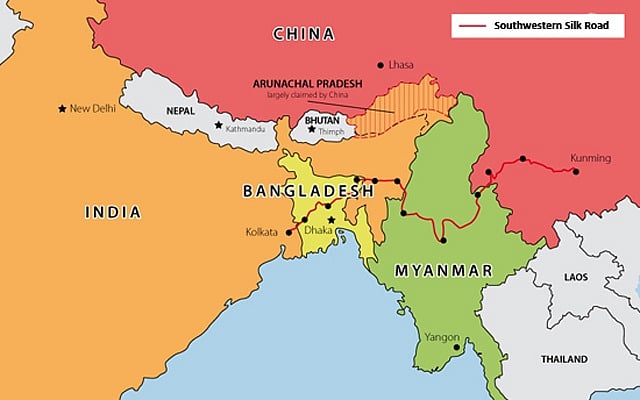
BCIM map by Asia Briefing

BCIM map by Asia Briefing

Know each other But he said people to people exchanges would be the “base” of the BCIM economic cooperation. He said BCIM countries could cooperate in tourism sector even before the infrastructure becomes ready for connectivity. He said Bangladesh’s culture, natural beauty and history can attract more Chinese tourists, but he found that Chinese people do not know about that. “We have now direct flight from Kunming to Dhaka, but many Yunnan people do not know that,” he said suggesting media exchanges and cultural exchanges of both sides. “Ask a local (Kunming) people about Bangladesh, how far Bangladesh from Yunnan? “I can promise you most of them would say it’s a long way, even longer than America”. “One general manager of a Kunming company asked me is it true that it’s just two hours to fly to India from Kunming,” Kong Can said. “There should be a ‘stable mechanism’ for people-to-people and media exchanges”. He said more than 10,000 Chinese students are studying in Thailand universities. But they don’t go to Kolkata and Dhaka. He said America and China have more than 100 kinds of exchanges at different level and even China has many exchange programmes with its rival Japan. “Most Chinese people don’t know about South Asia even”. But he found once Chinese people go to South Asian countries, “they go again and again and tell their friends to visit”. Last Nov, Kong Can brought few private sector personalities to join the Kolkata to Kunming (K2K) forum in Kolkata. More than 13 Yunnan entrepreneurs attended the forum and that was their first trip to South Asia. “But today in seven months almost half of them have paid a second visit”. He said the society and culture attracted them and they find business opportunities. “So media should be the pioneer for strengthening the relations between South Asia and China to promote cooperation and exchanges”. He said most of the adult people know South Asia from Indian movies in 1950s and 1960s. “Now we don’t have that kind of cultural exchanges and their ideas about South Asia seems to have frozen in time”. He said another group knew South Asia after paying a short trip. “They stay some days and get an idea about modern and contemporary South Asia, its diverse people, culture and religions. They think it can be a tourist destination”. But he said there is a group who study South Asia and found lot of things that even China can learn from South Asian experiences of growth. He said China’s economic growth relies on exports and manufacturing sector. “We have been successful but we have some problems because we have used too much natural resources”. “We should switch from this kind of model to a new model,” he said, "and service sector could be an area in which China could learn from South Asia". “In fact we can learn from each other”.

Also Read:

Bangladesh needs BCIM: PM
Related Stories




