bdnews24.com
Home +
  • Bangladesh
  • Politics
  • Campus
  • Education
  • Media
  • Environment
  • Health
  • Fashion
  • People
  • Automobile
  • Aviation
  • World
  • Science
Sport +
  • Sport
  • Cricket
World +
  • Middle East
  • Europe
  • Neighbours
Business & Economy +
  • Business
  • Economy
Features +
  • Opinion
  • Technology
  • Lifestyle
  • Entertainment
  • Hello
  • Stripe
Others +
  • Photos
  • Tube
  • Mobile

June 08, 2026

  • Bangladesh
  • Sport
  • Technology
  • Opinion
  • Politics
bdnews24.com
বাংলা
  • National Election 2026
  • World
  • Opinion
  • Entertainment
  • Lifestyle
  • Economy
  • Business
  • Cricket
  • Recent
bdnews24.com
Home
  • Bangladesh
  • Politics
  • Campus
  • Education
  • Media
  • Environment
  • Health
  • Fashion
  • People
  • Automobile
  • Aviation
  • World
  • Science
Sport
  • Sport
  • Cricket
World
  • Middle East
  • Europe
  • Neighbours
Business &
Economy
  • Business
  • Economy
  • Budget 2025-26
Features
  • Opinion
  • Technology
  • Lifestyle
  • Entertainment
  • Hello
  • Stripe
Others
  • Photos
  • Tube
  • Mobile
  • Business

Bangladesh factories pick up speed in handset assembly

People involved with the mobile phone sector feel Bangladesh will no longer need to import handsets as a dozen of local factories are scaling up assembly operations.

Senior Correspondent

Shamim Ahamed, , bdnews24.com

Published : 30 Jan 2021, 11:14 PM

Updated : 30 Jan 2021, 11:14 PM

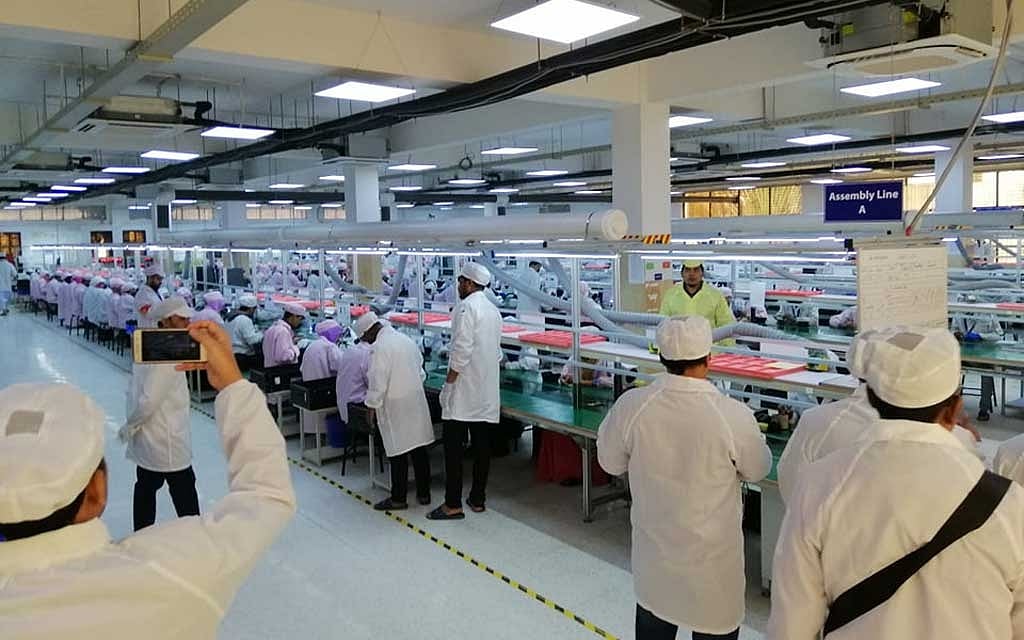
Symphony mobile assembling factory in Zirabo, Ashulia. They plan to export handsets in 2022. Symphony mobile assembling factory in Zirabo, Ashulia. They plan to export handsets in 2022.
More than 60 percent of feature phones in Bangladesh are assembled in local factories; experts in the sector hope to meet the demand fully this year. More than 60 percent of feature phones in Bangladesh are assembled in local factories; experts in the sector hope to meet the demand fully this year.
Bangladeshi factories are assembling smartphones to fully meet local demand. Bangladeshi factories are assembling smartphones to fully meet local demand.

They say the factories are fully capable to meet the local smartphone demand, while they can supply almost 80 percent of the feature phones.

Top officials of the plants, including that of Korean giant Samsung Electronics, say the sector will be able to fully meet the local demand this year.

The production of mobile phone handsets in Bangladesh has caused the grey market of illegal and fake mobile to shrink.

As many as 33 million mobile handsets were made in Bangladesh over the past one and a half years, including 18.8 million in last six months, said Shyam Sunder Sikder, the chairman of Bangladesh Telecommunication Regulatory Commission or BTRC.

Bangladesh imported 16.3 million mobiles in last one and a half years with only 1.8 million of them imported in the last six months.

Before domestic production began in 2017, Bangladesh needed to meet the local consumption through 100% import of handsets. Now the plants import small parts and assemble the handsets.

The handset market in Bangladesh is worth over Tk 100 billion or roughly $1.2 billion.
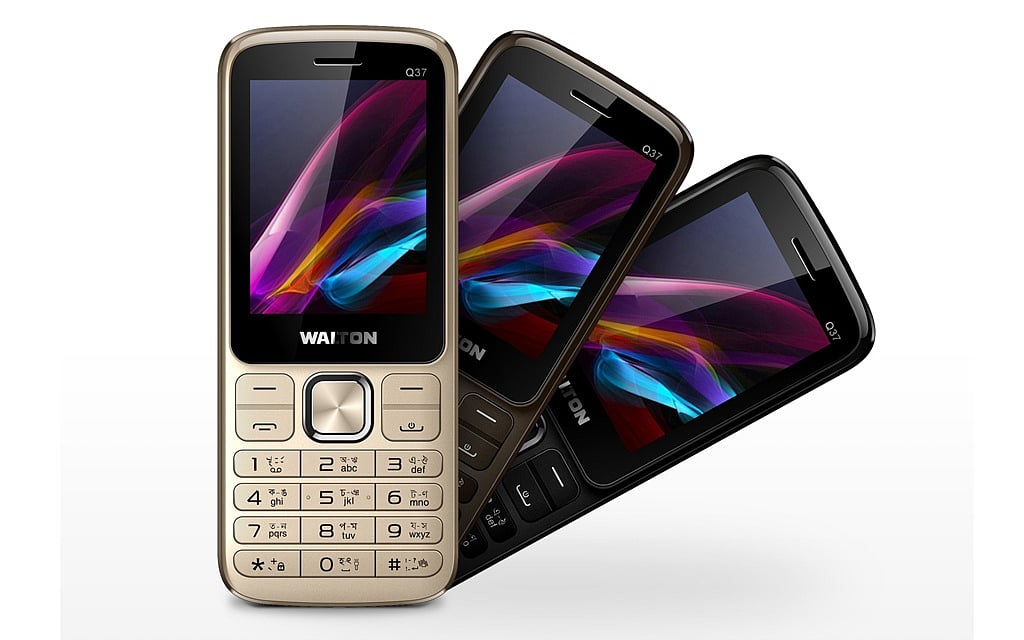
More than 60 percent of feature phones in Bangladesh are assembled in local factories; experts in the sector hope to meet the demand fully this year.

More than 60 percent of feature phones in Bangladesh are assembled in local factories; experts in the sector hope to meet the demand fully this year.

One has to pay more than 60 percent tax in total to import a handset. On the other hand, the government has exempted the local manufacturers from paying value added tax or VAT while the plants assembling the handsets need to pay only 5 percent VAT.

According to the BTRC, at least 12 companies have the licence to make mobile

handsets.

These are Walton Digi-tech Industries Ltd, Fair Electronics (Samsung), Edison Industries (Symphony), Alamin and Brothers (5 Star), Carlcare Technology BD Ltd (itel and Techno), Anira International (Yunstar), Best Taicool Enterprise Ltd (Vivo) , Grameen Distribution (Lava), Banglatrinic Technology (DTC), Benley Electronic Enterprise (Oppo), and Okay Mobile and Mycel Technology.

The annual demand in Bangladesh is more than 35 million handsets, including 11 million smartphones made or assembled locally, according to Zakaria Shahid, the general secretary of Bangladesh Mobile Phone Importers Association.

Over 60 percent of the feature phones are made or assembled in Bangladesh, according to Zakaria. He hopes the plants will be able to meet the demand fully in a short time.

Import of illegal and fake handsets dropped after local factories began to assemble handsets, added Zakaria, the managing director at Edison Group.

“The cost dipped 20 to 25 percent after handsets began to be made in Bangladesh. That's why the grey market is unable to make profits."

He also hopes that market of illegally brought and fake handsets will be gone when the regulator begins the process to shut down such phones.

Among the 12 factories licenced to assemble mobile handsets, only two are not yet operational, the importers' association chief said.

More companies are now keen on setting up factories in Bangladesh and the association is providing assistance to those firms.

"Currently, almost 100 percent of the demand for Samsung phones is met by locally assembled handsets in our factories. Samsung’s high-end devices like Galaxy S21 Ultra 5G will be assembled here soon, as Bangladesh will be having 5G (network)," said Md Mesbah Uddin, the chief marketing officer of Fair Electronics, which is the marketing and local assembly partner of Samsung.
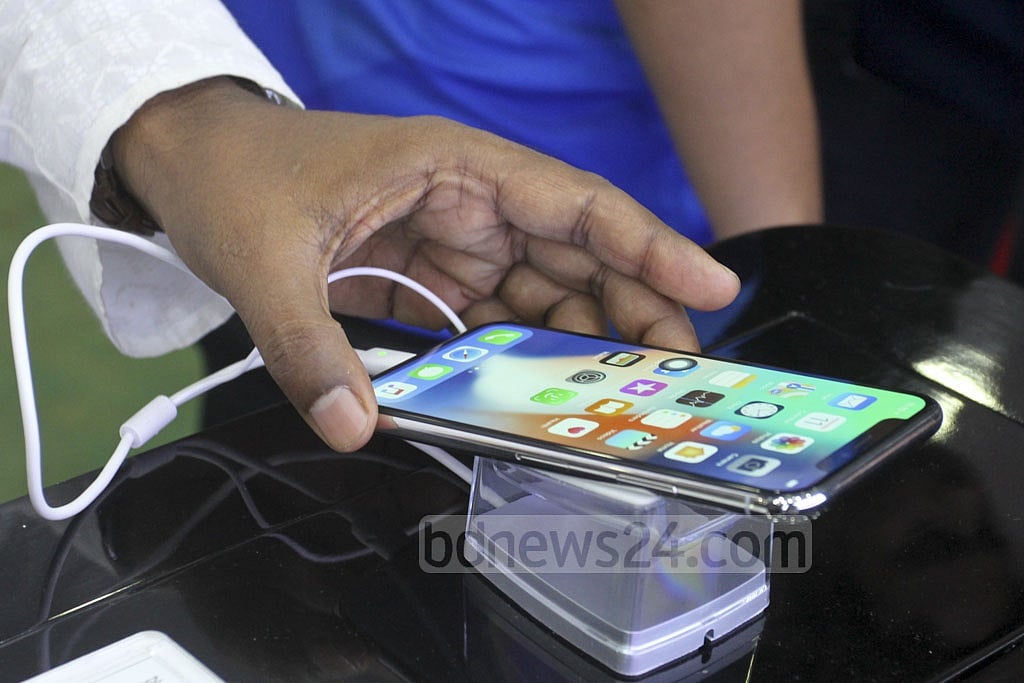
Bangladeshi factories are assembling smartphones to fully meet local demand.

Bangladeshi factories are assembling smartphones to fully meet local demand.

Samsung Bangladesh and its local partner Fair have been assembling smartphones in the plant at Narsingdi since June 2018 to cater the local market.

“The handsets are cheaper now since they are assembled here. Also, the sector has generated more than 15, 000 jobs. We hope there'll be more," said Mesbah.

"Earlier, there wasn't any opportunity to create skilled labour in making mobile handsets. This sector has just begun to gain the skills."

“Some factories are preparing to make motherboards, and gradually the mobile phones will be 100 percent made in Bangladesh. This sector will play a significant role in export after meeting local demands," said Mesbah, the joint secretary of BMPI.

“Around 5.5 million units of handsets of Techno and itel brand are made in our factory. Starting its operation two years ago, the factory produces more than 1.5 million smartphone handsets per year. The demand has shot up this year, so we plan to scale up our production as well,” said Transsion Bangladesh CEO Rezwanul Hoque.

Walton Digi-tech Industries have been assembling handsets since December 2017.

The company produced 4 million feature phones and 400,000 smartphones amid the coronavirus pandemic last year, said Asifur Rahman Khan, Walton’s head of sales.

Walton Digi-Tech plans to double the production next year, he added.

“The government is prepared to fully support these companies,” said Post and Telecommunication Minister Mustafa Jabbar, referring to the VAT exemption and cut.


Follow bdnews24.com on Google News
Related Stories
Wall Street ends sharply lower
Bad loans behind lenders’ repayment woes: Kyser Hamid
BSEC chief plans regulation as needed
Read More
Zverev clinches maiden Grand Slam title
UK tops remittance chart for first time
Brazil lose injured Wesley, call up Ederson
Women members ‘complete’ parliament: speaker
Read More
Opinion

Anika Tahsin

Misunderstood truths about studying English

Misunderstood truths about studying English

Towheed Feroze

Is Masud Rana wearing lipstick?

Is Masud Rana wearing lipstick?

Arshi Fatiha Quazi

When hospitals become death chambers

When hospitals become death chambers

Jon Sindreu

How a housing pivot could rescue Starmer

How a housing pivot could rescue Starmer
Read More
Editor-in-Chief and Publisher: Toufique Imrose Khalidi
News
  • Home
  • Bangladesh
  • Business
  • Politics
  • Economy
  • World
  • Technology
  • Science
  • Environment
  • Health
Op/Ed
  • 1971
  • Achievement
  • CHT
  • Corruption
  • Culture
  • Democracy
Social
  • Facebook
  • Twitter
  • Instagram
  • Youtube
  • WhatsApp
Features
  • Tech
  • Lifestyle
  • Entertainment
Others
  • Stripe
  • Hello
  • Mobile
Sport
  • Sport
  • Cricket
Follow us
  • Disclaimer & Privacy Policy
  • About Us
  • Contact Us

Copyright © 2026, bdnews24