Published : 27 Jul 2024, 08:19 AM
Updated : 21 Aug 2026, 11:42 AM


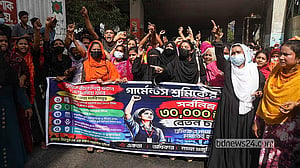
The apparel sector in Bangladesh is grappling with the aftermath of unprecedented violence during student protests for reforms to government job quotas, a subsequent curfew, and internet shutdown.
TAD Group, a major player in the industry, had to halt production due to the disruptions.
With a daily output of 300,000 to 350,000 garments and monthly export volume of 6 to 7 million products, the impact of the shutdown has been significant on the company.
Production resumed on Tuesday following the easing of the curfew, but the four-day suspension beforehand has raised concerns about long-term effects.
Ashikur Rahman Tuhin, TAD Group's managing director, expressed worries over the delayed production. “We couldn’t produce nearly 1.4 million garments in those four days,” he said.
“If there’s a delay in shipping, many buyers might cancel their orders or demand air freight, which would significantly increase costs.”
Bangladesh has about 2,800 garment factories involved in direct exports, all facing similar anxieties.
The country earned $55.55 billion from exports in the FY 2022-23, with nearly $47 billion coming from the garment industry, making up 84.58 percent of the total.
The curfew and disruption in banking and internet services have heavily impacted this vital sector.
Business owners say that while production is starting to normalise with the easing of the curfew and restoration of the internet, it may take two to three months for conditions to return to normal.
The repercussions could even extend into the third quarter of the current fiscal year – January-March 2025.
“With limited broadband internet now operational, we resumed communication on Wednesday,” said MD Tuhin.
“We are concerned that we might need to use air freight for some products, or we could miss the end of the winter season entirely.”
EXTENT OF DAMAGE
The chaos caused by the quota reform protests started disrupting product transportation in mid-July.
By Jul 18, when the situation escalated, most businesses and factories were forced to close.
Broadband internet was cut off that night, while mobile internet had already been suspended.
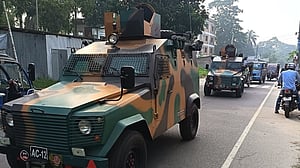
The curfew imposed from the night of July 19 led to a nationwide military deployment, halting production and preventing shipments from factories to ports.
Existing shipments were delayed due to internet service disruptions, and imported raw materials faced clearance issues at ports.
The situation began to normalise on Wednesday following the partial resumption of broadband internet and security measures for export-import activities.
The Bangladesh Garment Manufacturers and Exporters Association, or BGMEA, reported daily financial losses of approximately Tk 16 billion due to the closures.
Mohammad Hatem, executive president of Bangladesh Knitwear Manufacturers and Exporters Association or BKMEA, estimates a $1 billion loss during the unrest.
Syed Moazzam Hossain, president of the Australia-Bangladesh Chamber of Commerce and Industry, or ABCCI, also noted the significant impact of the chaos.
“Due to the bank closures, opening LCs was halted, and garment factories were also shut down. This disrupted production.”
“Now, to recover the losses, we need to keep the factories operational even on holidays.”
INCREASED AIR FREIGHT COSTS
The garment sector exports an average of $4.5 billion worth of goods monthly, equating to daily exports of $150 million, according to the BGMEA.
Due to the disruption, some shipments that could not be dispatched on time may now incur additional costs if sent by air, potentially adding $1 million in expenses, said a businessman.
“Earlier, a delay of five to seven days was manageable. But due to persistent issues from our country, they now refuse to accept it and will charge for air freight,” he said.
“This will add an extra $1 million in costs, which is substantial.”
When asked about this, ABCCI President Moazzam said: “Due to the general holiday, we could not ship orders.”
“We now have two options: offer a 10-15 percent discount to buyers or ship by air, which could significantly increase costs.”
Zahid Hussain, former lead economist at World Bank’s Dhaka office, said: “While short-term losses are evident, the key concern is whether there will be any long-term effects.”
LC COMPLICATIONS
BKMEA’s Hatem said he applied for a $100,000 LC at a private bank on Jul 18.
However, due to disrupted internet connectivity and bank closures, the LC was opened only on Jul 25.
“Even without the crisis, banks are often slow in opening LCs. The delay has further damaged business operations,” he said.
Although banks reopened on Wednesday, the rate of LC openings was initially low before increasing on Thursday.
State-owned Sonali Bank typically processes $400-500 million in LCs daily, but due to closures, overdue LCs amount to $30-40 million.
Officials anticipate resolving these by next week.
Syed Mahbubur Rahman, managing director and CEO of Mutual Trust Bank Limited, said bank closures delayed LC openings and they would assess the impact after the end of the month.
“Banks resumed LC services on Wednesday, but demand is lower than before,” he said.
‘REAL DAMAGE’ AHEAD
The impact of the recent unrest and curfew on the garment sector is far from over.
Industry insiders are concerned that the full extent of the damage may not become clear until the third quarter of the fiscal year.
This period is typically crucial for Bangladesh’s exports, as demand for products in the US, Europe, and other Western countries peaks due to holidays and travel.
Currently, countries like India, China, and Vietnam are sending samples to secure orders for this critical period, which must be completed before the August holidays.
However, the recent disruptions in factory and export-import operations have caused delays in sending these samples, putting Bangladesh at a disadvantage.
Exporters are worried about the potential long-term effects on buyer confidence due to disrupted communication during the internet outage.
They fear that the sector may experience a 20 percent drop in exports during the January-March period.
Shovon Islam, managing director of Sparrow Group, said: “We experience maximum export volume from the 25th of December to the 30th of March, averaging $270 million per month.”
“However, it seems we will incur a $60 million loss each month this time.”
They export garments to 40 companies in 20 countries.
Fazle Shamim Ehsan, owner of Fatullah Apparels Limited, also anticipates long-term losses.
He said delays in sending samples before the August holidays could result in significant financial losses, as competitors from India, Vietnam, and China continue to send their products.
His company, which typically exports around $1 million worth of goods each month, is expected to suffer considerable setbacks.
IMAGE CRISIS
BGMEA Director Shovon highlighted the sophisticated nature of their buyers and the automated systems they rely on for monitoring production processes.
"Our buyers are sophisticated. They can observe every step of the production process from afar. But with the internet down, they were completely in the dark.”
“We had mobile phones, but they were on 2G, making communication difficult," he explained.
He continued, "Although limited internet service resumed on Wednesday, we still couldn't make WhatsApp calls. We are trying to communicate via Zoom, but the buyers remain unconvinced”
“After all this, they are reluctant to take further risks. Convincing them is proving to be challenging."
"Our image has suffered irreparable damage. Our reputation has taken a significant hit," he lamented.
BGMEA President SM Mannan Kochi echoed these sentiments, expressing concern over the potential loss of trust and reliability among international buyers.
"We are worried about the erosion of confidence and trust from our international buyers,” he said.
WAY TO NORMALCY
With limited internet services resumed and alternative customs services in place, export-import operations have begun to normalise.
By Wednesday evening, 6,718 export shipment documents had been processed on the server for customs clearance.
According to the National Board of Revenue, or NBR, last year an average of 6,000 export shipments were processed daily through 43 customs stations across the country.
An NBR official told bdnews24.com they were operating all customs houses at full capacity. “With alternative arrangements in place, there are no issues with assessment and clearance," he said.
BKMEA’s Hatem, however, expressed doubts about a quick recovery.
"Recovering from this damage will be very challenging. Such incidents have both short-term and long-term impacts," he said.
“I believe the long-term effects will be significant due to the six-day shutdown.”
ABCCI’s Moazzam also noted the difficulty in overcoming the damage.
"It will be tough to recover from these losses. To get back on track, workers may need to work on Fridays in the coming days,” he said.
[Writing in English by Fariha Bristy]