Published : 24 Oct 2026, 07:32 PM
Updated : 24 Oct 2026, 07:33 PM


Asif Nazrul hopes the parliamentary committee on constitutional reform will deliver the biggest possible gains, even if it falls short of the sweeping changes once envisioned under the interim government.
The former law advisor of the Nobel laureate Muhammad Yunus-led interim administration said he wants a Constitution far more advanced than the present one.
“Whatever is achieved will be a gain, but the aim is the maximum.”
“What we wanted during the interim government, you can understand from the laws themselves. Personally, I think any positive change in the Constitution is a reform. What matters more is whether we ultimately achieve the goal, more than the process we followed.”
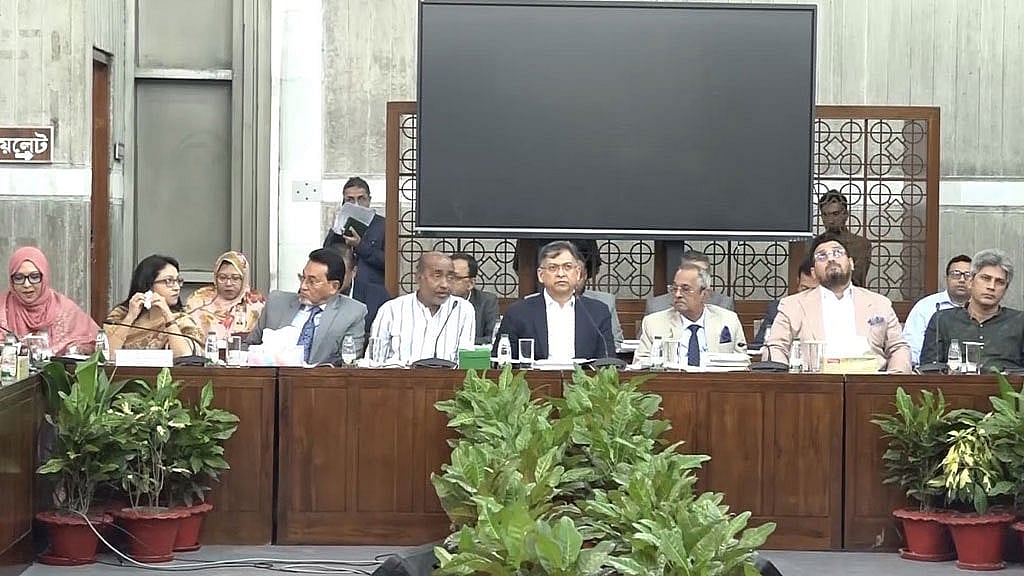
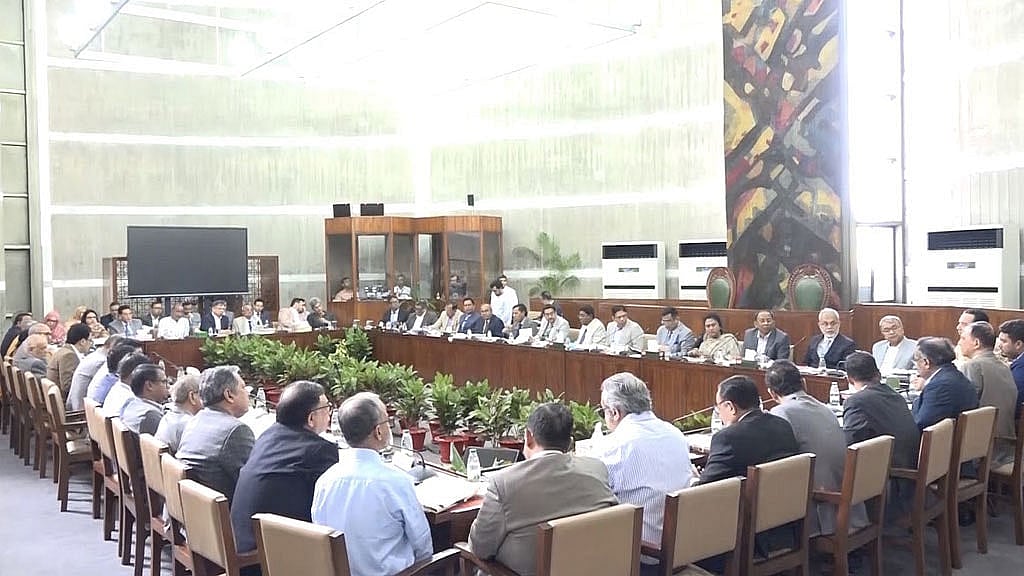
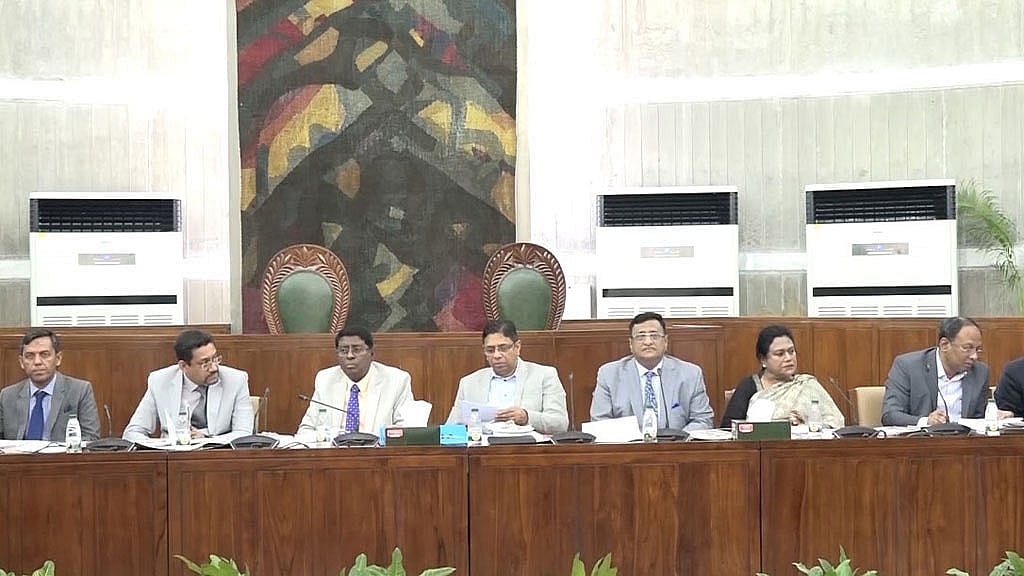
The committee’s ninth meeting began at 11am at the parliament complex, presided over by Home Minister Salahuddin Ahmed, with leading legal experts in attendance.
The July National Charter was adopted for state reform under the interim government led by Muhammad Yunus.
Efforts to form a Constitution Reform Council in line with the referendum verdict stumbled at the start.
After the Feb 12 election, winners from the Bangladesh Nationalist Party (BNP) took oath only as MPs, while winners from the Jamaat-e-Islami-led alliance took oath for both roles.
Amid opposition street protests demanding implementation of the Charter, the BNP government formed the committee. The opposition has sent no representatives.
The committee has already met political parties and alliances, academics and teachers, eminent citizens, leaders of social and professional groups, women leaders and stakeholders of the July Uprising.
On Saturday, legal experts gave views on drafting a widely acceptable amendment, overall reform and strengthening constitutional institutions.
Leaving around noon, Nazrul said: “I hope we get a Constitution far more advanced than it is now. Whether it will be a reform council or an amendment committee, and whether this is a political dispute, I don’t want to go into that.
“Constitutional institutions were discussed,” he said. “How the caretaker government will be formed was discussed at length, and the talks are still going on.
“The election system was discussed, and so was Article 70.”
The Dhaka University law professor said he was also invited to the parliamentary committee on constitutional amendment under Suranjit Sengupta, probably in 2011 under the Awami League.
“We went with high hopes but were later deceived. Later I saw that the widely condemned 15th Amendment was passed.
“This is the second such committee, so I hope we get better changes this time. I appealed that the expectations of the mass uprising stay in our minds.”
He said he expressed disappointment that the Supreme Court judges appointment law and the Supreme Court secretariat law have been dropped, and reminded the committee that the BNP’s own commitment favoured them.
“The law minister told me they will legislate later. He said it is not that they have dropped them altogether.”
On parliamentary standing committees, he said: “I requested that opposition members be made heads of some important committees. I got no reply on that.”
The former advisor said a law is due under Article 76 of the Constitution so that the standing committees can work properly.
“Our home minister has said they will do it,” he added.
About 40 experts took part, including lawyers Shahdeen Malik and Mahbub Uddin Khokon, and Prof Salimullah Khan of the history and philosophy department at North South University.