


Published : 24 Sep 2013, 08:42 PM
Updated : 09 Aug 2022, 11:08 AM


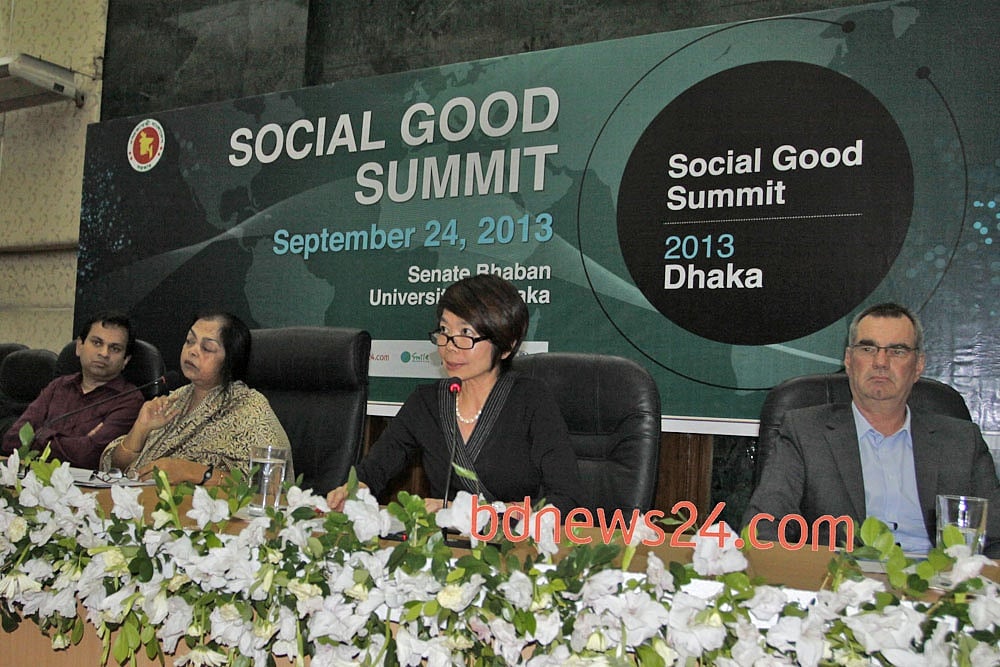
She made the call in her inaugural speech at the “Social Good Summit-2013’ held in the capital on Tuesday.
“Bangladesh is committed to digitalise the nation. Now the youth have to shape the future Bangladesh,” said Chaudhury.
“Youth will lead Bangladesh in 2030.”
The Speaker said the technology sector deserved unbound gratitude because thousands of lives in the coastal areas could now be saved simply by sending an SMS about a bad weather forecast.
Social networking had brought about a revolution in social communication, and mobile technology and the Internet had dramatically changed people’s lives, said Chaudhury.
She cited the government’s significant achievement in attaining the second Millennium Development Goal, which is ensuring education for all by establishing e-centres.
The Speaker took part in the programme through a video conference from her office in Jatiya Sangsad Bhaban.
The event was organised jointly by the Bangladesh government and United Nations Development Programme. The internet newspaper bdnews24.com was one of the co-organisers.
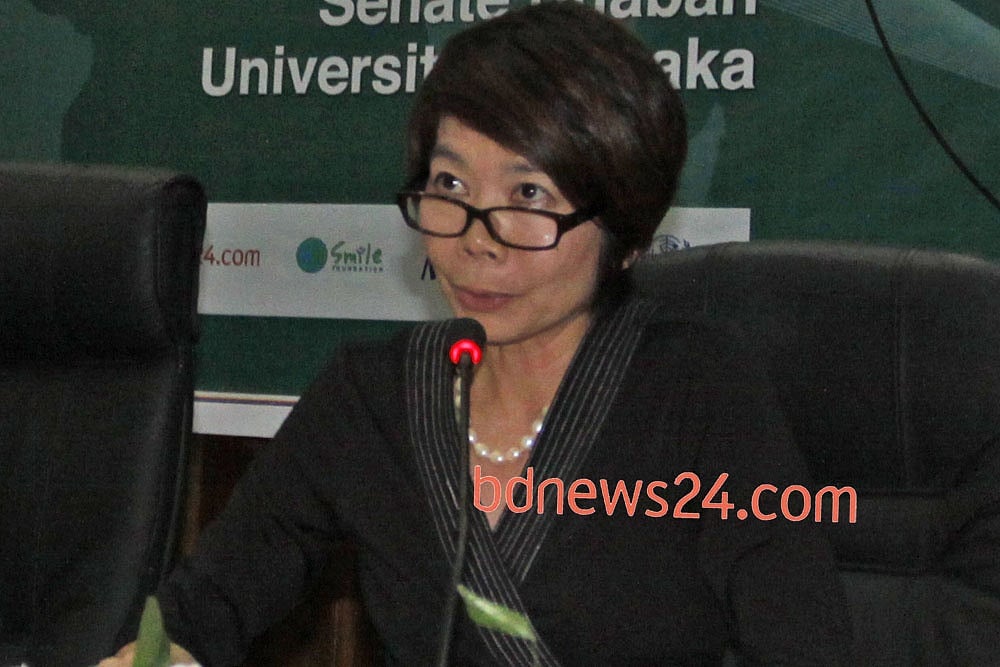
“Social Good is a global platform for the youths of the world. The summit intends to show how problems can be solved by using the little resources (people have),” said UNDP’s Resident Representative Pauline Tamesis.
The UNDP representative shared the Speaker’s view that youths would play the key role in building a digital Bangladesh.
“Young people are the future leaders. They will decide how future Bangladesh will look,” said the UN’s Resident Coordinator in Bangladesh, Neal Walker, in a video message.
He also promised UN assistance in helping the country to attain its desired development goals.
BRAC’s Senior Director Asif Saleh who attended the conference said: “Post-Rana Plaza campaign of Bangladeshi online activists on social networking sites has shown how a social movement can be built up online.
“The Bangladeshi mainstream media has, to some extent, become dependent on social networking sites,” said Saleh.
Dhaka University’s Pro Vice-Chancellor Nasrin Ahmed drew attention to the changes brought about by mobile phone technology over the last two decades.
She also drew attention to such government steps as the announcing of examination results by SMS—part of its effort to create a digital Bangladesh—were changing people’s lives.
Speakers also emphasised the use of social networking sites in coping with natural disasters and their aftermath.
Several hundred students from different public universities, including the Dhaka University, attended the conference.







