Published : 12 Oct 2022, 09:18 PM
Updated : 12 Oct 2022, 09:19 PM


Hanufa Begum's son, Imran, has been missing for almost two years. A year after Imran’s disappearance, his wife went back to her father's house, leaving behind their two young daughters.
Hanufa, who is not financially stable, now bears the burden of raising her two granddaughters on her own. The family is just about managing to get by with the help of other family members and neighbours.
Imran, who is a native of Cumilla’s Laksham Upazila, left home voluntarily after being radicalised, according to the Rapid Action Battalion.
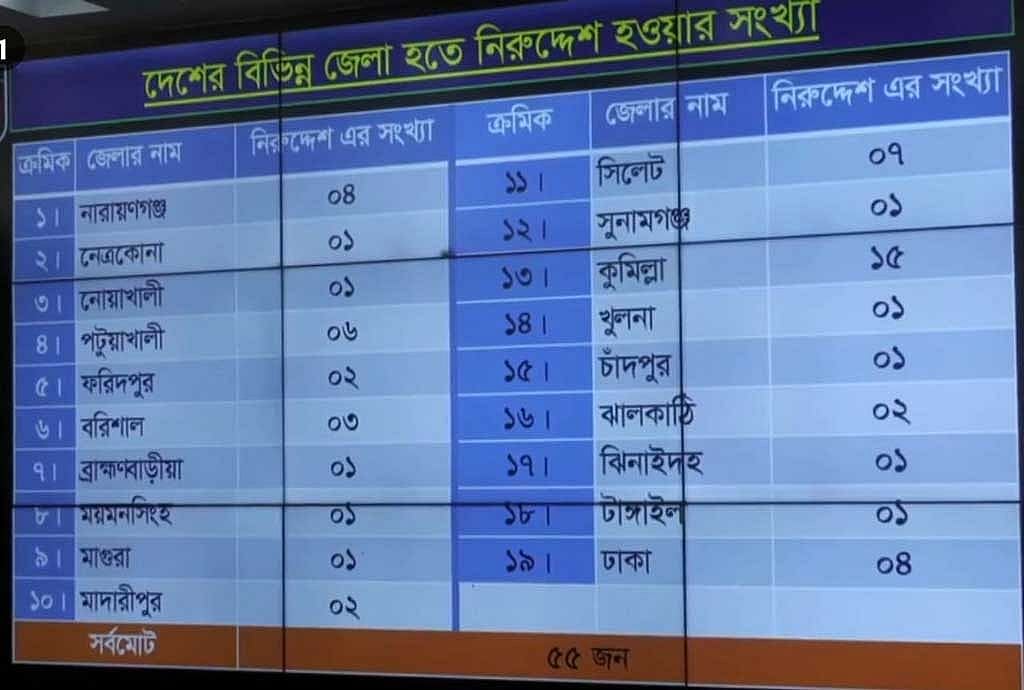
On Monday, the RAB published a list of 38 people with militant ties who had gone 'missing' in the last two years. Imran's name was on it. The list includes middle-aged people as well as teenagers, some of whom have already been arrested.
The families of the runaway militants are forced to deal with the dire consequences of their actions. Many are battling social stigma, while some families are facing destitution as their breadwinners have left.
HANUFA’S SUFFERING
Imran's family has been in financial trouble since his departure. Hanufa said that Imran used to work as a carpenter before leaving for Qatar 15 years ago.
Imran stayed there for about eight years. There, he learnt how to operate road rollers. He also used to send money back home to his family.
The family was doing well. Imran returned to Bangladesh seven years ago and got married. He has two daughters, aged five and two. He also worked as a road-roller operator here.
Hanufa said her family usually performs religious activities together. But, no one could imagine that Imran would just up and leave like that.
Before the start of the COVID-19 pandemic, Imran went out one morning and did not return home. However, the family did not inform the police about the matter.
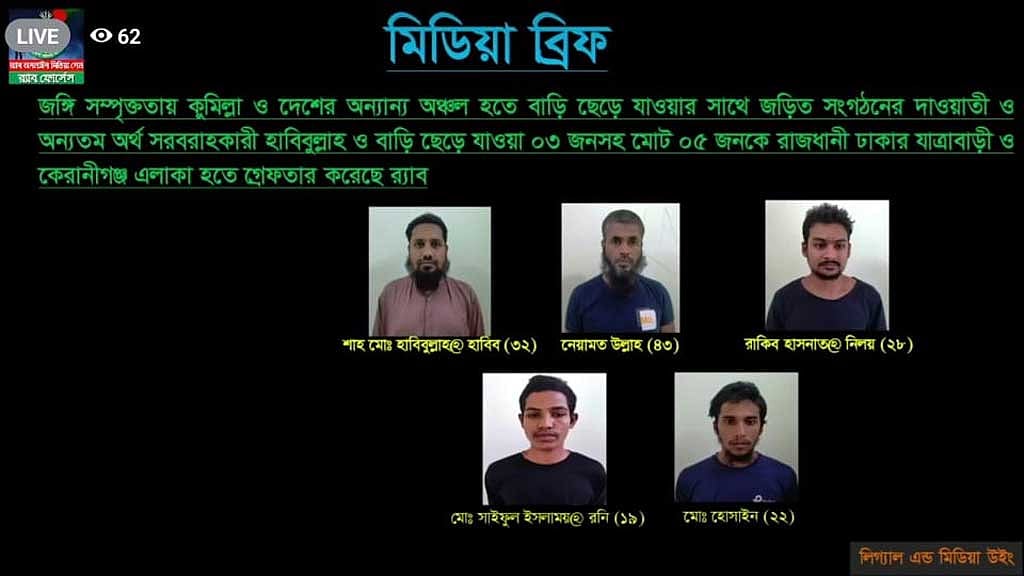
Later, members of law enforcement visited their house and told them that they had information that Imran had joined a militant organisation.
Imran's sudden disappearance left Hanufa in the lurch. Hanufa had already lost her husband and had no job.
Hanufa said that she heard Imran’s wife has remarried.
"Have you heard anything about my son? I pray a lot for him and I hope that he comes back. I am very worried about the children as I am unable to work," she said.
A MOTHER LONGS FOR HER TEENAGE SON
Sylhet HSC candidate Tahiyat Chowdhury has been missing since Nov 15 of last year. His mother Shahana Chowdhury said that her son suddenly started displaying stronger religious tendencies during the pandemic.
Tahiyat used to talk to everyone in the house about religion. In the middle of last year, he left home. He returned a few days later before leaving again, taking his mobile phone with him.
The family was in touch with him for three days. Afterwards, his phone was turned off and he could not be located.
A few days later, an officer from Dhaka's anti-terrorism unit called and asked the family to visit their office. There, the officials presented Tahiyat to them.
"The officers chided us. We were criticised for being unable to observe the changes in Tahiyat and take action. Afterwards, we brought him home. His exams started. On the last day of the exam, Tahiyat wanted to leave the house for five minutes to buy something. He never came back," Shahana said.
"Tahiyat is the most talented of all my sons and daughters. He received a scholarship in grade 8, and also got a scholarship for his SSC scores. What happened to my boy? We don't understand anything. Do you have any news about him?”
A year and a half ago, Shibbir Ahmed disappeared from Sylhet without a trace. After earning his title from a local madrasa, he began teaching at another Islamic school.
A week before he went missing, he told his father that he was thinking about going abroad for work, with Dubai and Malaysia being his preferred destinations.
But the last time his family saw Shibbir was just before Ramadan last year, his father, Abdus Salam said. Since then, Salam has gone to great lengths to find his son's whereabouts, but to no avail.
“A week before [the disappearance] he said, 'Father, I want to go abroad'. We briefly discussed his plans. I told him how difficult it would be for him to do that as we didn't have the money or the means. But I thought maybe he had some money saved up since he was already working."
Then suddenly one day, Shibbir disappeared. "I thought he may have gone abroad," said Salam.
But then, Shibbir's true intentions for leaving came to light. "Everyone found out about what happened. Word came from the police station that a boy who had gone missing with Shibbir had been found. Based on what he told the police, they searched our house. That's when we knew as well."
As word of Shibbir's involvement with militancy spread, his family was ostracised by the community. "People talk poorly of us. They don't want to associate with us," Salam says ruefully.
"The police and the RAB come and go from our house and we have to deal with that. My other children are facing problems at work. Nobody wants to talk about him anymore.”
'WE THOUGHT HE WAS ABROAD'
Muhammad Abu Zafar, a native of Faridpur's Char Bhadrasan, has not been in touch with his family for a long time. He left for Saudi Arabia a decade and a half ago. Since then, he has been very distant in every sense of the word.
After completing his SSC, Zafar joined Tablighi Jamaat before leaving the country, according to his brother, Md Asaduzzaman.
Zafar was implicated in a case following a scuffle with a group of people. But after the matter was settled, his family sent him to Saudi Arabia. "Since then, we haven't had much contact. We've been trying to reach him but our efforts have proven unsuccessful so far."
But the news that Zafar had not only returned to the country but had taken up a life of militancy came as a bolt from the blue to his family.
"We never once went to the police after he left. We thought he was abroad. Later, the police said he came back and became a militant," said Asaduzzaman.
Asaduzzaman now wants to know more about his brother's whereabouts. "We are six brothers. He is the youngest. We've knocked on so many doors to find out where he is and are trying to get in touch with him. But it's come to nothing so far. We're having to deal with a lot of condescension because of him."
The RAB has been receiving various intelligence about those who left home to pursue militancy at different times, according to the force's spokesman Commander Khandaker Al Moin.
"We noticed that a lot of people had been disappearing in phases. There are many families whose children have been missing for around two years but they did not inform us about it. When we go to speak to the families and their neighbours, many say that maybe they are abroad."
And, in the case of those who have been missing for two to three months, their families believe they may have gone for 'chilla' (a self-transformative tour to a mosque in another city), according to Moin.
"We have to believe the parents when they say their child is abroad. But later on, we sometimes found something completely different."
“When members of our various battalions visited the families to verify the information [about the men joining militancy], many said they're certain that their children are abroad. They also said that when they needed money, they sometimes got it from their children, even if it wasn't a large amount."
"However, the people we have arrested said that they were not abroad, but in the Chattogram Hill Tracts, working for a militant organisation. Sometimes, they sent money to their families from the organisation's fund."