Published : 04 Feb 2015, 12:03 PM
Updated : 19 Oct 2022, 06:35 PM


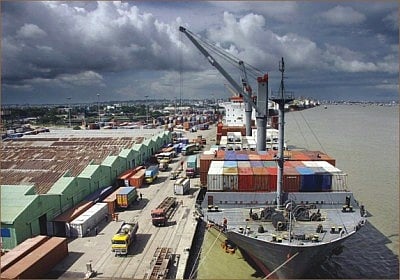
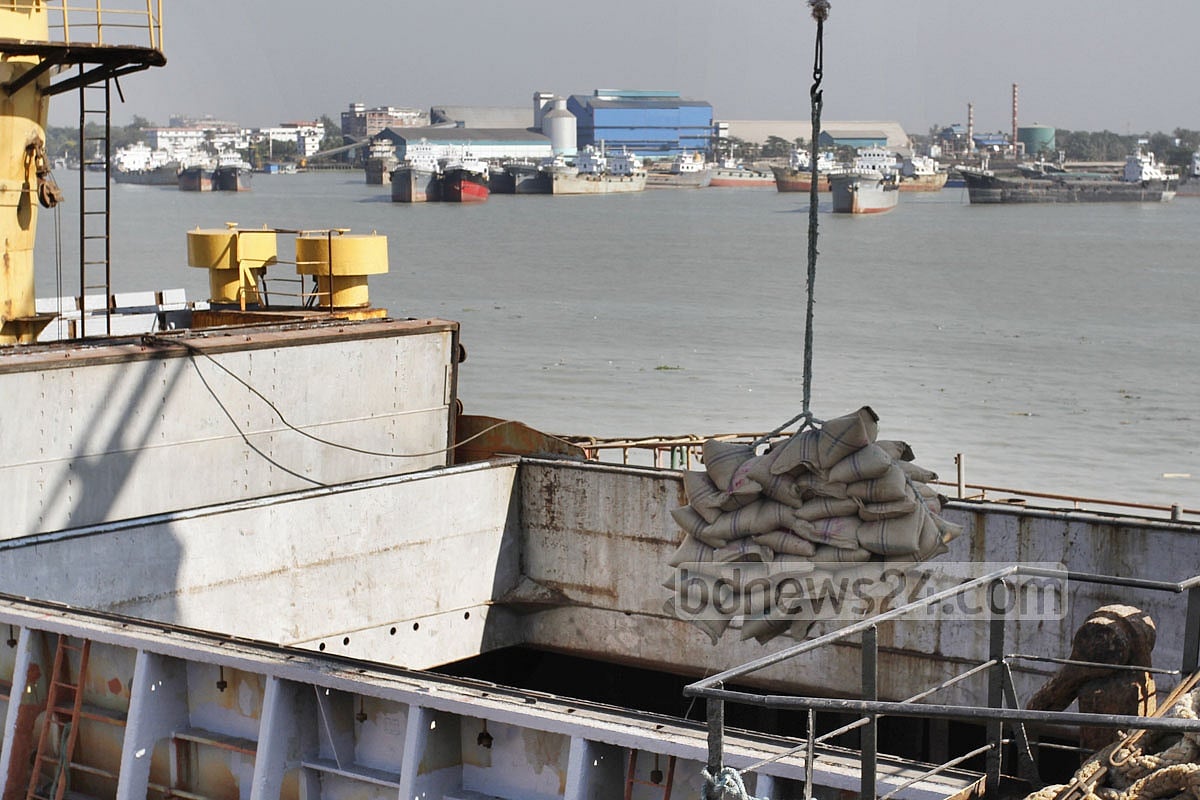
The BRAC Institute of Governance and Development (BIGD) has flagged various challenges faced by Chittagong in a detailed analysis on urban governance in the port city.
The institute, in the third report of the 'State of Cities' series, titled 'Governance for a Liveable Chittagong', observed that it needed urgent immediate attention from policymakers to address its multitude of problems.
“The city is lagging behind Dhaka in terms of per capita capital expenditure, critical for its long term sustainability. Per capita capital expenditure in Chittagong is barely $3 compared to Dhaka’s $11. Needless to say, development of Chittagong is vital,” the report said.
In the chapter on Political Economy of Urban Governance, the report citing primary data showed that the city's development was not need-based.
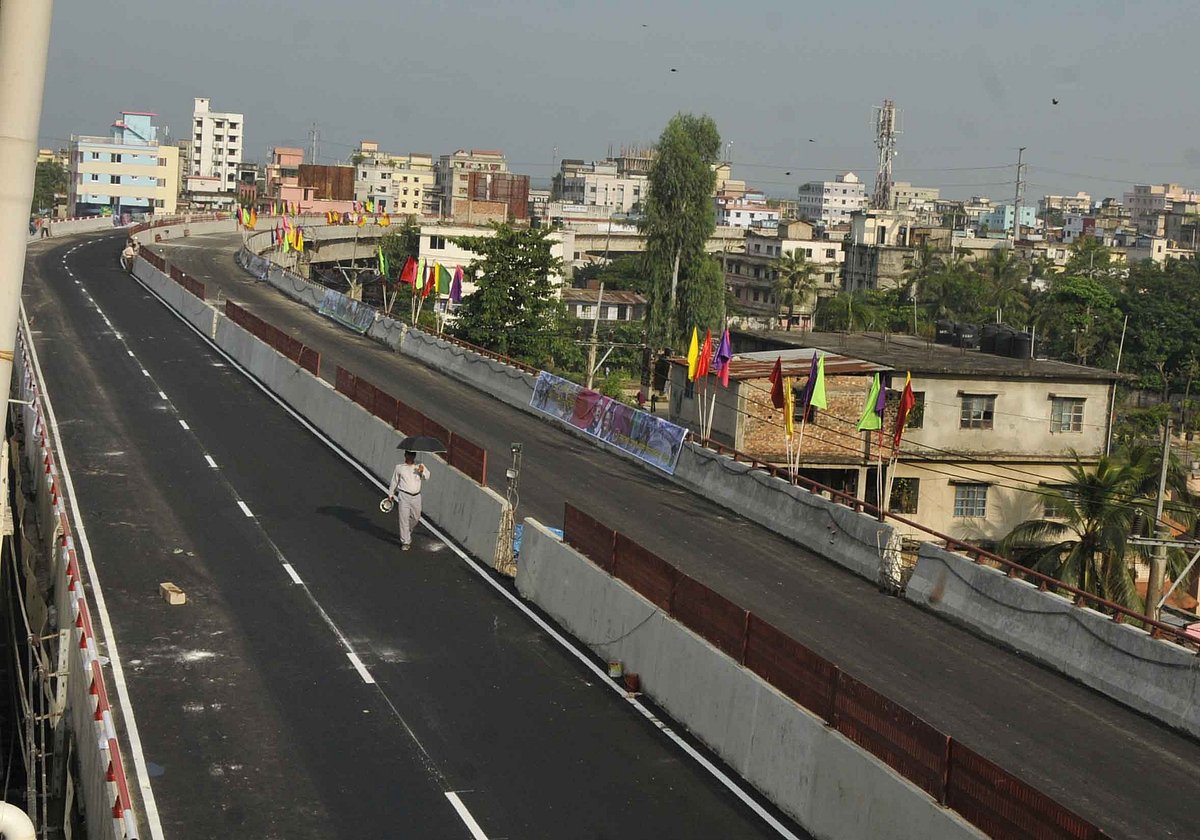
“In peak hours, number of vehicles moving underneath the flyover exceeds the number of vehicles using the flyover by 3.8 times. The money spent for the flyovers could have been utilised better for other priority projects as far as the city’s traffic management is concerned,” the report said.
Chittagong’s financial dependency on the centre and Chittagong City Corporation’s (CCC) grant dependent and unpredictable development budget often caused delay in project implementation, the report claimed.
The annual realisation or implementation rate of CCC’s development budget varied between 17% and 35%, as per the BIGD report.
It said the CCC received Tk 3.48 billion from the government in the past four years, whereas the Chittagong Development Authority was given Tk 44 billion in the last five years.
The lack of accountability of service delivery and governing agencies, patronage politics, limited autonomy of City Corporation and the centre's undefined policy to fund the local government, inter alia, constrained implementation of city’s ‘Master Plan and other need-based projects,’ the report said.
Report suggested that the CCC and other agencies should be given enough administrative power to mobilise their own funds lessening dependence on the Centre.
The chapter on Governance of Land Use and Housing reviewed the governance of housing and its essential corollary land use in Chittagong.
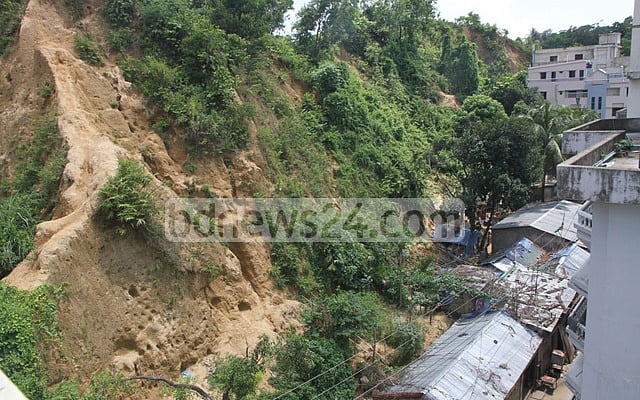
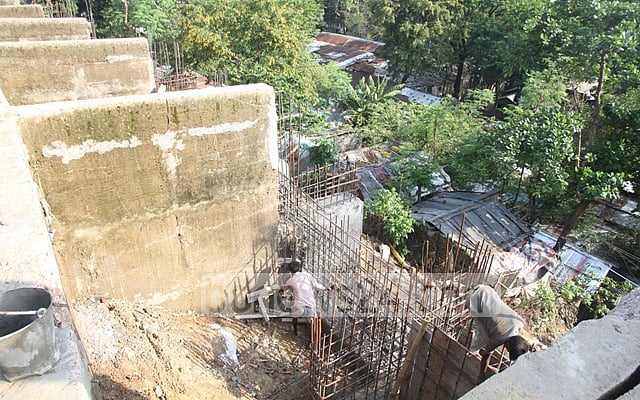
It observed that a planned consistent urban expansion through appropriate and systematic land use had been largely absent, which was leading to urban sprawl posing significant challenges namely expansion of utilities and amenities, greater exposure to water logging and flash floods, land grabbing and hill cutting and shrinking of green space.
“About 49% of the households felt that rented houses in the city are insufficient and about 60% of low income respondents claimed that conditions of their rental homes are either bad or very bad. Thus, the people who need housing most are excluded from public provisions. They are also excluded from the private housing market.”
The report said one of the outcomes of poor governance in the city’s land resources and the inability to address the housing problems of low income people was land grabbing in the form of hill cutting and settlements in numerous hills that distort the city’s land use pattern and make it environmentally vulnerable.
In order to streamline the governance of land use and housing in Chittagong, the report recommended that sprawling of the city should be restricted, initiative should be made for low income housing and enforcement regulations should be streamlined.
On delivery of basic utility services, the finding was mixed. The quality of services was found to be by and large remained the same as before.
“Comparatively, the case of gas and water the quality of services was found to be improved, the city dwellers experienced deterioration with regard to electricity and waste management. Sanitation system in non-slum areas has improved, whereas in slums it deteriorated,” the report pointed out.
“The households are increasingly relying on deep tube-well (47%) than piped supply water (37%). About 57% city dwellers do not have access to public toilets. Majority of the households have not experienced reduced power outrage and they also reported that garbage is not cleared regularly,” the report added.
“Limited autonomy of the service delivery agencies as well as consumers’ preference for cheaper services constrains rationalisation of utility prices. Nevertheless, the upward adjustment of utility price is not the panacea, as we learnt from the electricity services. Other related policies also need to function effectively in order to make the price adjustment useful,” the report highlighted.
To provide better service delivery, it recommended greater autonomy of local service delivery agencies. Among others, it also suggested that private sector should be involved in addressing issues like waste management.
On the transportation sector, the report argued that the proliferation of informal transport in the city was the result of the less than required supply of formal public transport.
“Traffic congestion is identified by the city dwellers as the key transport bottleneck. Operation of mixed speed vehicles, absence of reliable mass transit, poor public transport system, illegal parking and no restriction on the route of rickshaws all contribute to the traffic gridlocks,” it said.
“To address the city's growing transport problems, Diesel Electric Multiple Units (DEMUs) trains have been introduced and a number of road extension and widening projects have been implemented,” the report further added.
It was also argued that the current approach undermined the city's need-based transport development.
“Based on the existing estimated number of vehicle flow at different intersections of the city — 2,800 to 4,900 vehicles per hour as opposed to the requirement of 10,000 — the construction of flyovers is not justified. Similarly, to serve only 0.02% of the city dwellers, the city is not in dire need to construct a 18-km long elevated expressway. Moreover, by the cost of a 3.5 km tunnel, the whole road infrastructure of Chittagong can be constructed,” the report pointed out.

It also stressed that Chittagong needs a sustainable transport system focusing on four dimensions social (safety and equity), economic (affordable and efficient), environmental (limits emissions of air pollution and GHGs, minimum utilisation of land) and peoples' participation (involves all the stakeholders).
The report also strongly recommended an exclusive bus lane from Bahaddarhat to EPZ and establishment of a Strategic Transport Planning Unit (STPU) within CDA to strengthen the institutional system.
The report also discussed various aspects of the city's environment like water quality, air quality, noise, waste management, drainage system and the respective governance arrangements.
“Solid waste management has been identified by city dwellers as the city's major environmental problem. In Chittagong, everyday about one third of the solid waste remains uncollected and often thrown around the drain, river or elsewhere,” it said.
In the absence of no 'reduce or reuse' mechanism, (only 2% waste is recycled) the city gets overloaded with the waste causing water logging and air pollution.
“When it comes to water quality, although the supply water source is safe, water becomes contaminated during distribution by the CWASA. Moreover, slums dwellers do not have access to the CWASA water and so they depend on shallow tubewell water that is often arsenic contaminated. There is no formal regulatory authority to oversee the water quality in slums,” the report said.

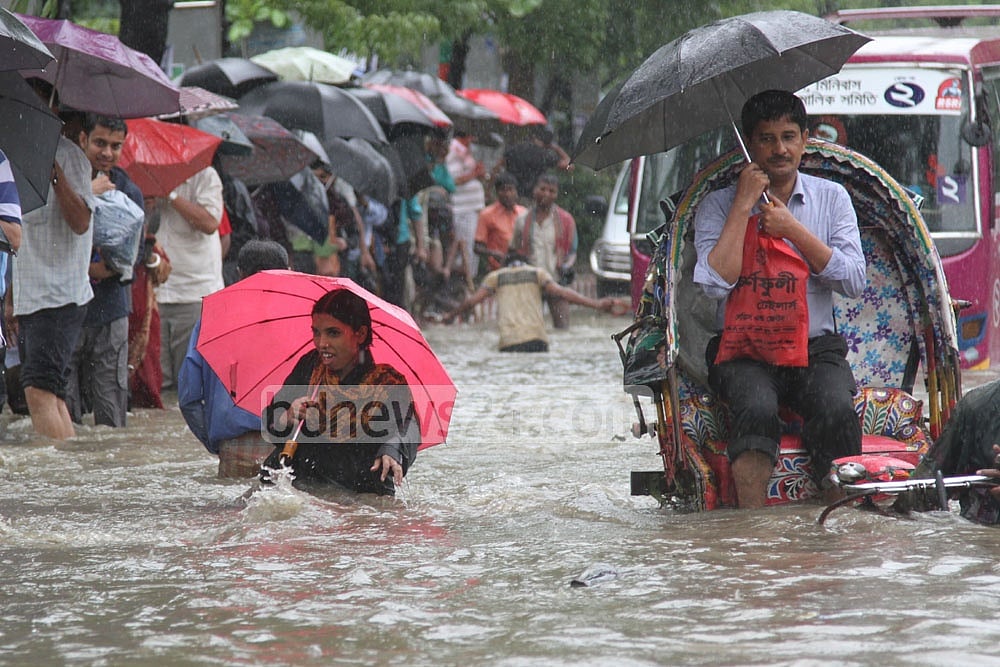
According to the report the overall air quality in the city too was not safe.
The Suspended Particulate Matters (SPM), caused the maximum harm. “It becomes hazardous between November to April ranging between 280 and 470 μgm, far exceeding the safety level (50μgm).”
Higher level of air pollution is recorded in GEC Morh, Bayezid Bostami Road, City Gate, Pahartali, Sholoshahar and Bahaddarhat Morh.
Industry and vehicles were found to be the main contributors to air pollution, whereas respondents blamed poor waste management.
Noise pollution in the city too was a cause of worry as it exceeds the safe level (45-70 decibels). Noise pollution is particularly high in industrial areas and traffic intersections (as high as 85 to 100 decibels).
To improve the situation the report suggested multi-level effort involving service delivery and regulatory agencies as well as citizen groups.
“To solve the problem of limited devolution of power to cities, which is linked with accountability problem and coordination failure of key agencies, inter alia, the city needs a unified urban governance model with greater devolution, the report added.