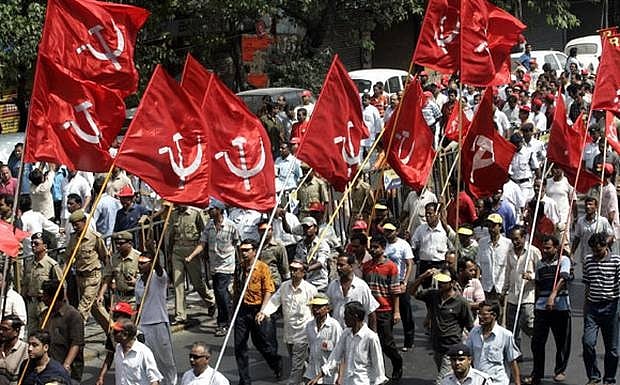
The state, which has the fourth highest number of seats in parliament, has seen the ruling Trinamool Congress campaigning hard to retain its position and the Left Front trying to regain lost ground.
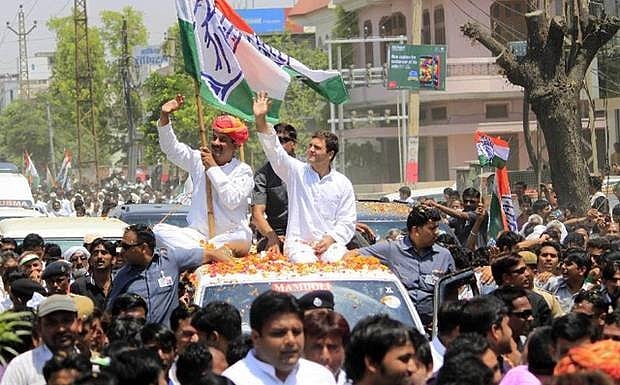
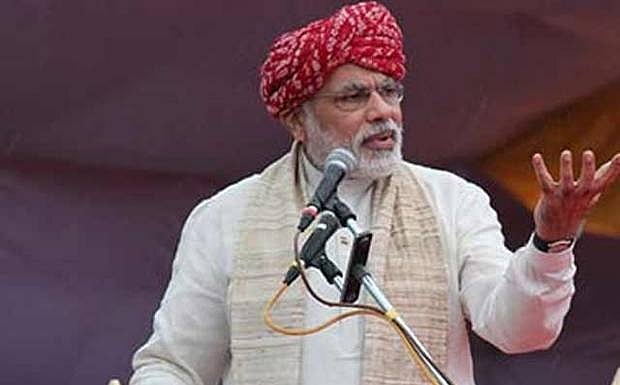
Congress leader Rahul Gandhi and BJP prime ministerial candidate Narendra Modi have promised all help to the state, while the Trinamool and the Left have made development their main campaign plank, but the voter’s choice will be finally sealed on Monday, the concluding day of the five-phase poll in the state.
The day will also mark the end of a nine-phase electoral exercise in India with polls being held for a total of 41 seats in the states of West Bengal, Bihar and Uttar Pradesh.
The country’s Election Commission will announce the results on May 16.

The poll campaign ended on Saturday leaving the electorate feeling more sought-after this time.
“We never saw a prime ministerial candidate come so frequently before,” Ranjit Biswas, a south Kolkata resident, told bdnews24.com.
Although the reference was to BJP leader Naredra Modi, Congress vice president Rahul Gandhi was not to be found trailing. Ever since the poll campaign began, the two top leaders of the two parties have been in the state several times, holding rallies in Kolkata and the districts.
This was on top of the Trinamool Congress and Left Front approaching the people for their votes.
Neither political observers nor the electorate had ever seen such a four-pronged campaign before.
Electoral battles in West Bengal, which currently has 42 parliamentary seats, had traditionally been fought between the Congress and the communists (later primarily the Left Front led by the Communist Party of India-Marxist) after 1947.
Mamata Banerjee and her followers broke away from the Congress in 1997 to from the Trinamool Congress. Ever since then, the fight has been between the Left Front on the one hand and sometimes a Trinamool-Congress or a Trinamool-BJP alliance on the other.
A Trinamool and Congress alliance came to power in 2011, ending almost 34 years of left rule, but Mamata Banerjee ended the alliance with the Congress soon afterwards.
Political analyst Ashis Biswas told bdnews24.com that West Bengal had almost become synonymous with Left rule, leaving other political parties uninterested in making a serious electoral bid here.
“But the Left Front’s defeat in the last election has made the all-India parties feel interested in this state.”
West Bengal has played a key role in government formation in Delhi ever since Congress hegemony on Indian politics ended in 1990, leaving regional parties with a vital say.
In 1996, when a third coalition government came to be formed in Delhi, a strong move was made to make the then West Bengal chief minister Jyoti Basu the prime minister - a proposal that the CPI(M), Basu’s own party, summarily rejected.
But even in the years that followed, either the Left Front or Mamata Banerjee’s Trinamool Congress has had a role in the formation of the federal government.
“That is why West Bengal is being given so much of importance. Those who manage to increase their seat count here, will have a say in central politics,” Biswas said.
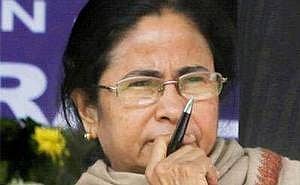
The Left Front, Congress and the BNP have targeted Mamata Banerjee in their campaigns to garner support, forcing a beleaguered Banerjee to hit back.
Mamata is having to cope with a barrage of criticism on the Saradha financial scam, lack of investments, issues relating to Bangladesh, and religious matters.
Veteran journalist and political analyst Sukharanjan Dasgupta told bdnews24.com: “All parties are basing their anti-Mamata tirade on the Saradha scam because they want to take advantage of her exposed weaknesses in various spheres.”
The BJP, a spirited contender of power in Delhi this time, has a strong presence in western and northern India but lacks strength in the southern and eastern parts of the country. As a result, the party has laid special emphasis on West Bengal this time.
Mamata Banerjee has floated the idea of a Federal Front at the Centre, while the Left has been stressing the creation of a Third Front - agendas they can pursue only if they are able to increase their tally in West Bengal.
In the last parliamentary election held in 2009, in which the Trinamool had forged an alliance with Congress, the Left Front had bagged 15 seats, the Trinamool 19, Congress six, and the BJP one.