


Published : 13 Jun 2015, 10:59 AM
Updated : 08 Aug 2022, 04:50 PM


Dhaka's Water And Sewerage Authority (WASA) also does not claim the water it supplies is ‘drinkable’.
WASA’s daily supply of around 2.1 billion litres falls short of the demand of 2.3 billion litres.
It is supposed to be the source of drinking water for the city. It collects 78 percent from deep tube wells and the rest from the rivers.
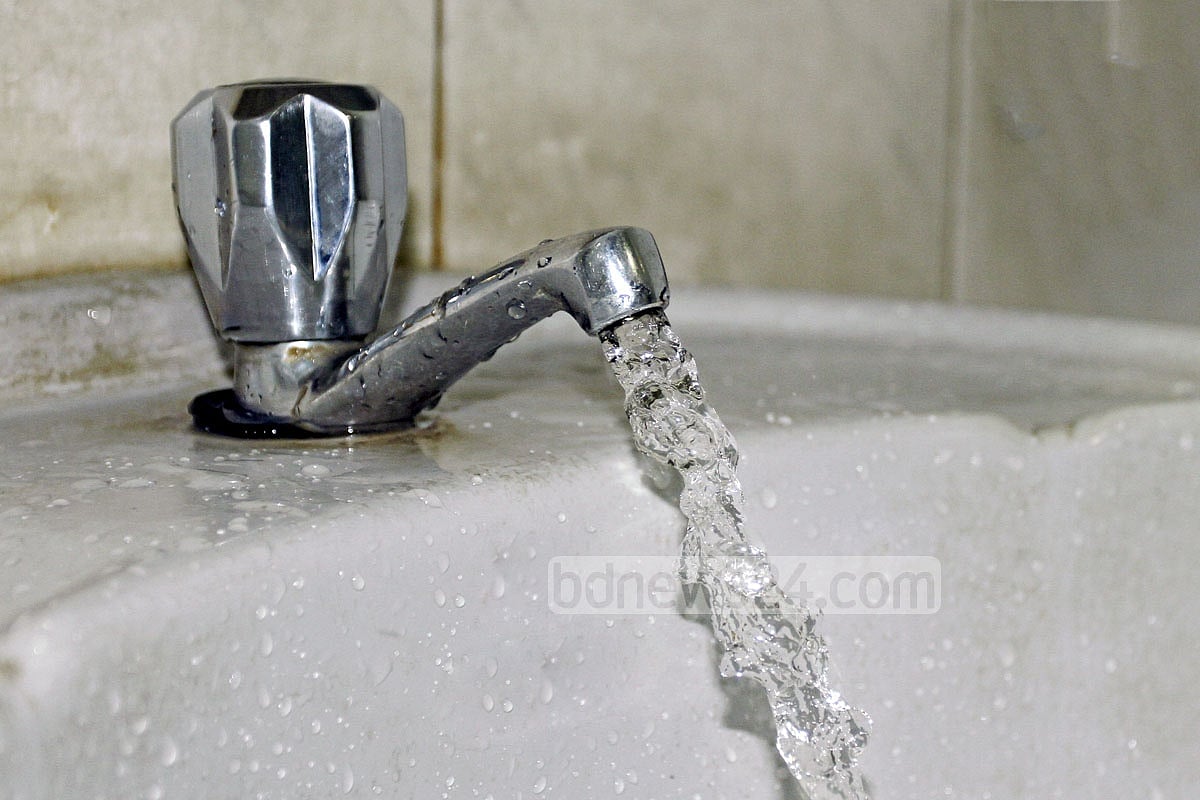
But drinking water from taps ended a long time ago after the water was found to be dirty, full of germs and foul odour.
Residents of Dhaka now drink water after boiling and filtering in households and from packaged bottles in offices.
WASA Deputy Managing Director Md Ataur Rahman said they were considering supplying drinkable water through pilot projects.
Urban development expert Nazrul Islam said he saw authorities testing water thrice a day in Colombo.
“Does the authority in Dhaka city do that?” an angry Islam asked.
He observed that the matter should have been taken into cognisance a long time ago.
“The people don’t have confidence on the quality of the water supplied by WASA,” he added.
Brac University’s Professor Emeritus Dr Ainun Nishat, a well known hydrologist, told bdnews24.com: “Now we’ve accepted that water from taps can be used for bath or washing clothes, but one cannot drink it.”
Chief Chemist Md Abdus Sattar Mia of Public Health Engineering Department suggested everyone should boil or filter the tap water before drinking.
“Even in my house, we do not drink water from taps. We drink after boiling and filtering,” he said.
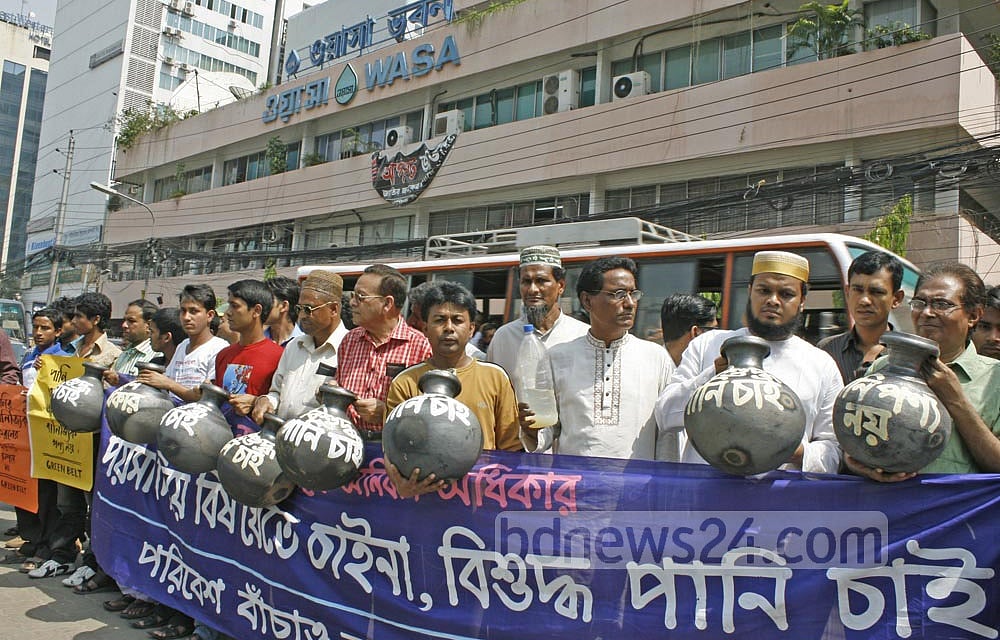
Dr Nishat blamed WASA for that.
“We know what should be done. WASA knows it, too. The WASA MD talks big, but does not implement it,” he said.
According to Nishat, two steps are necessary to ensure drinkable water from taps - repair the entire pipeline of Dhaka and maintain continuous high pressure in the pipeline.
“Dirty water can easily make its way through 50-year old pipes.
“Drinkable water might be supplied from the processing plant at Saidabad, but it gets polluted due to lack of high pressure in the pipeline. Thus the water supplied to the houses is not safe," Nishat said.
Nishat argued that lack of supply was also due to the absence of high pressure in the pipeline.
Experts say the water collected through deep tube wells is ‘good enough’.
The water remains ‘good’ after processing, but becomes undrinkable on its way to the consumers through the pipeline.
WASA supplies the rest by refining ‘dangerously polluted’ water of the rivers Buriganga and Shitalakkhya.
The reserve and overhead tanks of the residential buildings make the situation worse as they are not washed regularly.
WASA’s Deputy MD Rahman said the water ‘can’ be polluted on its long way to the households.
He suggested checking the reserve tanks and pipes regularly.
However, Dhaka's Centre for Urban Studies Chairperson Dr Nazrul Islam said it was WASA’s duty to conduct awareness campaign for the checking of tanks and pipes, which it does not do.
Malodour and dirty things in the water in Dhaka rise during summer and rainy season, causing allergy. The number of patients in the cholera hospitals also goes up.
Middle-income families like those of Adabar’s Hisham Khan or Azimpur’s Dilruba Zaman drink water after boiling and filtering. People like private banker Saiful Islam Russel cannot even think about drinking water from taps directly.
Slum-dwellers, however, have to drink water directly from taps.
Rickshaw-puller ‘Selim’ of Agargaon slum said his family has to drink water collected from taps on the streets.
“We have two stoves for six families here. It is hard to get the chance to cook, let alone boil water,” he said.
It is clear that bottled water or water purifiers are not for the families earning Tk 10,000-15,000 monthly.
“To drink water after filtration with a piece of cloth is the only way for us,” Selim said.
WASA is repairing the pipeline of Dhaka with the help of Asian Development Bank (ADB) funds for five years in order to reduce ‘system loss’ and ensure drinkable water.
The Tk 15 billion project is aimed at repairing 3,000 kilometres of pipelines gradually.
WASA MD Taqsem A Khan has recently expressed hope that residents of Dhaka could drink water directly from taps once the project was implemented.













