Counsels in verbal spat at Sayedee hearing
Exchange of words as prosecution springs up 'surprise' witness on 'unprepared' defence team at war crimes trial Full report
bdnews24.com News Service
bdnews24.com
Published :
24 Jan 2012, 12:03 PM
Updated :
09 Aug 2022, 03:20 PM
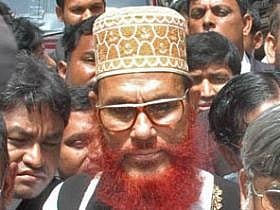
Dhaka, Jan 24 (bdnews24.com) — A war of words broke out between the defence and prosecution before the 15th prosecution witness could depose against Delwar Hossain Sayedee at the war crimes tribunal on Tuesday.
The International Crimes Tribunal, set up to try crimes against humanity during the 1971 Liberation War, has indicted Jamaat-e-Islami executive council leader Sayedee on 20 counts of war crimes including murder, rape, arson and loot.
Tuesday was reserved for deposition of prosecution witnesses after the prosecution failed to produce Madhushudan Gharami, 80, as one of its witnesses since he was taken ill.
The prosecution and Sayedee's defence fell out over the 15th witness, with the defence claiming that it was not prepared to cross-examine Mohammad Solaiman Hossain, as he was not among the two that the prosecution had mentioned in the morning.
In the morning, tribunal chairman Justice Nizamul Huq was irked at the prosecution's failure to produce witness.
'LEARNT OF SAYEDEE' ROLE'
Solaiman Hossain, 60, remembered hearing Sayedee speak at a public rally in the run-up to the national assembly elections, where he referred to Bangabandhu Sheikh Mujibur Rahman as 'Jagabandhu'.
Hossain also said Sayedee took shelter at one Rowshan Ali's house in Dahakola village of Bagharpara union in Jessore after the independence war. "After making enquiries (from locals), we learnt that Sayedee had been involved in anti-liberation activities in his locality."
Hossain also recalled Sayedee from a 2005-06 religious gathering at the same venue -- Bagharpara Pilot School playground -- that had hosted the 1970 rally where Sayedee had come to speak. Hossain recalled: "At one point he said, 'I had taken shelter in this village when times were rough at Rowshan-bhai's place'."
He said Sayedee then asked his audience, "Is Rowshan-bhai here?"
"Rowshan Ali, who was indeed present, answered back, and went up to meet Sayedee on the stage," Hossain said, adding that the Jamaat leader thereafter went to Rowshan Ali's house.
Contending that they were not prepared to Hossain's cross-examination, the defence team asked only two questions, and after several requests for adjournment for the day, tribunal chief Huq agreed.
The defence counsels firmly protested when the prosecution brought Solaiman Hossain for deposition after the lunch recess.
An excited M Tajul Islam was quick to draw the court's attention to the fact that the prosecution had expressly said it would produce either of the two witnesses out of four on a list. But Solaiman was not one of those two.
Tajul Islam told the tribunal, "The prosecution is doing it deliberately. They had agreed to produce one of the two witnesses and we had prepared accordingly but now there is a different witness present."
Tribunal chief, Justice Huq, who had told prosecutor Syed Haider Ali to proceed with a stiff face, told Tajul Islam, "We shall see whether you are being prejudiced during the deposition."
Justice Huq tried to calm Tajul Islam putting a word or two of reassurance as the counsel continued to harp on his point that the prosecution should not have done it and that this was deliberately done only to throw off the defence.
This visibly drew the tribunal chairman's ire. "Will you take your seat?"
Tajul Islam: But I have the right to submit before this court.
Justice Huq: Indeed. But you cannot go on repeating the same thing over and over.
Tajul Islam: But you are not listening.
Justice Huq: Of course I have.
Tajul Islam: But they cannot do it.
Justice Huq: Then I will have to tell you there is no law that says [the prosecution] has to follow a certain sequence of witnesses.
Tajul Islam: But they deliberately misled us saying that they would depose one witness but they have brought another person.
Justice Huq: I have said already. Let the deposition begin and then we shall see if the defence is being prejudiced.
Prosecutor Haider Ali, who was already at the podium ready to begin deposition, said that he had already submitted a list of witnesses and therefore would depose any witness he preferred.
At this point, Mizanul Islam, another defence counsel, pulled at Tajul Islam's gown to make him sit and only succeeded after persisting with much effort.
Taking cue from the list of witnesses that Haider Ali had just mentioned, Mizanul Islam submitted that the prosecution had named one Abdur Razzak as a witness although his name was not included among the 68 that he claimed the prosecution had provided them.
When the tribunal asked whether it had anything to do with the witness at the stand, Mizanul Islam said it did not. "But I am only drawing the attention of the court."
Haider Ali insisted that Abdur Razzak was indeed among its list of witnesses.
Mizanul Islam then provided the tribunal with a type-written sheet that the defence had prepared for its own use while Haider Ali tried to show the tribunal where his list of witnesses were in the files provided to the tribunal.
The judges looked through the pages and engaged in a consultation among themselves.
It was at this point that Tajul Islam turned his attention towards Haider Ali and it was evident from their heated exchange that Justice Nizamul Huq's firm words, and Mizanul Islam's efforts to calm his colleague, had only had a temporary effect.
The argument went back and forth between the defence counsel and the prosecutor all the while that the judges consulted among themselves.
The war of words would have perhaps continued for some time more, had Justice Huq not put an end to it. "Why don't you fight it out and we sit back and watch?"
Tajul Islam only reiterated his previous points when Justuice Huq once again reassured him that the court was in full knowledge of what was going on and would see to it that the defence is not prejudiced.
Tribunal member, Judge A K M Zaheer Ahmed then stepped in, "Why don't we just see what the witness says in his [deposition], and we can take it from there."
The judge added, "If we proceed with the deposition, then we will have gotten that over with. At least some work will have been done."
Haider Ali then began deposition of the witness.
Once over, defence counsel Mizanul Islam, who generally leads the cross-examination, also urged the court for a day's adjournment since the defence was not prepared.
He said it is not practical to proceed with the cross-examination. He said the cross-examination may actually be rather brief, "But since we are not prepared, I do not believe it would be fruitful for us in any way."
He submitted before the court there was only an hour and a quarter left before the court adjourned. "I do not believe it would be that bad to forego one hour's session for the day."
The judges agreed but insisted that he begin his cross-examination with a token question.
Mizanul Islam obliged. He asked Solaiman Hossain if he remembered the date and day of the 1970 rally. The witness said he did not. When asked if he remembered the person conducting that rally, Solaiman Hossain said that it was most likely Hossain Munshi.
Judge Zaheer Ahmed then told the prosecution, "What happened today should not happen in future."
Justice A T M Fazle Kabir spoke too. "You had mentioned the names of witnesses you would be bringing. If you had not, then it would be fine. But it was a very clear submission."
Justice Nizamul Huq then ordered that the prosecution provide the defence with a list of 10 witnesses to depose next within 5pm.
Judge Zaheer Ahmed suggested to Tajul Islam that he should go with Syed Haider Ali to his office and get the list over a cup of hot coffee. "It will rid of the heat," he said jokingly.
Tajul Islam firmly protested saying that he did not want to go to prosecution's office because apparently the guards had misbehaved with his junior colleagues. Then he said there were all kinds of hassle that the defence was made to go through.
Judge Zaheer Ahmed said, "But this time we are directing you to go. There should not be any such problems."
Tajul Islam urged the court not to give him that order.
Justice Nizamul Huq then told Tajul Islam with a finality in his tone, "No, we are telling you to go. And we want to see whether such unpleasant things happen today."
In cue, although a little late, Haider Ali invited the entire defence team to his office for coffee.
Tajul Islam later told bdnews24.com that he had not been to prosecutor's office. "A colleague of mine, Shahjahan Kabir went there."
He said the prosecution had provided them with 10 names of witnesses. "But they were supposed to give us 15 names."
FIRST CASE TO TRIAL
Sayedee's is the first case to proceed to the trial stage at the tribunal. The prosecution on Sept 4 proposed framing of charges against him on 31 counts for crimes against humanity and genocide in the first case of the tribunal.
The tribunal, on Oct 3, indicted Sayedee on 20 counts.
The tribunal also sent Jamaat's guru and former chief Ghulam Azam to jail on Jan 11. His indictment hearing, as well as that of the present Jamaat chief Matiur Rahman Nizami, has been scheduled for Feb 15.
Besides Sayedee, Jamaat chief Matiur Rahman Nizami, secretary general Ali Ahsan Mohammad Mojaheed and assistant secretaries general Mohammad Kamaruzzaman and Abdul Quader Molla, and Bangladesh Nationalist Party's standing committee member Salauddin Quader Chowdhury, also a lawmaker, have been detained along with others, on war crimes charges.
The tribunal had granted conditional bail to former BNP MP and minister Abdul Alim on March 31 last year. The bail was extended further on Jan 16, ordering him to be present in the court on Mar 15 when the prosecution has been directed to submit formal charges against the BNP leader.
bdnews24.com/ta/bd/1750h