


Published : 10 Nov 2014, 06:02 PM
Updated : 23 Apr 2022, 03:25 PM


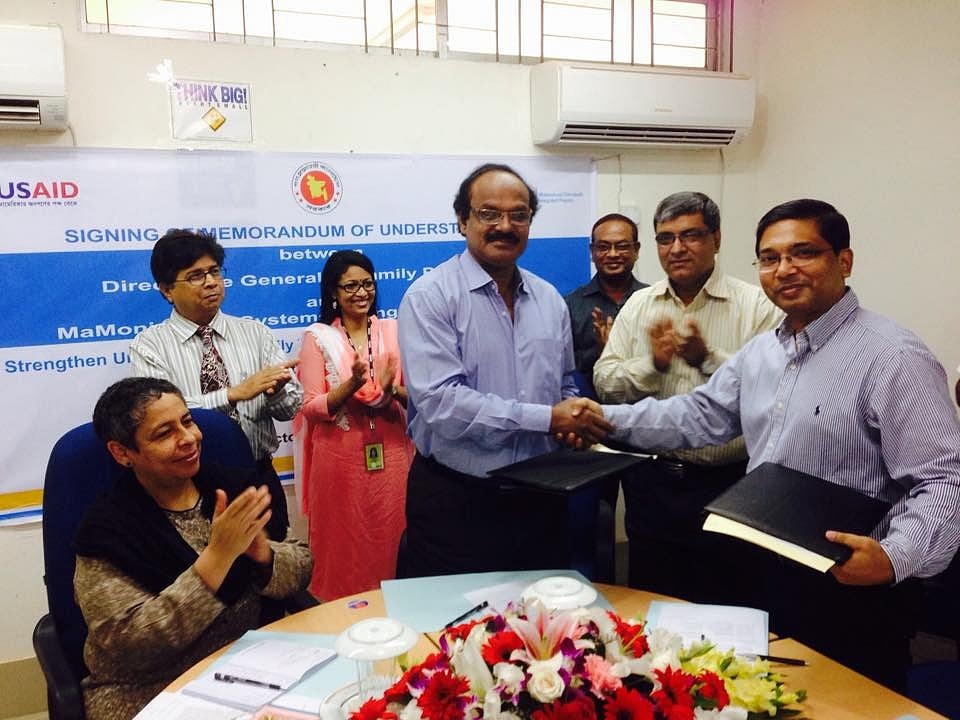
A MoU was signed in this regard between the Directorate General of Family Planning (DGFP) and the USAID supported MaMoni Health Systems Strengthening Project on Monday.
In Bangladesh most of the deliveries are done by unskilled attendants at home.
Skilled attendants account for only about 30 percent deliveries a year.
The government in 2011 set a target to increase the rate to 50 percent to cut down maternal and newborn deaths.
One of the ways was to bring women at facilities for deliveries.
The DGFP, for that, runs about 3,900 Union Health and Family Welfare Centres across Bangladesh.
Those centres were supposed to offer round-the-clock normal delivery services, but in reality they cannot.
Under the new MoU, MaMoni project will help them adopt a ‘Habiganj model’ in which the USAID flagship project showed integrated safe motherhood, newborn care and family planning services are possible.
This approach in Habiganj district resulted in 60 percent skilled attendance at birth and 45 percent facility delivery in targeted unions in 2013.
USAID says the national skilled birth attendance coverage rate could be pushed up to 64 percent in 2016, far more than the government’s 50 percent target, if appropriate measures were taken.
The appropriate measures mean ensuring adequate human resources and their residential facilities, providing drugs and equipment, among others.
Director General of DGFP Md Nur Hussain Talukder, and Chief of Party of the MaMoni Project Dr Ishtiaq Mannan signed the MoU.
Director of the USAID’s Office of Population, Health, Nutrition and Education Melissa Jones was present among others at the ceremony at DGFP.













