Published : 22 Feb 2014, 03:19 PM
Updated : 19 Oct 2022, 07:23 PM


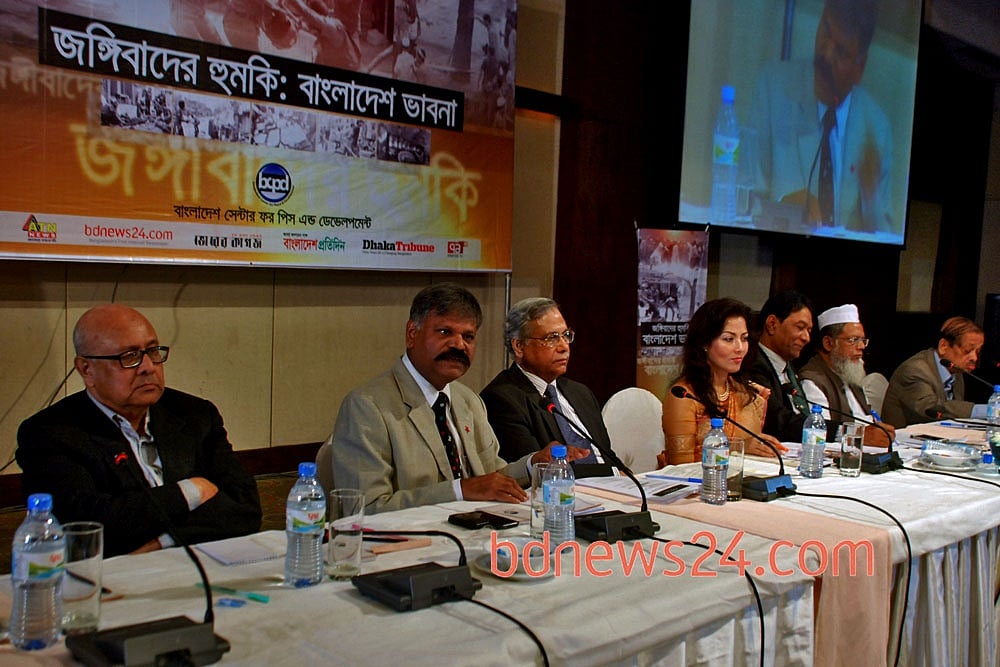
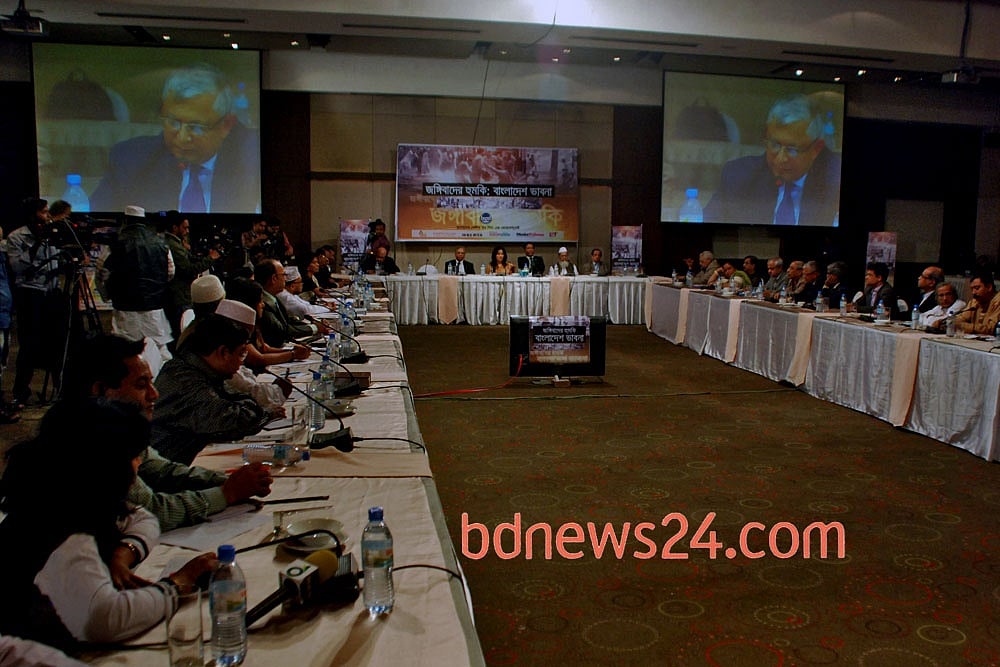
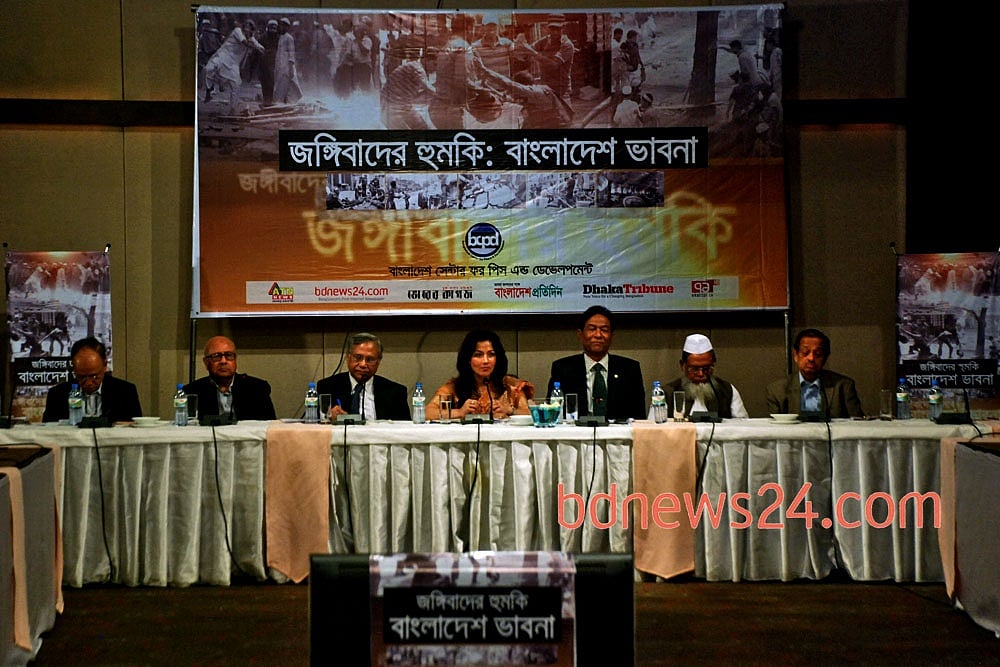
At the discussion, organised by a nascent organisation, they blamed ‘compromising’ political parties in the country for the emergence of militancy.
The discussants were former chief justice to human rights organiser, cultural organiser, journalists, retired military officials and leaders of islamist political parties.
Role of Jamaat-e-Islam in encouraging militancy also came up at the discussion. Even Islamist leaders supported the contention that Jamaat is fuelling the rise of militancy by using Islam.
Allegation of Jamaat getting the backing of western countries also came up at the discussion.
A few speakers referred to the alleged extra-judicial killings, saying those unlawful actions will never be effective in rooting out militants in the country.
The roundtable on the threat of terror in Bangladesh was the maiden programme arranged by Bangladesh Centre for Peace and Development, and attended by high-profile personalities from various fields.
Some of the speakers connected to the event through video link from outside the country as well as from six divisions of Bangladesh.
The event was held against the backdrop of an audio-video clip circulating on the Internet with a still photo of al-Qaeda chief Ayman al-Zawahiri.
Zawahiri, in his message, called Bangladesh ‘a huge prison’ and asked its Muslims to start an 'intifada' [uprising] against the ‘secular’ government in Bangladesh and other ‘enemies of Islam’.
“Almost 40 terror outfits are active in Bangladesh,” said, retired Maj Gen Abdur Rashid. “So far 22,700 people were killed as a result of their activities.”
He urged that the crisis be tackled with people's unity.
Celebrated cultural personality Ali Zaker said, “Those who were defeated in our glorious war of Liberation are still lurking to snatch our victory. The war isn’t over.”
“Militants are made when people are cheated into believing a manipulated version of religion,” said former Chief of Bangladesh Army Major General KM Safiullah.
Referring to Shahbagh movement, women leader Khushi Kabir said, “There are many secular people in Bangladesh. They should be used (in deterring militant activity).”
Former Deputy Governor of Bangladesh Bank recommended formulating a uniform education system in exterminating militancy.
Dhaka University Prof Mesbah Kamal said, “The history of the War of Liberation should be included in all stages of education. The madrasa education should be modernised and related to livelihood.”
President of Sammilita Islami Jote Maulana Ziaul Ahsan said, “Why is not the national anthem sung and the national flat not hoisted up at madrasa even so many years after the independence?.”
A monitoring cell should be formed to find out the patronisers of the madrasas, he suggested.
Islamic scholar Maulana Fariduddin Masud said, “US diplomats went to visit the Chittagong madarasa (of Hifazat-e Islam) a few days ago.”
“Why did they go there? It should be found out whether they went there to incite them.”
“Everyone should be spread at the village level to counter terrorism. Religious persons should also be used in it.”
Dubbing Jamaat as a terrorist organisation, Masud demanded that all of their publications be banned.
Dhaka University’s Prof Anwar Hossain said, “BNP, Jamaat and Hifazat are not different from each other. They are same.”
Pointing to the results of the first phase of the Upazila elections announced last week, he said, “They have become much calculative. The election results proved it.”
He urged the government to take control of Jamaat’s all financial institutions.
Prof Zillur Rahman Khan, Barrister Tania Amir, Air Commodore (retd) Ishfaq Ilahi Choudhury and former Election Commissioner Brig Gen Sakhawat Hossain, among others, participated in the discussion.
Somokal Editor Golam Sarwar Transparency International, Bangladesh director Iftekharuzzaman also took part.
Ain O Salish Kendra’s Sultana Sultana Kamal, KM Shafiullah, addressed the discussion through video conference.
bdnews24.com was one of the media partners of the event.