Published :
28 Apr 2014, 12:13 PM
Updated :
19 Oct 2022, 07:28 PM
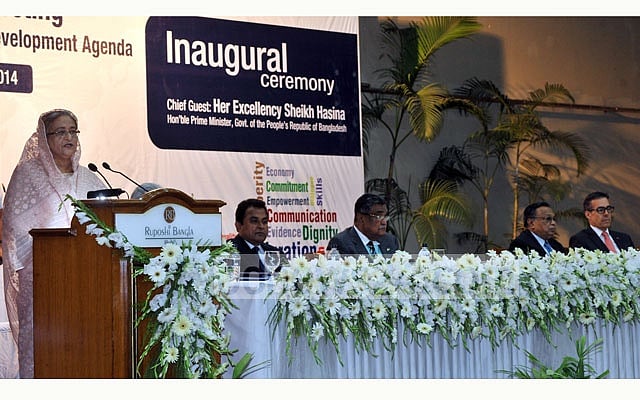
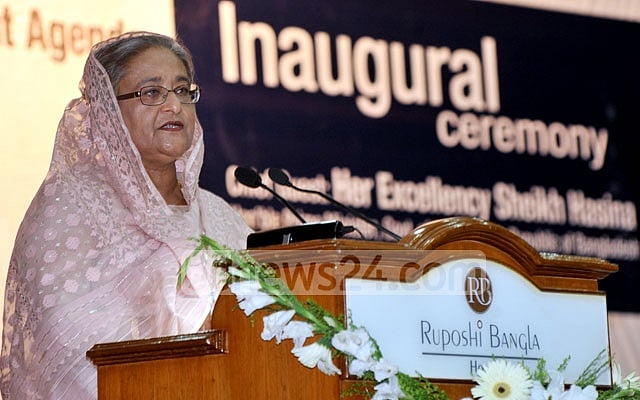
“It is crucial that we all view every migrant as a human being -- not just as an element of economic activity or production. They must enjoy all rights the rights as citizens as locals do," Hasina told a global meet of migration experts in Dhaka on Monday.
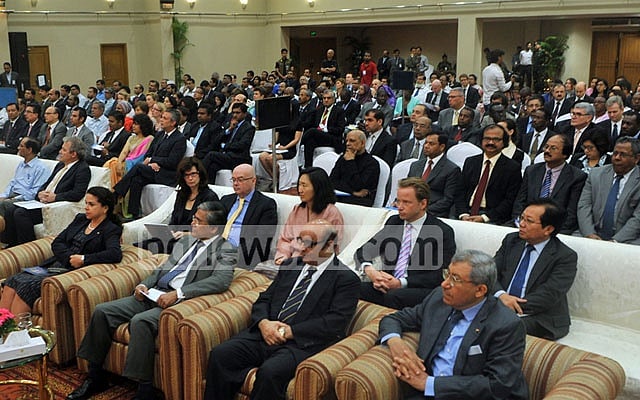
The meeting, jointly hosted by Bangladesh and Switzerland, aims at “securing a rightful place for migrants' in the emerging post-2015 development agenda.
Prime Minister Sheikh Hasina inaugurated the meet as chief guest at a hotel in the capital.
Addressing the inaugural session, Hasina underscored the need for placing the people at the centre of all development efforts to meet various challenges caused by the steady rise of population.
She said in both the origin and destination countries migration and migrant workers must be portrayed positively.
“As the world population continues to grow, societies and economies face various challenges. Today, we witness unprecedented mobility in human history, within and beyond borders,” she said.
She said technological advances, production management and demand for basic services were rising and these were shaping global human mobility patterns.
“So the rights of migrants should be central in all discussions and dialogues,” she added.
The prime minister said she had shared her perspectives on impacts of migration on development at the Global Leadership Meeting on Population Dynamics in Dhaka in March last year.
In that meeting she also outlined how the developed and developing countries together can, and must, beneficially address the challenges of global demographics and its dividends as well as harness the benefits of migration and mobility.
Sheikh Hasina said Bangladesh, like many other countries, was engaged at the national and global levels on articulation of the sustainable development goals within post-2015 Agenda with considerable interest.
“Over the past decades, Bangladesh accomplished laudable social and economic achievements, particularly in poverty eradication and women empowerment,” she said.
The prime minister said providing employment for an increasing number of young people was a challenge for the country as well as for the world.
“The world must consider millions of young persons, who can be trained, as a resource."
She called upon the developed countries to come forward to support countries across Asia and Africa - to equip the young people with knowledge and skills that are recognised across borders.
The government of Bangladesh has special plans to train millions of country’s youth, she added.
The prime minister said close to a quarter billion migrants in the world were making immense contributions to their host economies and their destination countries. She outlined some steps for the consideration of the experts at the meeting as possible targets and indicators.
She said she often met ordinary Bangladeshi migrants at airports or overseas and saw the need to make migration safe, orderly and beneficial.
Her plans included (a) creating enabling atmosphere for migrants, especially women and girls across the migration chain (b) provision for quality basic education and vocational and technical education for migrants and their families (c) supporting migrants with all forms of preparations for work abroad and (d) bringing down all costs in migration process to the minimum, including the cost of remittances.
She said if these were implemented, the sustainable development goals could prove to be visionary and transformative for all the countries over the next 15 years.
Foreign Minister Abul Hassan Mahmood Ali, Minister for Expatriate Welfare and Overseas Employment Khandakar Mosharraf Hossain and Planning Minister AHM Mostafa Kamal also spoke on the occasion.
A video message from Sir Peter Sutherland, special representative of the UN Secretary General on International Migration and Development, was screened at the meeting.
Swiss Ambassador Christian Fotsch read out a statement from Eduard Gnesa, the special ambassador for international cooperation on migration issues of Federal Department of Foreign Affairs of Switzerland. William Lacy Swing, the director general of International Organisation for Migration, also delivered a statement.
Migrant workers is one of the two main sources for foreign exchange -- in the last fiscal, they sent back $15 billion in remittances.
After Hasina came to power, her government has tried to strike official deals with many labour-short countries for manpower supply.