Published :
09 Feb 2013, 06:10 PM
Updated :
20 Oct 2022, 03:34 PM
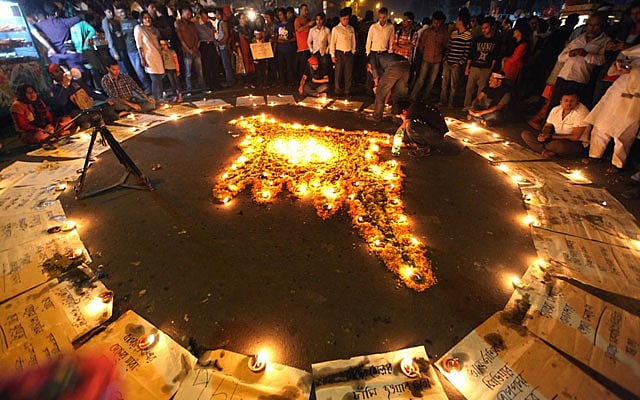
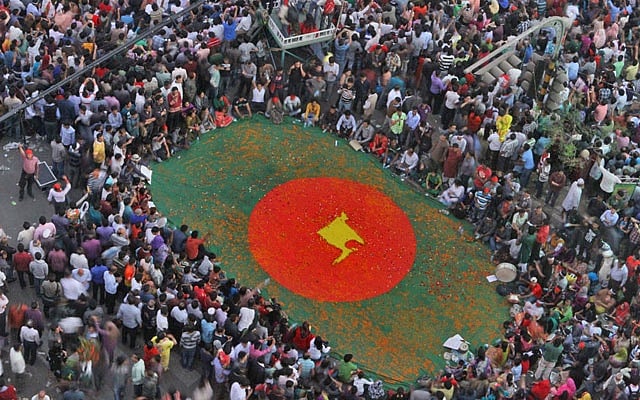
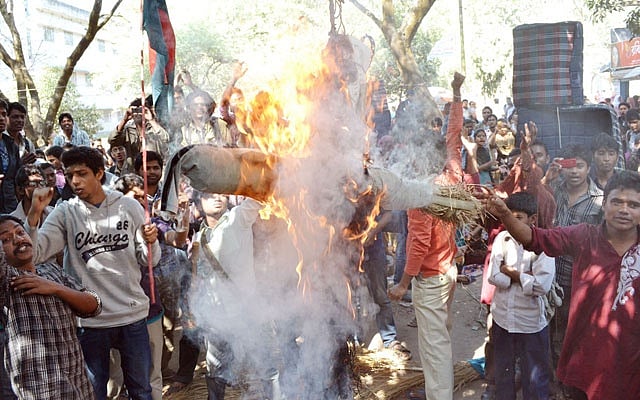
The roundabout turned into a sea of humanity as the movement continues for the fifth day in a row.
Protesters were chanting slogans demanding death for the war criminals and ban on Jamaat-e-Islami as they positioned themselves on the streets starting from Bangabandhu Sheikh Mujib Medical University (BSMMU) to Dhaka University’s Faculty of Fine Arts and National Shishu Park to Kataban.
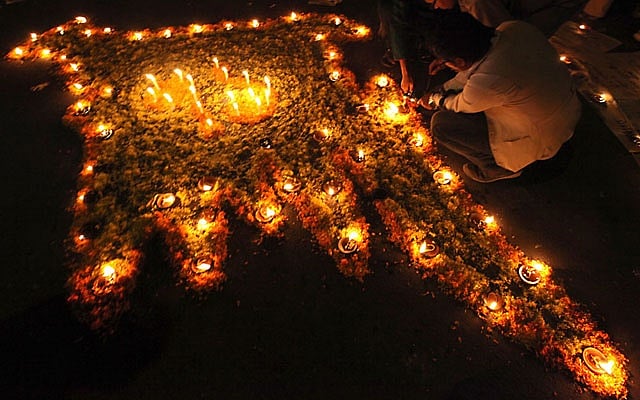
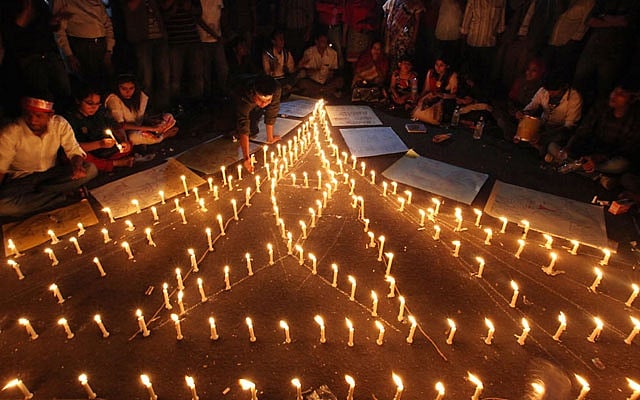
The candles were also lending voice to support the demand of the protesters, especially young men and women. Those who had gone home tired last night, returned Saturday afternoon in renewed vigour.
The movement had begun last Tuesday demanding capital punishment for Jamaat's Assistant Secretary General Abdul Quader Molla. He has been awarded life imprisonment by the second war crimes tribunal for committing crimes against humanity during Bangladesh’s War of Independence in 1971.

The protesters called the punishment “too light” compared to crimes of Molla, widely known as “Butcher of Mirpur”. And the crowd is now raising slogans demanding death penalty for the killers and collaborators of 1971. The protestors are also demanding a ban on Jamaat, a key ally of the main opposition BNP.
The International Crimes Tribunal-2 in its two verdicts had underlined Jamaat’s complicity to mobilising auxiliary forces during the Liberation War of 1971.
In the maiden verdict, former Jamaat member Abul Kalam Azad, also known as Bachchu Razakar, was sentenced death sentence while Molla was awarded life in jail in the second verdict.
Molla’s verdict sparked the protest of the unsatisfied people since Tuesday. The scene was same on Saturday after the grand rally which took place on Friday.
Like the last few days, the demonstrators sung songs, recited poems and chanted slogans altogether giving strength to each other and taking oath not to leave the streets until their demands were met. They wore bandanas, carried placards with slogans and national flags.
Agriculture Minister Matia Chowdhury also expressed solidarity with the movement on Saturday. But she did not give any speech there.
At that time, an announcement came from the main stage, “She [Matia] is with us. We want to tell the Prime Minister through her that, we will not return home without the death sentence of the Razakars, we will not budge until justice has been served. The laws will have to be amended to try the war criminals, if needed.”
Earlier in the day, people in small groups and processions from different areas of the capital started to gather at Shahbagh, which the young demonstrators have dubbed as ‘Prajonmo Chattar’, as the day begun. Every groups and processions were welcomed with slogans and round of applause as they joined the gathering.
The movement is receiving support from more and more organisations, educational institutions and individuals, strengthening the will demonstrators to press for their demand.
A ‘Charampatra’ (ultimatum) was read out Friday afternoon at the grand rally that summed up the spirit of movement seeking death penalty for those who perpetrated atrocities joining hands with the Pakistanis to crush the Bengali nationalist movement.
“We will not return until our demands for hanging war criminals are met,” said Mukta Baroi, a third-year female student of Dhaka's Eden College. She has been leading a slogan-shouting brigade for the last five days.
“Mukta has been at Shahbagh for the past five days and refuses to leave,” said bdnews24.com correspondents at the site of the protest.
“I do feel tired at times, but when I see so many people participating, I forget my weariness,” said Jahangirnagar University ex-student Shafique M Rahman. He has been at the Shahbagh intersection since the start of the movement on Tuesday.
“We will return only when all Razakars are hanged,” Rahman said.
He did go for food to the Dhaka University's Jagannath Hall, but then he was back soon.
The 'Prajonmo Chattar' was flooded with people by noon. Then an announcement came that the Jamaat-e-Islami's strike in Chittagong on Saturday had not evoked any significant response, the crowds joined in thunderous applause.
People were also seen carrying Bangla and English placards blaming the global media for 'spreading confusion’.
Many had gathered with families as some more came from out of the capital only to join the movement in person. Several of them even stayed overnight on Friday.
One of them, Riad from Comilla said, “I could not come in the last few days. That’s why I ran for it in the morning.”
“After seeing this mass uprising, I feel like I have seen Bangladesh completely. This battle must be won.”