THE MAMATA EFFECTBihar CM wants Delhi to review Ganges treaty
Taking a cue from Mamata Banerjee, Nitish Kumar now demands that 'gross injustice' be reviewed
bdnews24.com News Service
bdnews24.com
Published :
13 Sep 2011, 12:41 PM
Updated :
10 Aug 2022, 05:26 PM
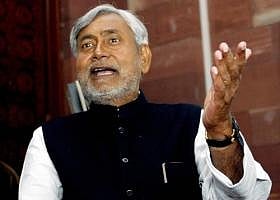
New Delhi, Sep 13 (bdnews24.com) – Bihar chief minister Nitish Kumar has demanded that India review the 15-year-old Ganges treaty with Bangladesh.
Kumar told journalists in his state's capital Patna that the treaty had been a "gross injustice", soon after his counterpart from Paschimbanga Mamata Banerjee red-flagged the proposed Teesta water sharing deal.
As a result, Delhi had to back away from signing the Teesta deal during Indian prime minister Manmohan Singh's Sep 6-7 visit, although it was perceived to be all but sealed.
Kumar also supported Mamata's decision to opt out of Manmohan Singh's entourage to Dhaka last week to protest the proposed modalities of Teesta deal.
The fiasco over the Teesta deal caused what is being seen in both Delhi and Dhaka as a major setback for Singh's visit.
Banerjee's All India Trinamool Congress is an ally of the Indian National Congress, which leads India's United Progressive Alliance government in New Delhi.
The Trinamool Congress won the state assembly elections in Paschimbanga last May, defeating the Communist Party of India (Marxist)-led Left Front, which ruled the state for 34 consecutive years.
Kumar belongs to the Janata Dal (United), which is an ally of the Bharatiya Janata Party, the main opposition party in the Indian parliament.
The Bihar CM told journalists it was unfortunate that India's central government overlooked the state governments while negotiating deals with neighbouring countries. "It is indeed unfortunate that we have no say in such issues," he said.
He said Indian public sector undertaking National Thermal Power Corporation has to suspend operations at one of the units in its Farakka Super Thermal Power Station whenever water supply to the plant from Farakka Barrage is suspended for release of water to Bangladesh in accordance with the water sharing treaty. "This adversely affects supply of power to Bihar," he said.
Bangladesh and India signed the treaty on December 12, 1996, putting in place a mechanism for sharing the Ganges water for 30 years. Prime minister Sheikh Hasina and her then Indian counterpart H D Deve Gowda signed the agreement in New Delhi.
The Ganges and the Teesta are among the 54 common rivers between Bangladesh and India.
bdnews24.com/corr/tk/ta/nir/1833h