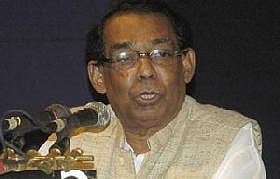
Suranjit questions SC motive
The co-chairman of the constitutional review committee has accused the Supreme Court of leaving a gap in the verdict that annulled the Fifth Amendment.
bdnews24.com News Service
bdnews24.com
Published :
21 Jan 2011, 04:52 PM
Updated :
10 Aug 2022, 04:14 PM
Dhaka, Jan 21 (bdnews24.com) — The co-chairman of the constitutional review committee has accused the Supreme Court of leaving a gap in the verdict that annulled the Fifth Amendment.
Suranjit Sengupta, also chairman of the parliamentary watchdog on law ministry, said on Friday that Article 96 was left out of the verdict because the Section gives power to the parliament for impeaching justices.
"Article 96 of the 1972 constitution needs to be revived in order to ensure accountability of the judges," he told reporters at his Jigatola residence.
"Without Article 96, the return to '72 constitution would be incomplete."
"Everything that was done through martial law ordinance was cancelled. The chief justice himself declared the Fifth Amendment illegal. Then why not revive the article 96?
"Because, it relates to the matter of impeachment or removal of judges," he observed.
Suranjit added that the parliament would commit to this task now.
Supreme Court on Feb 2, 2010 dismissed the two petitions challenging the 2005 High Court ruling that declared the Fifth Amendment illegal.
On the same day, Suranjit told the parliament that the dismissal had "paved the way for Bangladesh's return to its original constitution framed in 1972". Mohammad Tafazzul Islam was the chief justice when the verdict was given.
The Awami League advisory council member on Dec 20 last year told the press that the law ministry was working to enact a law that would make any government official to appear before the parliamentary committee.
The Supreme Court held a full court meeting on the issue on Jan 3. The meeting ruled that Bangladesh's parliament is not sovereign. And so the court is not bound to answer to the parliamentary standing committee.
At a book launching event on Jan 15, chief justice A B M Khairul Haque told reporters that the parliament, administration or the judiciary, none are accountable to each other, but only to the people of the country.
"Our accountability is not like that of the administration. We are accountable to the people," the chief justice said.
Suranjit called the comment inconsistent. "People hold the supreme power in a republic. The Article 96 speaks of impeachment of the president, prime minister, chief justice and chief election commissioner in case of corruption or moral turpitude. And it will be done through the parliament."
"Judicial autocracy cannot be democracy. According to the constitution, everyone in the republic is accountable to the parliament."
Quoting Article Seven of the constitution, he said since parliament represents people, everyone including the judiciary should be accountable to it.
Saying that constitution is the supreme law of any country, Suranjit said, "Everyone should obey it."
bdnews24.com/sum/al/sh/pks/am/2213h