November 21, 2026

Sujatha departs with a call for polls

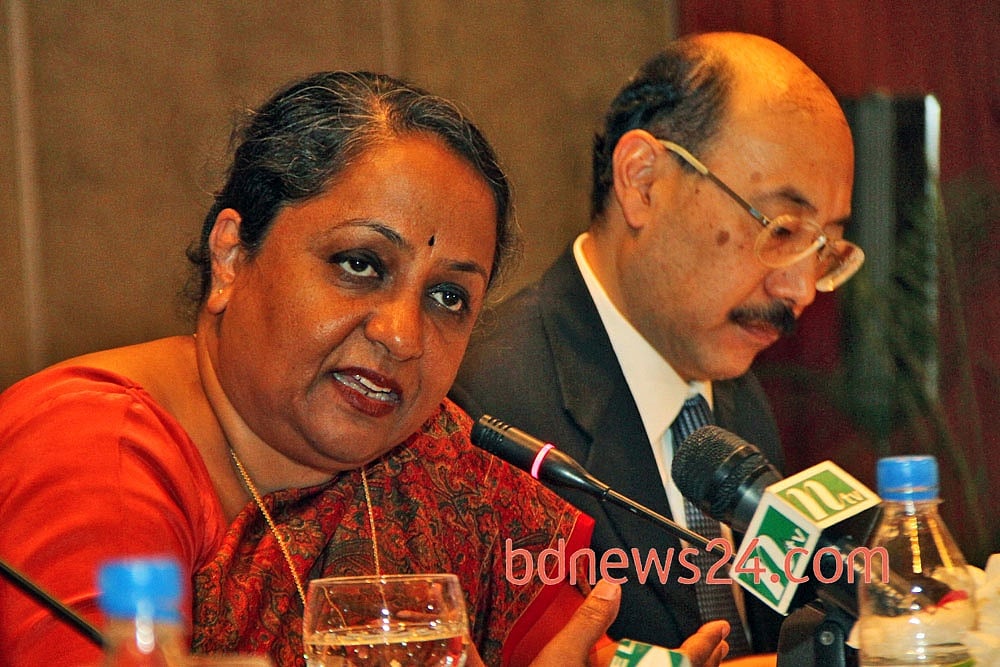
The India’s foreign secretary Sujatha Singh left for New Delhi on Thursday morning ending her maiden 24-hour hectic visit to Bangladesh, leaving behind Delhi’s apparent message to the Sheikh Hasina administration to go-ahead with the current polls schedule.

Nurul Islam Hasib

bdnews24.com

Published : 05 Dec 2013, 11:06 AM

Updated : 20 Oct 2022, 03:42 PM

Image
File Photo

Also Read:

Indian Foreign Secy arrives in Dhaka

Also Read:

India wants 'as many parties as possible' in election

Also Read:

Delhi for democracy, stability

Also Read:

'Govt to be blamed if Jamaat rises'

The Indian Air Force aircraft carrying Singh left Dhaka's Shahjalal International Airport around 8.15am.

The top diplomat’s visit has been viewed as India’s effort to break the political standoff over the Jan 5 elections, though she told journalists that she was here in a ‘goodwill’ visit, and ‘not as mediator’.

But she left behind a strong message that India would be happy to see elections with the participation of “as many parties as possible” and results of elections were “accepted” by Bangladeshi people.

“It is for the people of Bangladesh to decide”. She said Bangladeshis would decide and define their own democracy, as to her, there were no set definitions of democracy and inclusive elections.

She, however, insisted on holding elections to build the institutions of democracy, which she referred as like a “chicken and egg” situation. “Unless you have elections, how do you build the tradition of democratic process? You have to have the elections in order to build the institutions of democracy,” she said. The BNP-led Opposition, boycotting the polls, launched a movement to install a 'non-party' cabinet to oversee the elections. The violent agitation has so far left scores dead and many injured. Violence has also overtaken the streets evoking strong reactions from the UN rights Chief Navi Pillay who has asked both sides to stop 'destructive brinkmanship' setting aside their differences as she said it was pushing Bangladesh “dangerously close to a major crisis”. The UN secretary general Ban Ki-moon had also made several attempts to broker dialogue between the two parties. In his latest and perhaps last effort, he is sending one of his top deputies, assistant secretary general for political affairs Oscar Fernandez-Taranco to Bangladesh. He will arrive in Dhaka on Dec 6.

The ruling Awami League’s ally HM Ershade-led Jatiya Party in the meantime joined BNP in boycotting the polls slated for Jan 5.

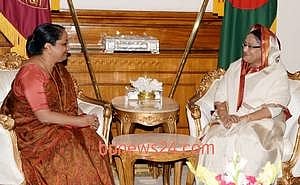
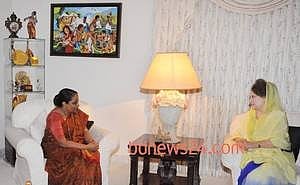
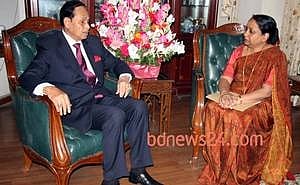
The Indian foreign secretary, apart from her meeting with the Prime Minister, also held meetings with the leader of the opposition and Ershad, who after the meeting told the press that “my final word is that I am not going to polls”. The former military dictator said Singh conveyed to him India’s concerns that ‘undemocratic forces or the Jamaat-Shibir’ might gain ground if the elections were not held. The comments could not be, however, verified. But Delhi has apprehension about the rise of militants and extremism in Bangladesh in the event of a change of guard in Dhaka. According to media reports it has conveyed this concern to its ‘strategic partner’, the US. Observers say the Indian top diplomat's ‘short-noticed’ visit was also an attempt at getting first-hand knowledge about Bangladesh’s conflicting political situation as the issue would be discussed in her upcoming Foreign Office Consultations with the US. She will travel to Washington shortly to have the consultation with her US counterpart Wendy Sherman where bilateral and regional issues would be discussed. But there are speculations that she has conveyed New Delhi’s specific message to Sheikh Hasina, particularly in this difficult time. The Indian foreign secretary did not divulge any details of what she had discussed with the top leaders. But to journalists she said she had stressed “on the importance that India attaches to stable, peaceful and prosperous Bangladesh and to successful completion of the democratic processes.” She said she delivered India’s message of “support, and solidarity” in this crucial time.

“We share not just common borders but common challenges,” she said and pointed out that both countries cannot “remain indifferent to or unaffected by developments” in each other’s territory.


Hours before her arrival in a special Indian Air Force aircraft on Wednesday morning, the new US Assistant Secretary for South Asia Nisha Desai Biswal appeared at the foreign press centre in Washington for the first time. She welcomed Bangladesh’s elections schedule and said they felt an “urgent need for concerted efforts at dialogue to bring the two major political parties closer”. She, however, stressed that solutions would not come from the international community. The Indian foreign secretary was also optimistic. While condemning the escalating violence that killed dozens of people mostly innocent, she said they had “deep respect for the wisdom and achievements” of the Bangladesh’s people. She spoke about India’s wish to have “broad based and inclusive” relations with Bangladesh and said India would remain as “an honest and enduring partner in your nation building efforts”. She took back a perception of a “very vibrant democracy” in Bangladesh, but said “democracy also means the ability to resolve differences through dialogue and peaceful means, without recourse to violence”. She did not make any direct comment on the main opposition’s demands for the restoration of a non-party caretaker system to oversee elections. But said from the perspective of a “matured democracy” she could say that the Indian democracy was working well without any such system.
Related Stories