


Published : 30 Jan 2018, 07:58 PM
Updated : 08 Apr 2022, 02:57 PM


The law minister, however, claims the incorporation of the issues from the section into the proposed Digital Security Act , cleared by the Cabinet on Monday, will not curtail the media’s freedom of expression, but stop the ‘abuse’ of the ICT Act section.
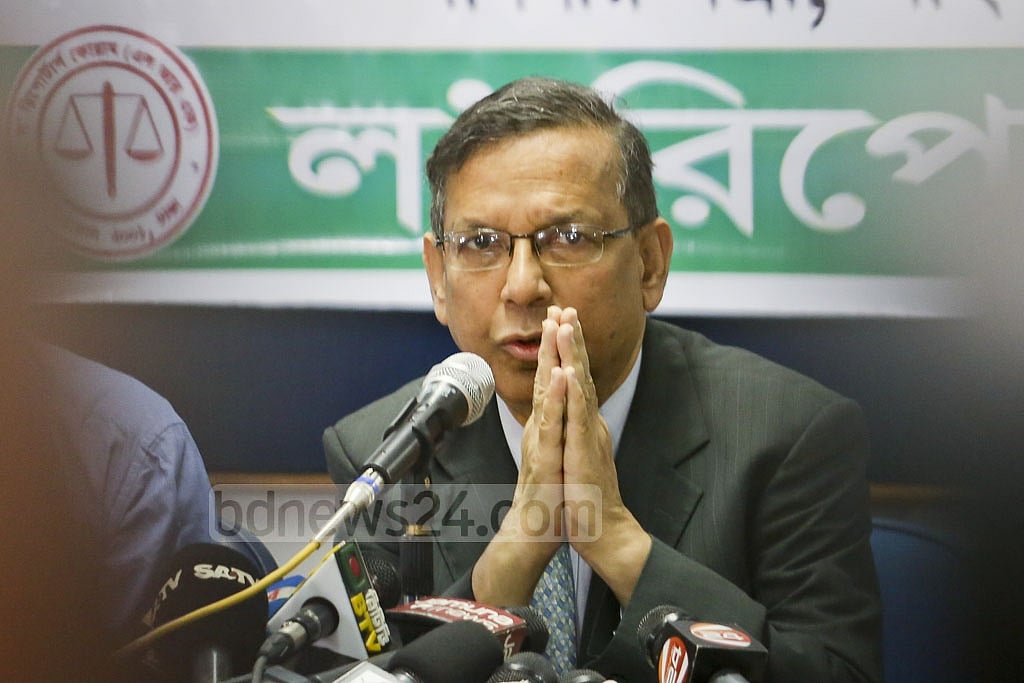
Facing questions by journalists at his Secretariat office on Tuesday, he told them it would not considered as spying if the journalists reports and publish any news on corruption.
“I could charge you under this Section 57 if I were a policeman, and even if you had done nothing,” he told the reporters.
He noted the ICT Act was passed during the BNP-Jamaat-e-Islami government in 2006 and added, “There were some means to curb freedom of speech in it. Now these have been made clear (in proposed Digital Security Act).”
“There is no attempt to curb freedom of speech and this law has not done it,” he said.
The ICT Act was drafted in 2006 and revised twice in 2009 and 2013. The latest revision increased the maximum jail sentence from 10 years to 14 years and made offences under Section 57 non-bailable.
Media workers and rights activists have protested against the controversial section, saying it aims to curb the freedom of media and expression.
In response to the protests, Law Minister Anisul had said ‘confusions’ over the section would go away once the Digital Security Act was passed.
On Tuesday, the law minister claimed the new law clarifies offences and their respective penalties.
The proposed law cleared by the Cabinet has kept a provision of up to 10 years in jail and Tk 20 million in fine for hurting religious sensitivities.
It also stipulates up to 14 years in jail and Tk 10 million fine for offences like hacking, espionage in digital or electronic form as well as for ‘propaganda’ against the Liberation War and the Father of the Nation.
The media workers are fretting over whether the provision declaring ‘espionage in digital or electronic form’ as offence will be used to choke their voices by stopping them doing investigative reports.
“The idea is to stop the abuse of Section 57. We believe the definite nature of the new law will stop the abuse of Section 57,” Anisul said.
He also said espionage is already an offence anyway.
“What we are doing is that we are adding the use of information technology or computer systems in espionage as an offence. I don’t think it has anything to do with journalism. These fears have no ground and some are criticising it only for the sake of criticism,” the minister said.
The law minister said they made the offences in the new law clear as Prime Minister Sheikh Hasina does not want innocent people to be harassed.
Explaining the anti-espionage provision, he said reporting illegal activities will not be a crime.
“If you publish a report on something illegal, like theft, it cannot be a crime. No book says it’s a crime. It cannot be a crime even if you (take) and publish any illegal thing from a computer,” he said.
“If any conspiracy is made secretly to do a crime and the journalists publicise it, it won’t be a crime.
“If a journalist records and publishes a crime and if they have data and information on it, it will not be considered an offence,” he said.
The minister also reminded the journalists about the law preserving secrecy.
“If a government or non-government organisation wants to keep something highly confidential and if that is correct, you should not publish it. Because it is a crime and it remains a crime,” he said.













